By Lucy
Days in England: 6
Sunday was another rest day. Monday dawned bright; not getting much of the famous English rain! Rich made breakfast again, this time a proper English breakfast; with hashbrowns, bacon, sausage, toast, and scrambled eggs folded with black pudding. I’ve not had black pudding before and it was delicious with the eggs, although I still want to try some plain.

We had an 11 o’clock booking to see the tunnels under Fort Amherst. There was only five of us; the guide, me and Rich, and an English couple who didn’t say much. Rich quickly outed me as Canadian, with French and German ancestry, and it will always amuse me that despite the war with “the Jerry’s” being the most recent, they continue to have the most animosity towards the French because of Napoleon. Also every Limey thus far whose mentioned visiting Canada has visited Vancouver, for some reason.
The tour was over two hours and the guide set about it with some gusto, clearly enthusiastic about his line of work. He was mostly playing off me anyway, because Rich knew the spiel already and the other two barely paid attention.
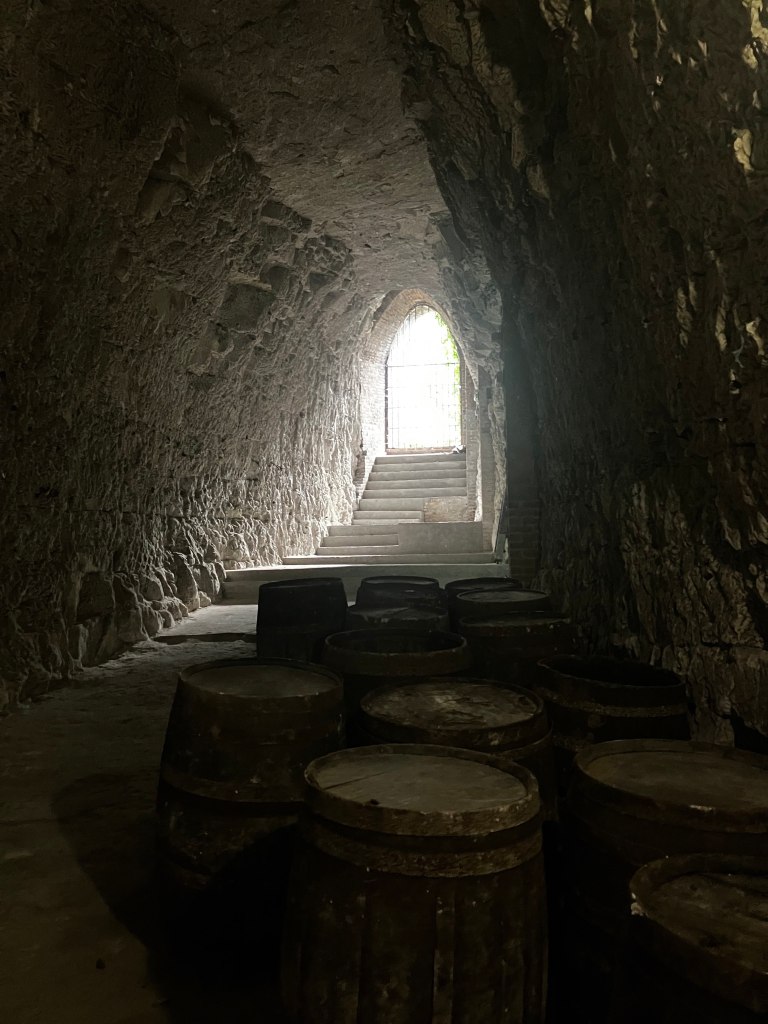
The first tunnels under what is now Fort Amherst were actually shafts, dug to get to the flint that formed naturally in the chalk in this area, thousands of years ago when what is now the United Kingdom was simply the bottom of the ocean. In fact, England was still part of the bottom of the ocean as few as 7’000 years ago, when it was briefly submerged as sea levels rose temporarily. It was fascinating to see the neat layers of flint, presumably formed when the ocean temperature rose and the bacteria in the sediment became more active.
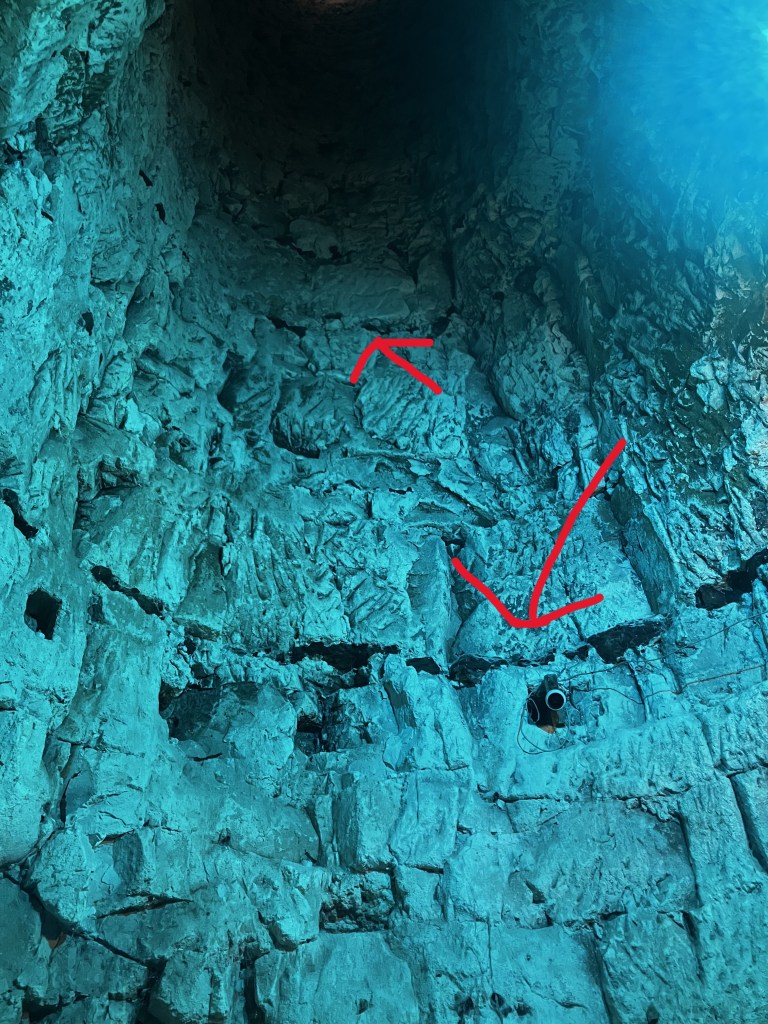
Due to the location of the Medway between the Channel and London, it’s often in the line of fire. In the 1660’s, Charles the Second (which one are we on now?) had the tunnels refined into a fort in preparation for a war with the Dutch. The Dutch handily won the Battle of the Medway, despite a hasty English decision to sink boats into the river to block their movement up it. They didn’t gain any ground, but they decimated the forces garrisoned there, and burned every ship left to the waterline. Except for the Royal Charles, parts of which were taken back to Amsterdam and are still on display there. Despite, the guide cheekily noted, the British asking for the bits back, because it’s not like the British have ever taken another country’s artifacts and refused to give them back. Unconvincing cough. [Editors Note: She actually did the cough in the tour too]
Ahem. The fort was again enlarged in the 1800’s to accommodate new weapons, cannons and muskets, in the war against Napoleon, but didn’t see combat this time.
In the first and second World War it was used as an Air Raid shelter and also as an intelligence operation, given its durability against bombing during the Blitz.
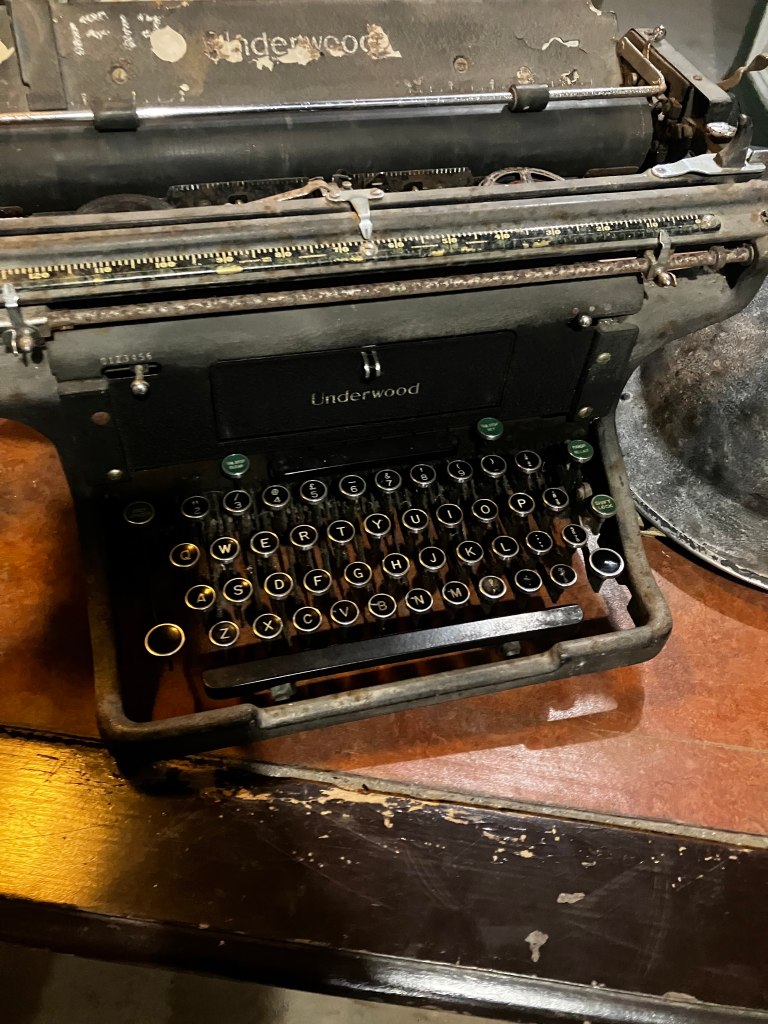
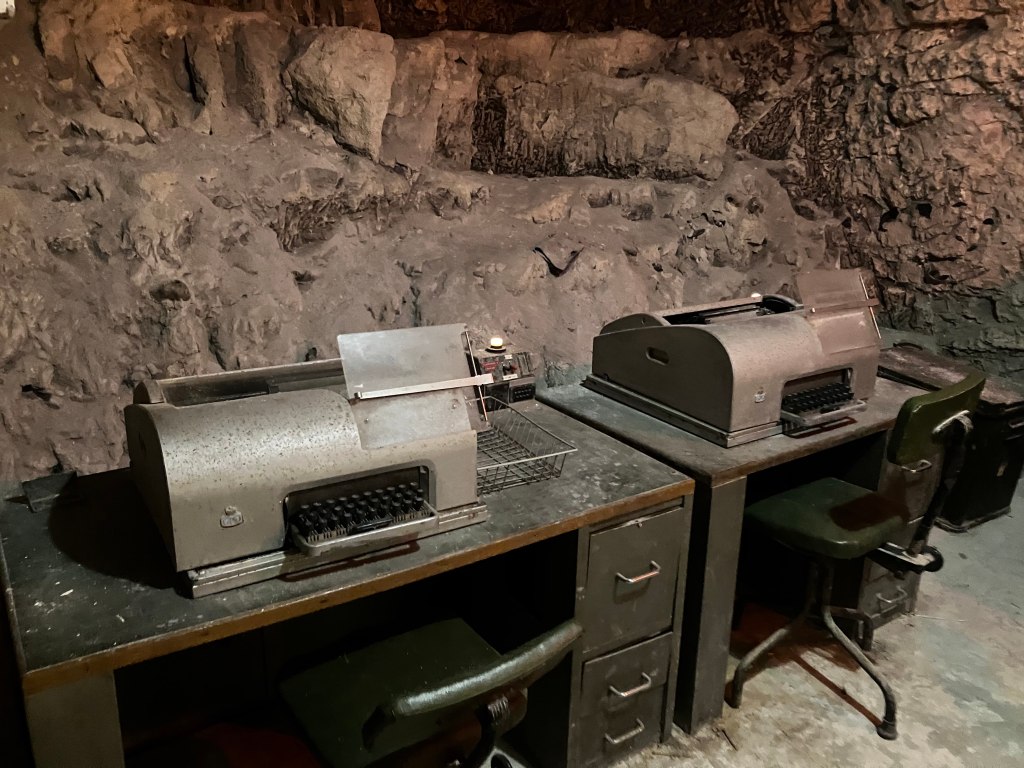
The artifacts from the second world war were especially interesting, since most of them were originals. The typewriter also led to an interesting aside where I had to explain to the guide that not only do we use British QWERTY keyboards and mostly British spelling, we are also still legally obligated to go to war if Britain does. You’ll note the typewriter in the picture is missing its 1 and 0 key, to save metal for the war effort. Metal, the guide noted, they didn’t actually end up needing, but it gave everyone a sense of camaraderie. There was also an chart with the actual list of bombings and damage done on the 21st of August, 1940, in ‘the plotting room’ (I should have taken a picture of the door that said ‘plotting room’).


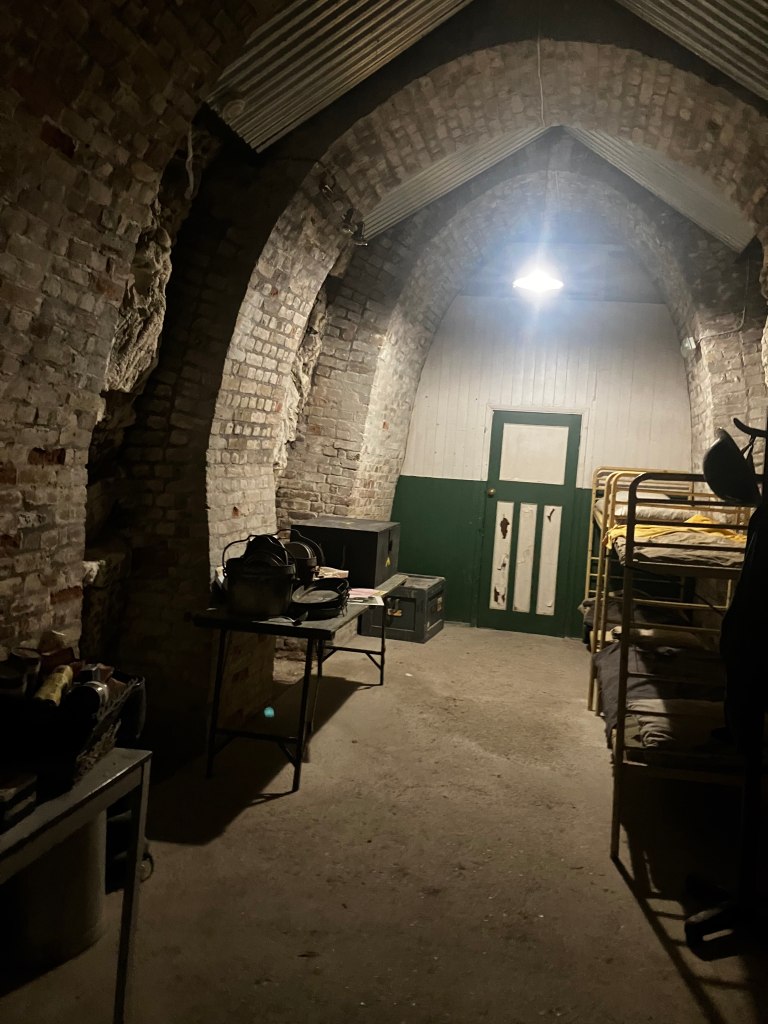
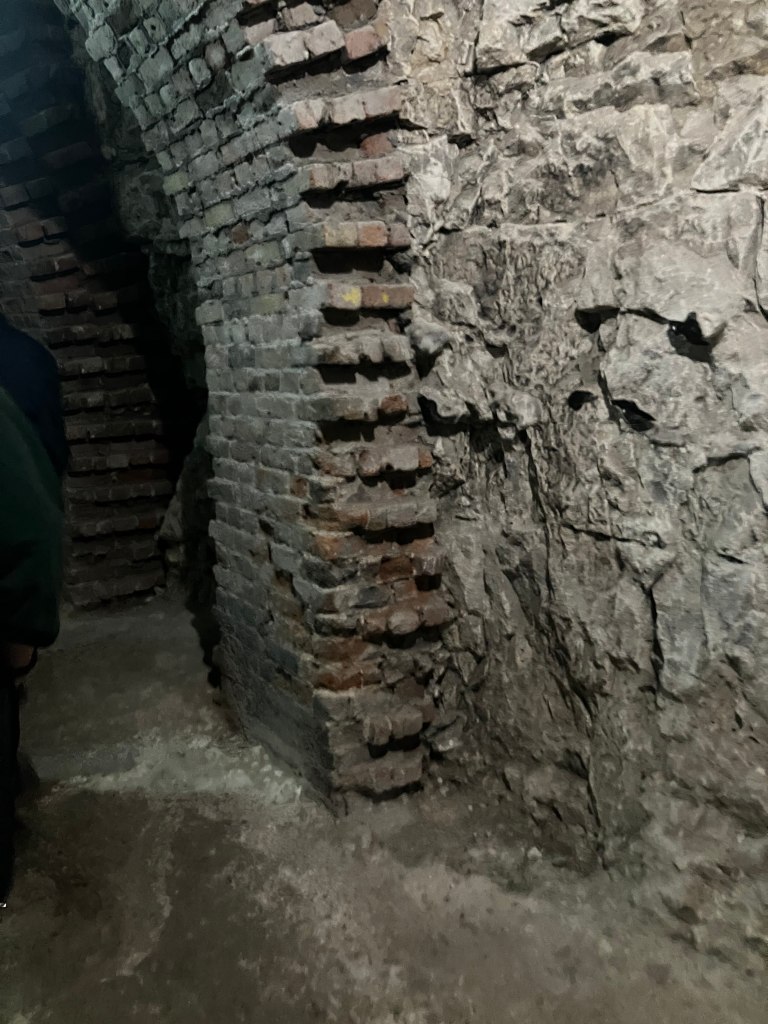
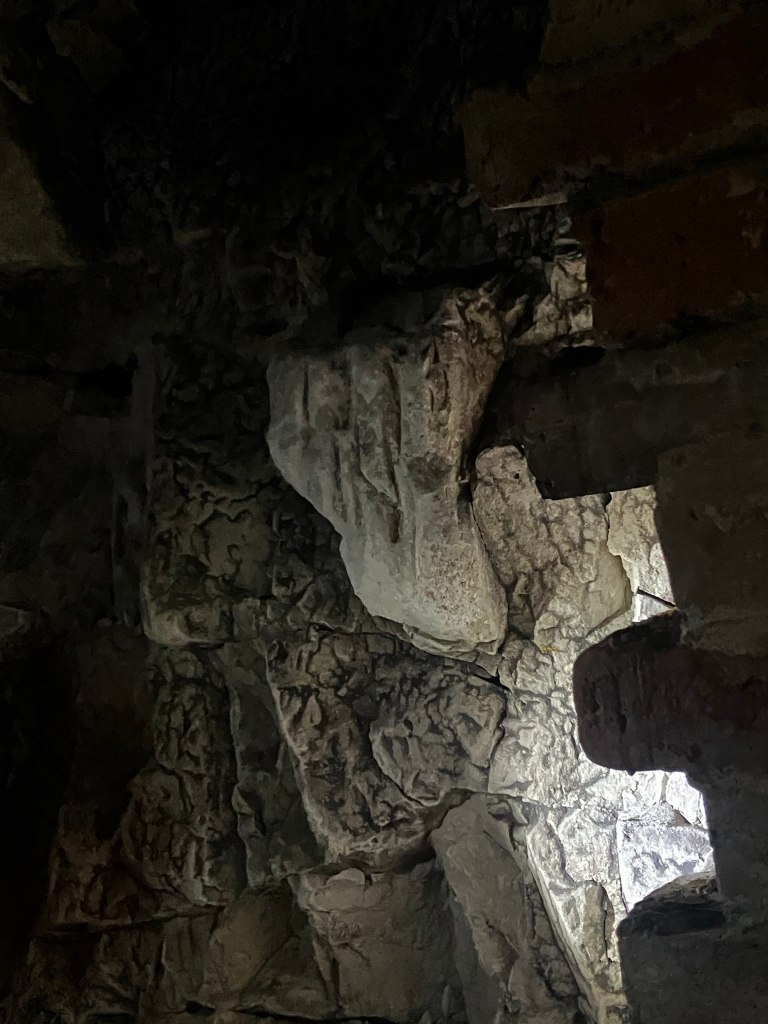
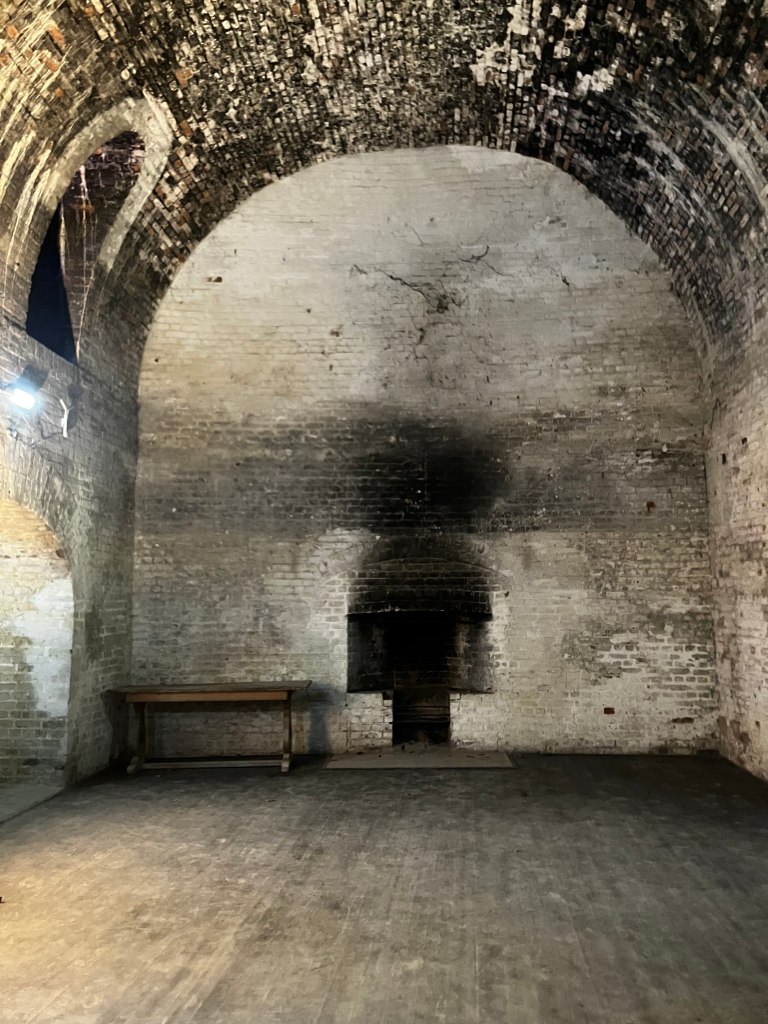
There was some unique building choices, such as not having the reinforcing brickwork level at the edge, so more bricks could be easily slotted in if the reinforcements needed to be expanded. He also pointed to an etched figure in the chalk and said it was a religious icon, probably Mary, that people would offer prayers of hope to, but then he also said the figure had wings, and I don’t believe Mary was winged. Personally I’d say it was an icon of Danu, but I’m not sure the tunnels are that old.

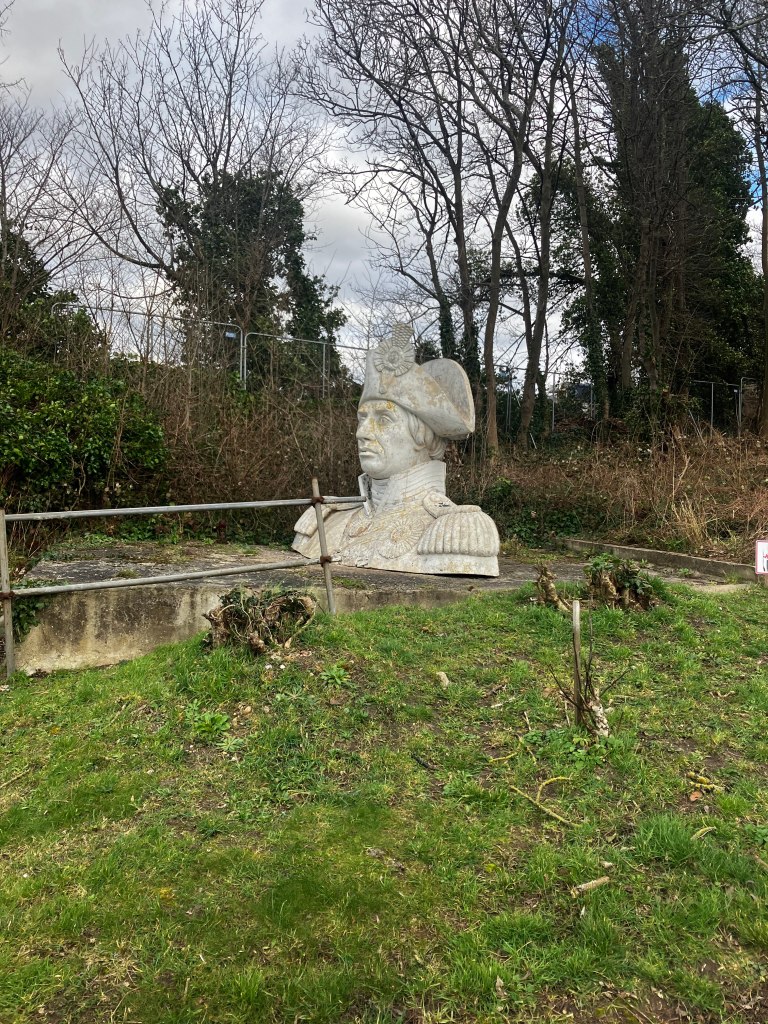
There was also this random, larger than life bust of Lord Nelson that they found completely buried at the fort. No one knows when or why it was made, or why it was buried.
Fort Amherst had one last secret; it was also the site of some filming for Sherlock Holmes: A Game of Shadows. Unfortunately I didn’t get pictures of those areas because I didn’t realize which they were until I got home, but I’ve got screen caps from the movie. If you ever visit, it was the hallway and stairs that were capped with hardwood so they wouldn’t spark the gunpowder.
The tour was lovely and I wished I could have stayed to pick the man’s brain because he was fun to talk to. Afterwards, Me and Rich wandered down the road to the Dockyards and had lunch at a bougie place called Ship and Trade. The food was very good; I just had bangers and mash, or sausages with mashed potatoes and gravy. They weren’t much to look at.
Our next and final stop for the day was the Royal Engineers museum, which was another cold splash of British entitlement.
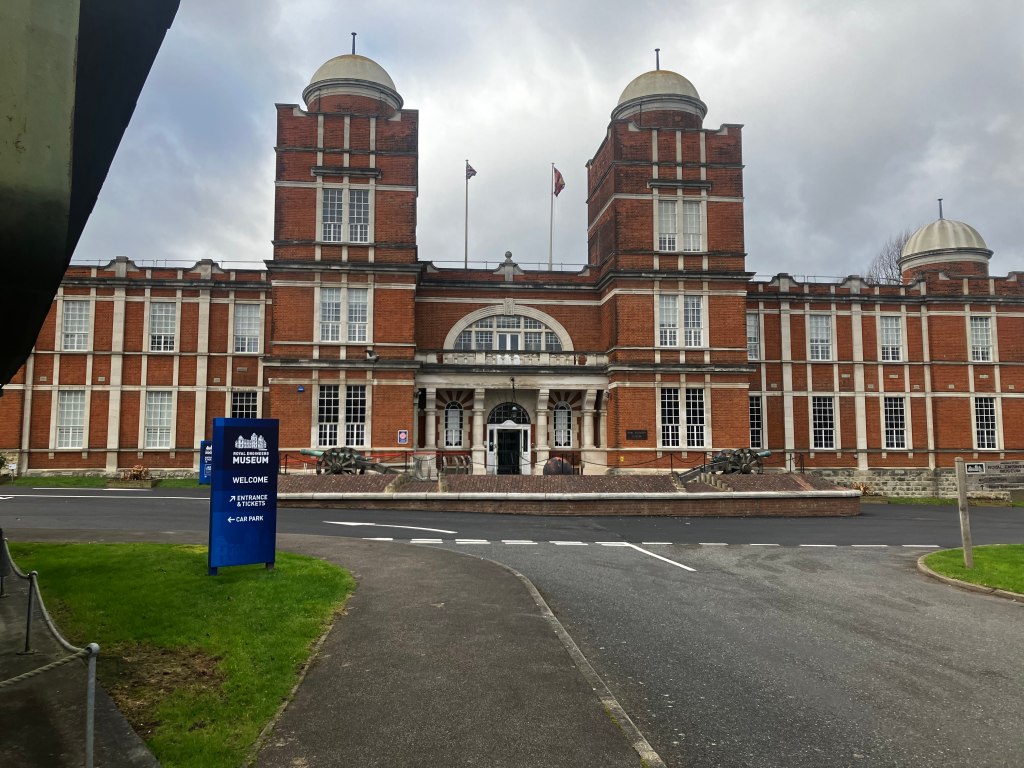

Some of it was very cool, and I’m a sucker for most museums. The amount of original artifacts, some of the wit and clever designs. The full size, original V-2 missile, the intact tank (which spawned a conversation of if I’m even tiny enough to fit in it), the World War 1 era motorcycle and all the attendant ways motorcycle culture and military service are linked. There was an original model of Gibraltar from a battle there, and a kit for smelling examples of gas (although I would think that by the time you’ve wrestled the kit open and ascertained the smell, everyone is dead or dying anyway). Also a lock of Napoleon’s hair, for some reason.
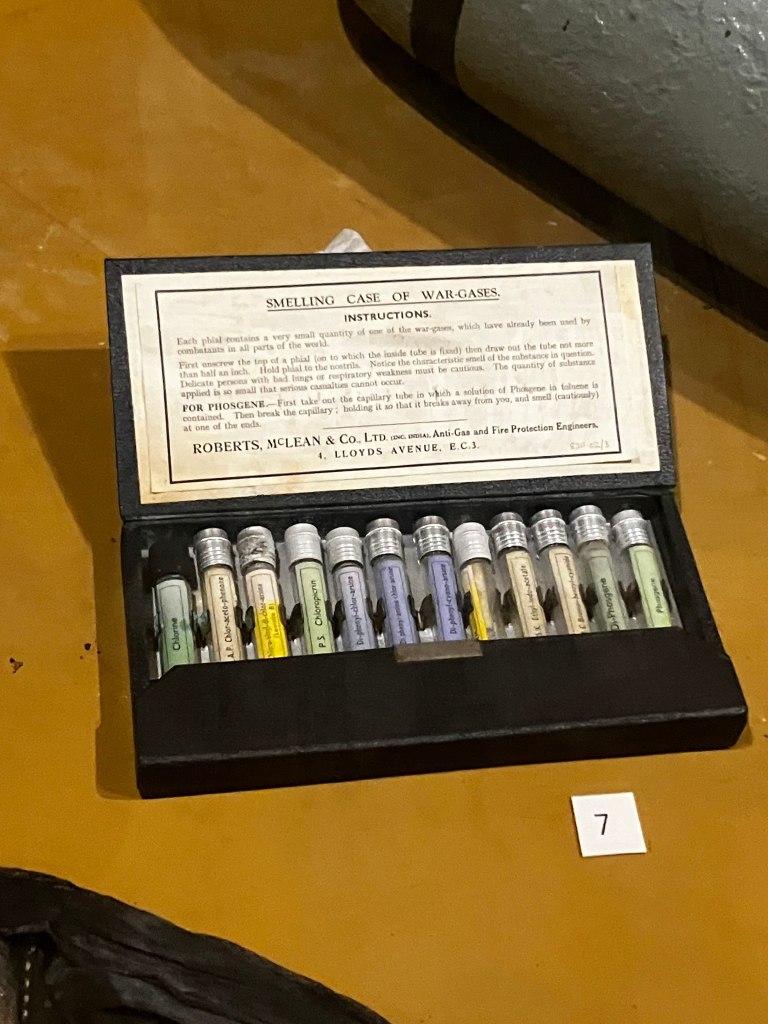
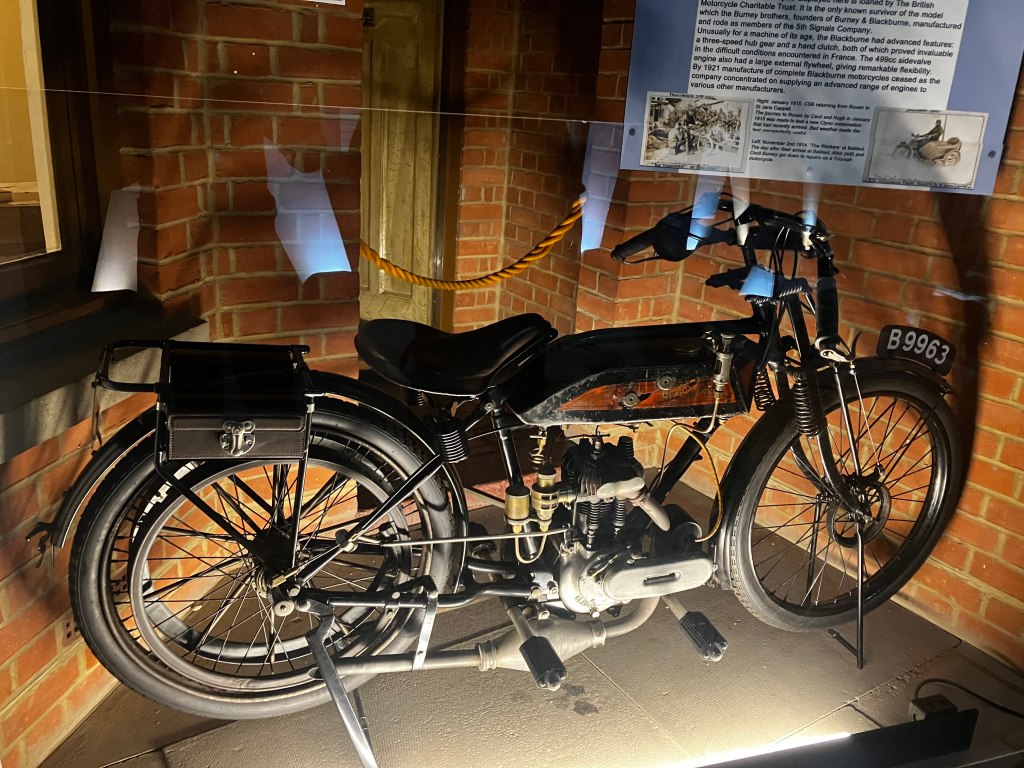
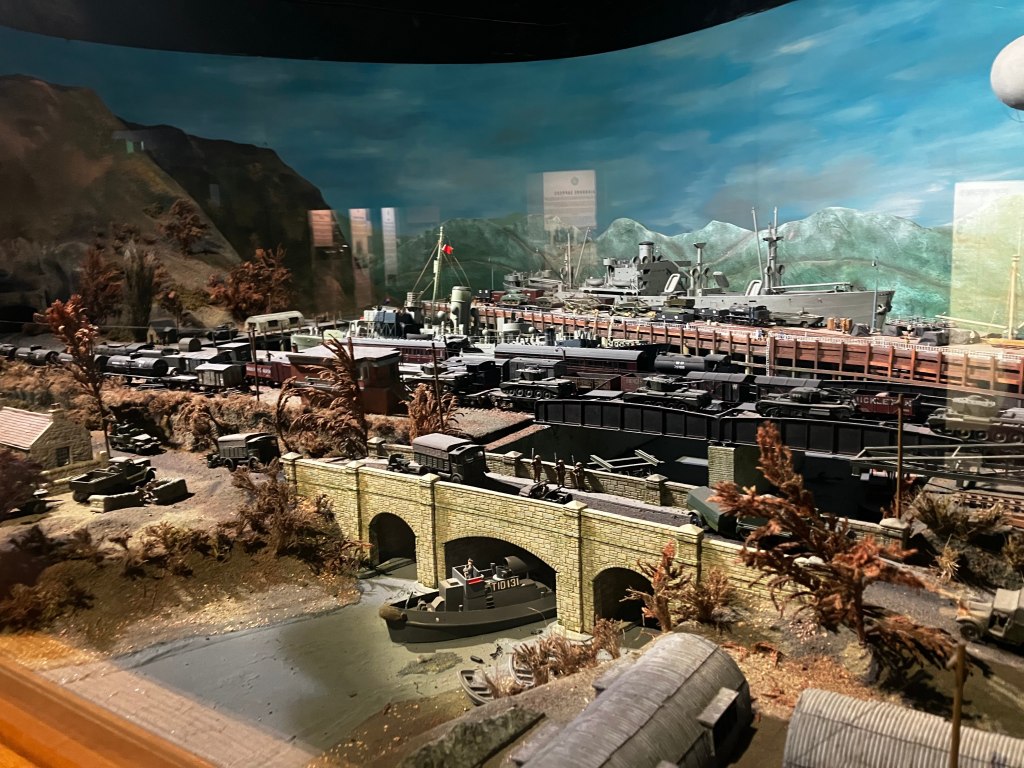
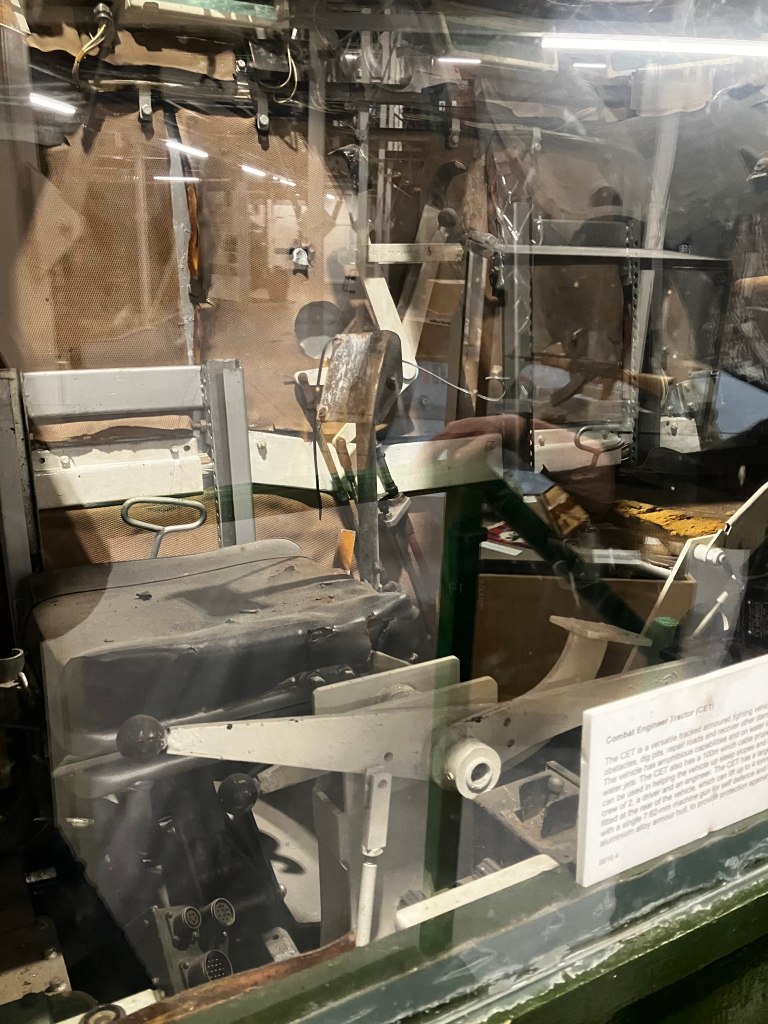

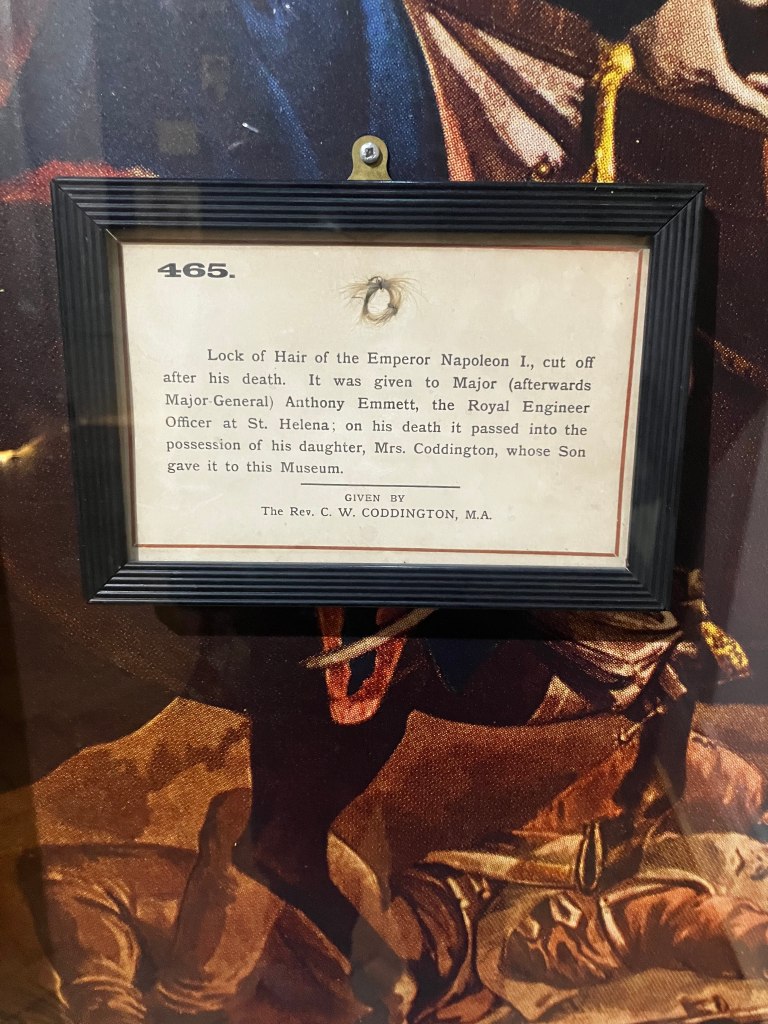
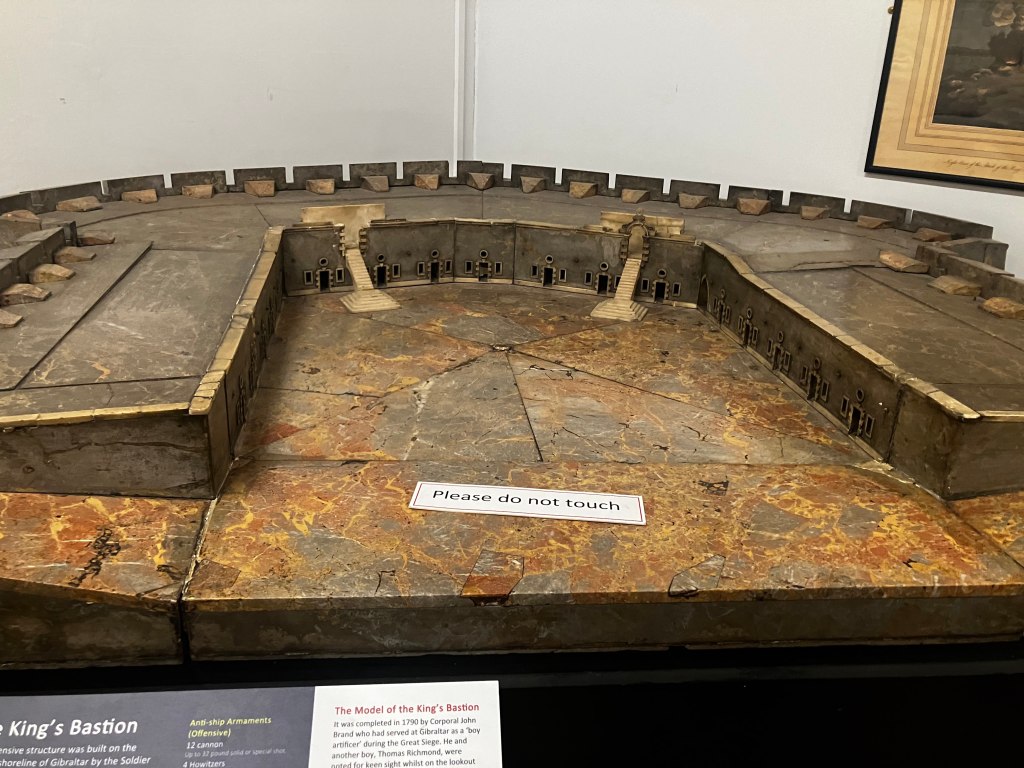

Unfortunately, the museum was obviously designed by someone who thinks hundreds of year of British colonialism have been nothing but positive, and was written in somewhat paternalistic and demeaning ways.
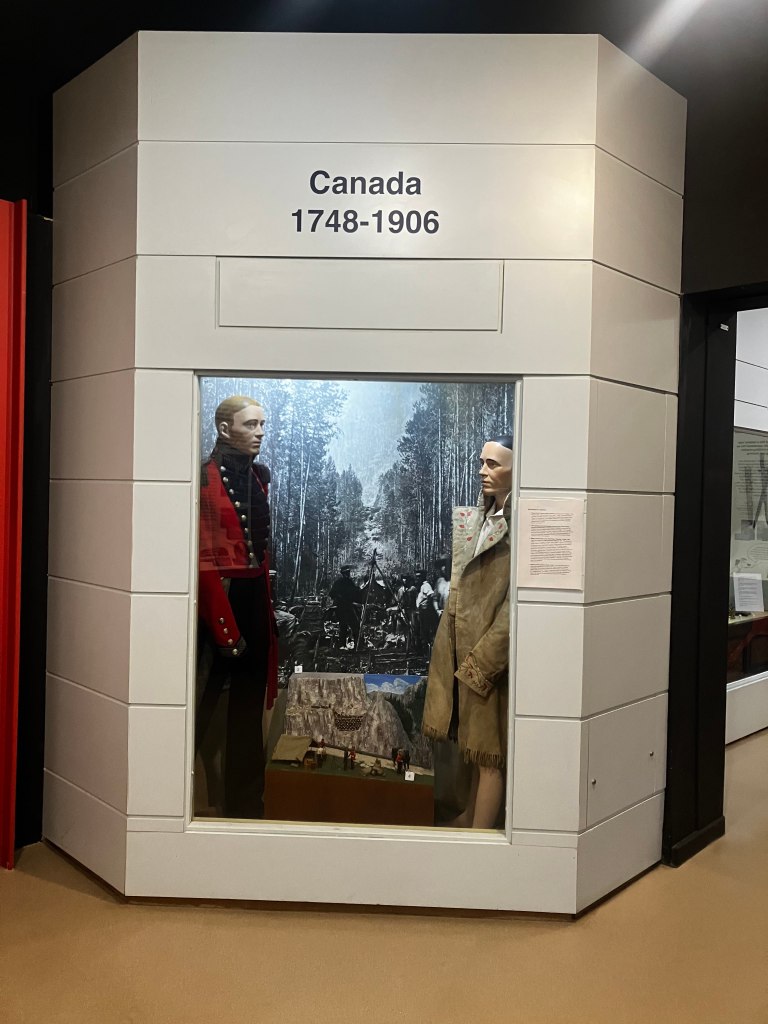
Like this, which was honestly so small it was like they included it as a token “oh yeah, we had troops in Canada too”. The note for the jacket on the right stated it’s an original deerskin with quillwork, which it had the gall to claim “had fallen out of use and been replaced by European glass beads”. If you’ll recall, not two weeks ago I was sorting porcupine quills for quillwork! It also stated he probably wore it to fit in among the natives, which… is not accurate. There was a English guy wearing it in Manitoba, even if his skin didn’t give him away his accent would. He was more likely wearing it because it was warm!
I’m not sure who has it worse, us or the Indians. They had a much longer and more involved section, laying bare the British’s reluctance to stop being occupiers and let them have their country back. To be occupied and forgotten, or fight a bloody war for your country back? I ranted angrily to Rich for a bit before stumbling through a good chunk of the museum numb and depressed. Here we have to swear allegiance to their king, and they barely acknowledge we exist. The blood of thousands of natives pools at their feet with a shrug of indifference. And I know what it’s like to have blood on my hands, and I know you can’t be held accountable for the sins of your fathers. My grandmother grew up in World War 2 Germany, and my great grandfather almost certainly fought in the military for the Nazi’s. I have no control over that, but I also don’t get to pretend it doesn’t exist either.
The cherry on top was Snob. Snob was a little dog that belonged to a Russian cavalry officer. When he died, the Royal Engineers adopted the dog. When the dog died, they stuffed him, put him in the museum, and made him the mascot of the museum. Just another stolen prize locked away in the vault.


I ended up leaving before the tour was done because I couldn’t take it anymore.
To end the post on an amusing note, the culture shock continues. Crossing the road continues to be a chore, and it’s not even because they’re driving on the wrong side. The UK favours roundabouts and yield signs over stop signs and intersections with lights, which is all good for the flow of traffic but makes me feel rude when I have to press the button to cross. Around here, at least, there’s a lot of one-way roads, or roads with concrete medians in the middle, with no indication of which way the traffic will be flowing, so it’s hard to know which way I should look. They also use a double yellow line on each side of the road, to indicate no parking, which isn’t how we use it.
We all speak English, but we are not speaking the same language. I said ‘good morning’ to a construction worker and mortified Rich. At the store in Canada, I would conclude purchasing something with a “thanks, have a good day’, but here you take your leave with a curt “cheers, mate”, as if the clerk is your illicit lover meeting you in public. My cheerful disposition and generally smiley expression disarm a lot of people in North America, but here it almost seems to make them suspicious. Rich noted I say sorry a lot more here and it makes me even more stereotypically Canadian. Still no comments on my accent.
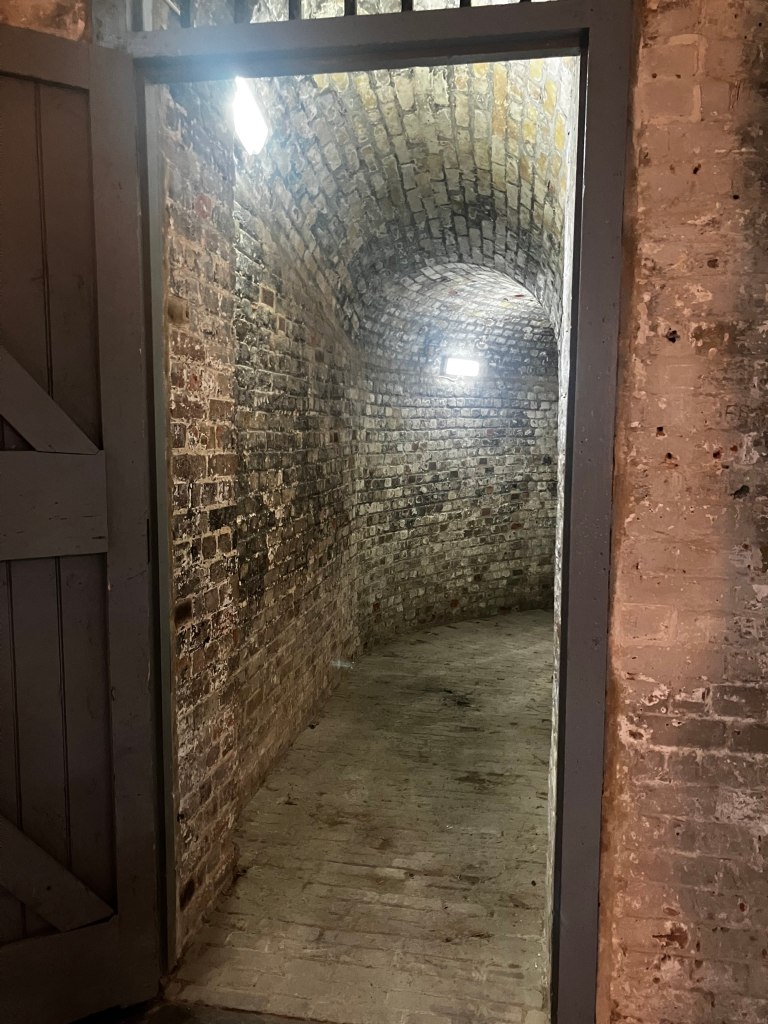
The guide noted the walls of the fort are also dangerous because they were painted with what they call “Scheele’s Green’, a paint made from arsenic, which was everywhere in England for a while, including Buckingham Palace. Brits love their paint. Even just walking around, I’ve noticed multiple places where they seem to think throwing up a sign saying anti-whatever paint will deter some form of public nuisance.
(Also yes, I know those kinds of paint do exist, but they usually require to be applied every year or every other year, which I sincerely doubt. Especially in locations I noted them, because they were neither worth vandalizing nor climbing.)


[Update: While I was halfway through writing this, I suddenly caught a vicious flu and spent a few days in bed recovering. Nothing interesting happened on those days, obviously. I recovered enough that we were able to get the bus to Edinburgh on Friday as planned.]
Friday is the day we leave for Edinburgh. Edinburgh is the city that has Rich’s heart [Editors note: It’s home, it makes me smile and glow and feel a level of comfort I have failed to find anywhere else, I am excited to show Lucy] and where he went to university. Even though I remember the hills and the castle from when I was there as a kid, it’s exciting to see it again through his eyes. We’ll be staying at a hostel and do a bit of a bar crawl as well. We’re getting the overnight bus (hopefully I can sleep better there than on the plane) and staying til Tuesday. It’ll be cold, back to Barrie weather – around 0 and snowing. I got my winter boots fixed, but they have a heel and Edinburgh is very hilly.
 Wanderjahre
Leave a comment