By Lucy
It was still raining when I woke up the next morning.
It occurred to me that I could possibly ask Ethan or Gary for a ride, but then there would be the issue of trying to get home as well.
I mulled it over as I ate breakfast, and decided against it. I would leave more than an hour early, so if I wiped out, I’d have time to recover. No matter how early I was to the train station, I’d just be on my phone anyway.
I packed everything I’d need for the night in my helmet bag. Everything valuable went into my jacket pockets, because I wasn’t going to go out without it. I didn’t bother with the laptop.
As I was waiting for the bike to warm up, Regan pulled into the driveway. “How’s the roads?” I asked him.
“They’re good! Enjoy your trip.”
Well… good for him, or good for a bike? Whatever, it wasn’t changing my mind.
The roads weren’t too bad for the bike. The water drained off the gravel into the ditch at the side. There was some pooling on the paved roads, however.
It took me somewhere around half an hour to 40 minutes to get to the station. It was even more bitterly cold this time. I don’t mind riding in the cold, but usually I’m somewhat sheltered behind the Vagabond. Even for him, his bike has a small windshield and hand guard, which mine lacks entirely. Usually you worry about heat coming off the engine or exhaust, but I was desperate for some warmth to come off the bike as I clamped the ice cold gas tank between my legs on turns.
When I pulled to a stop, I screamed as I wrenched my numb fingers off the handlebars. I discovered my knees were numb and locked into place as well. It was all I could do to lock the bike and fumble the key into my jacket pocket as I stumbled up the stairs to the little shelter. I had half an hour to get through, although it wasn’t that cold now that I wasn’t being subjected to wind and spray. I peeled my gloves off, slowly, then my helmet, unzipped my jacket and stuck my red, almost blistered hands into my armpits. The pins and needles as they came back to life was incredibly painful.
Eventually I thawed out. I shoved as much as I could into my helmet, then put my helmet in the bag and tucked everything else in around it.
The train was about ten minutes late, which didn’t help my general low feeling. Finally it appeared, and pulled to a stop. A smiling woman, dressed like an air plane attendant, stepped out and handed me my ticket. Of course, I was the only person expected on at this station. I found my seat and tucked my helmet bag under it.
There wasn’t much scenery, at first. I’d had to backtrack towards Christchurch for this train, and where I sleep is in the foothills of the mountains, so we had to cross about 20 clicks of plains to get there again. The plains, which are called Canterbury because of course they are, are 200 km north-to-south and 70 kilometers across. Which leaves 100 kilometers of mountains, before about 30 kilometers of slightly level ground between the Alps and the east coast.
I decided a hot drink was in order, so I wandered to the cafe car for an overpriced flat white.
It continued raining for the entire train journey, which sucks for 3 reasons. Firstly, I didn’t have a beautiful blue sky to frame the snow-capped mountains against. Secondly, the mountains are in the clouds, so you couldn’t see some of them. And third, it washed out the teal alpine rivers to a muddy grey again.
The roughly hour-long section between Sheffield and Arthur’s Pass is the most scenic portion of the train ride, so plan bathroom breaks accordingly.
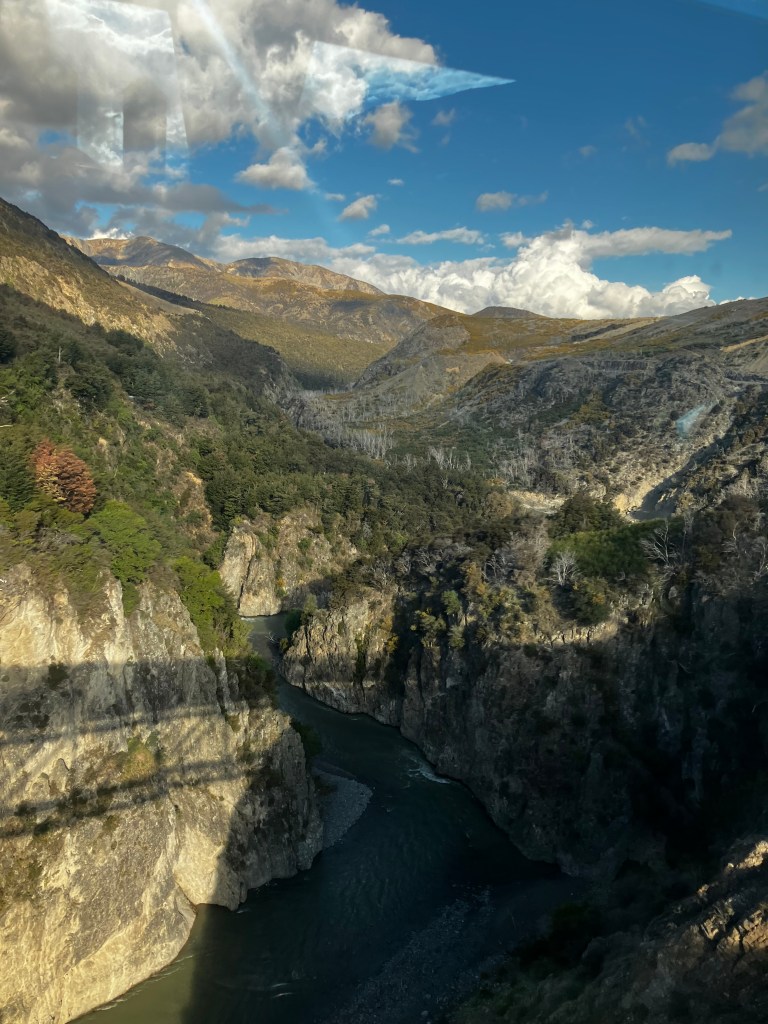
The train follows a track that was, in theory, laid to shuttle coal and gold from the west coast to the east for sale. In parts, it does seem like it was intentionally crafted as a scenic route. As it weaves through the mountains to Arthur’s Pass, it follows the Waimakariri river, through 15 (short) tunnels and 4 viaduct bridges.
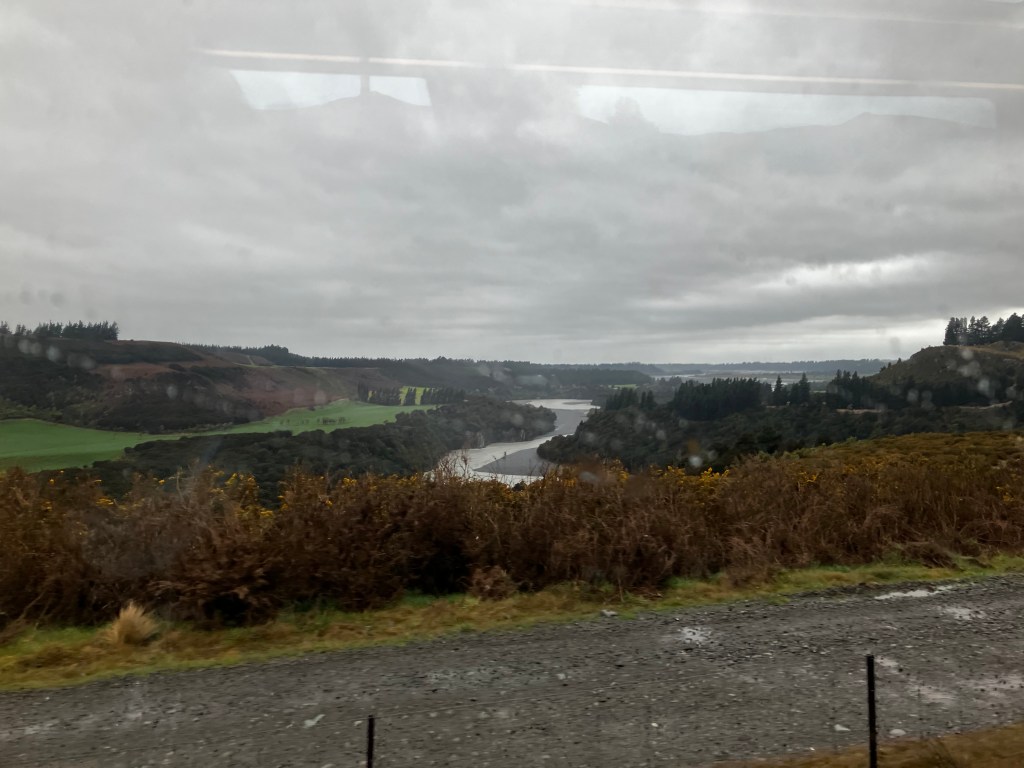
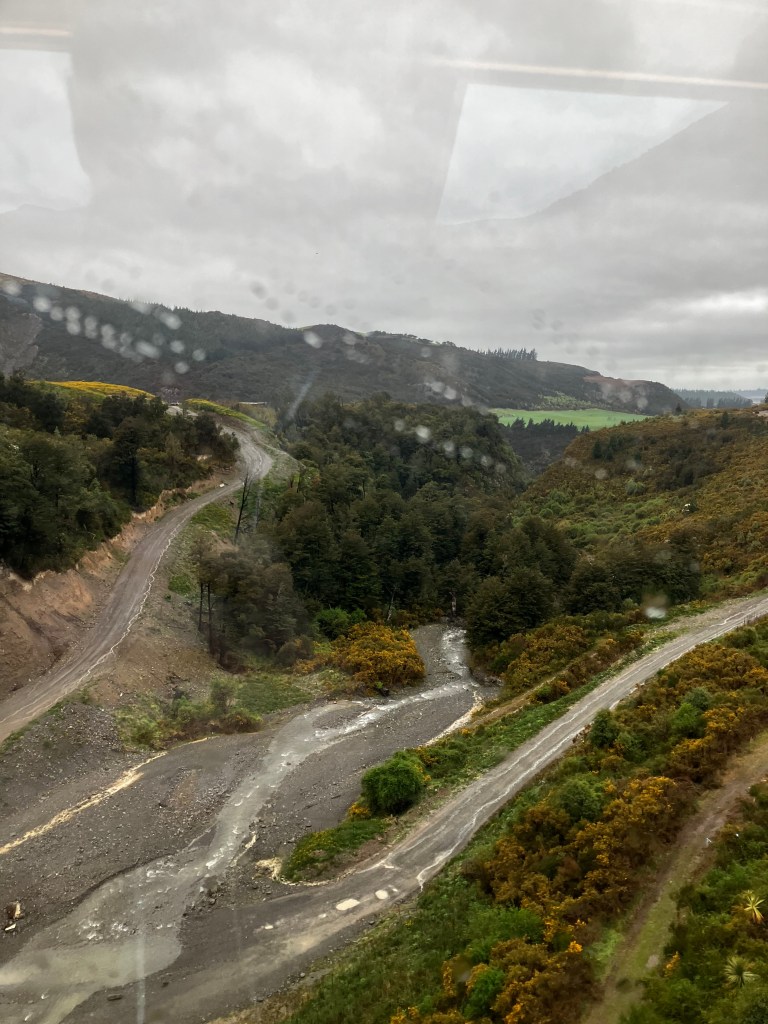
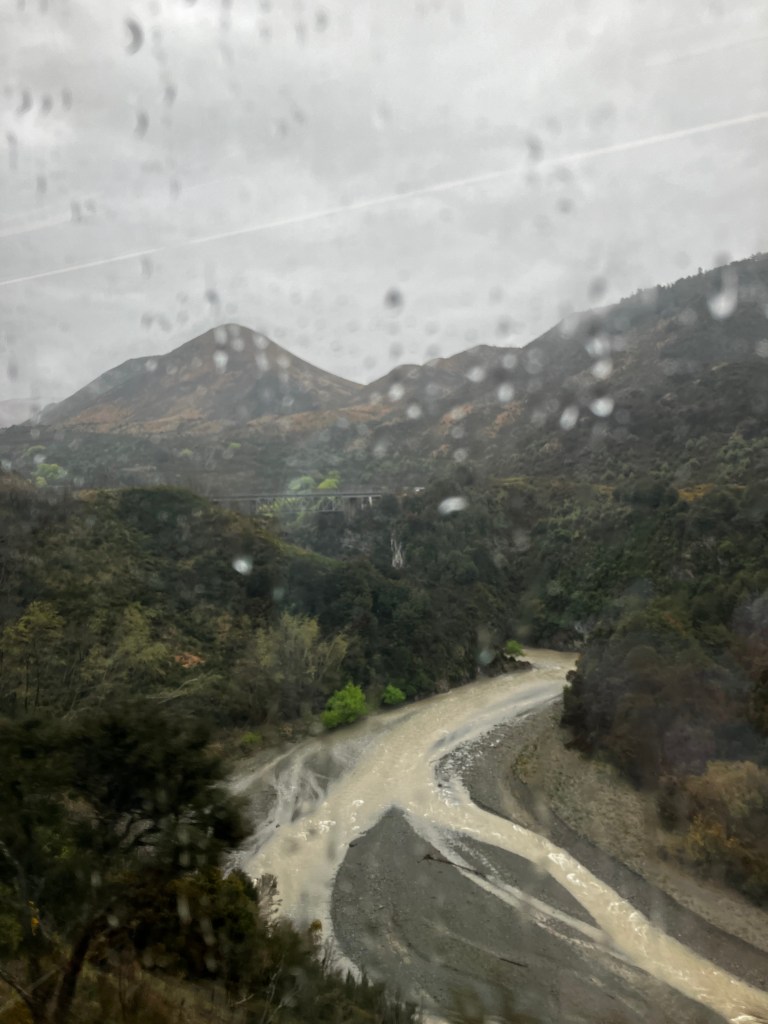
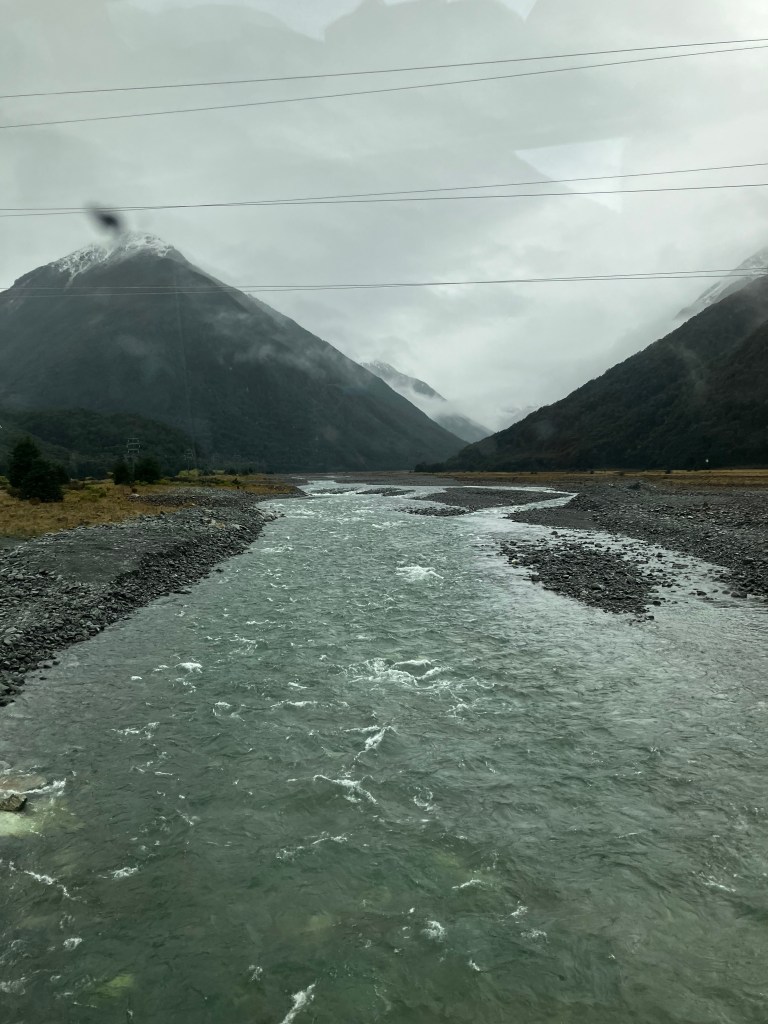
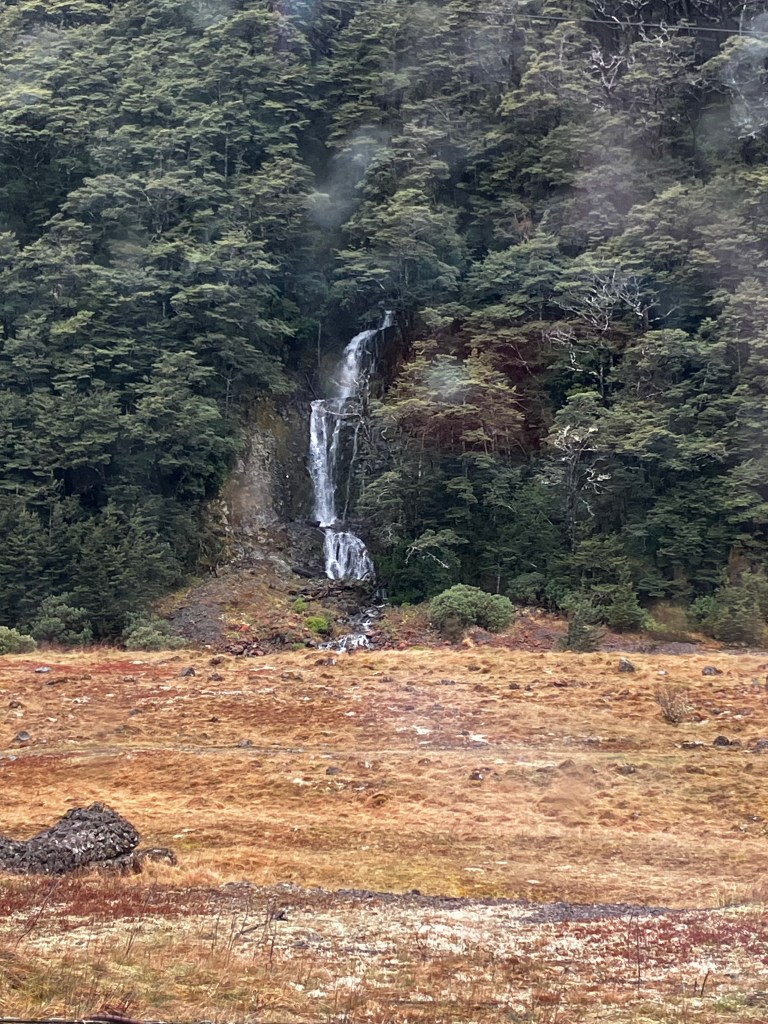
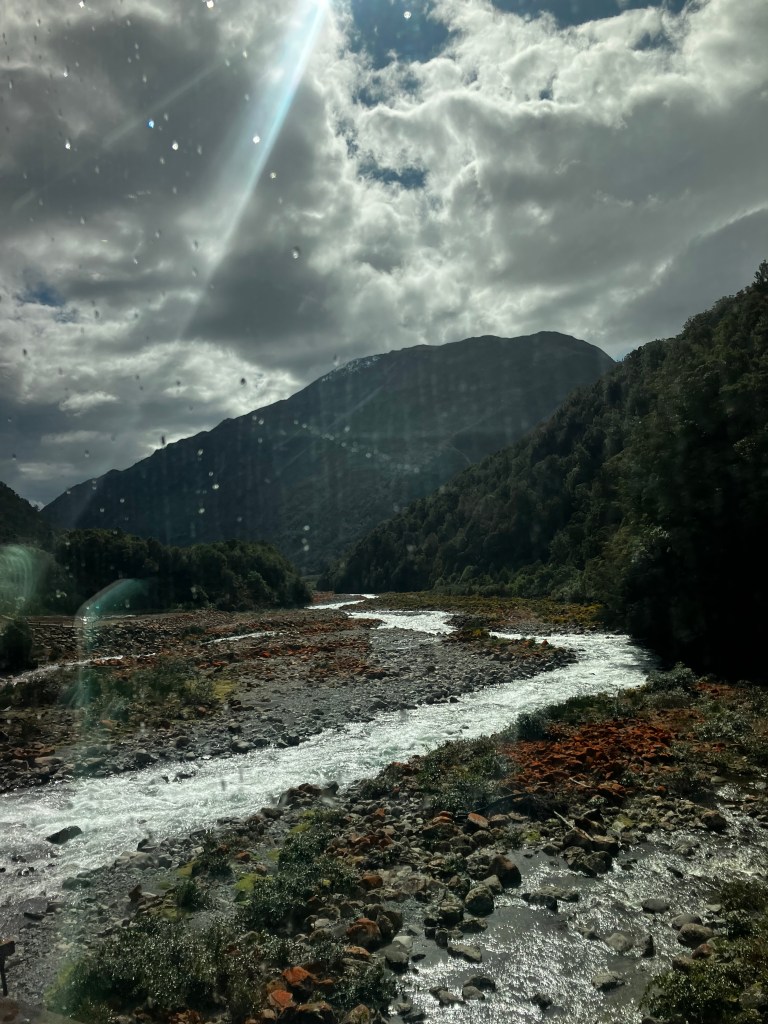
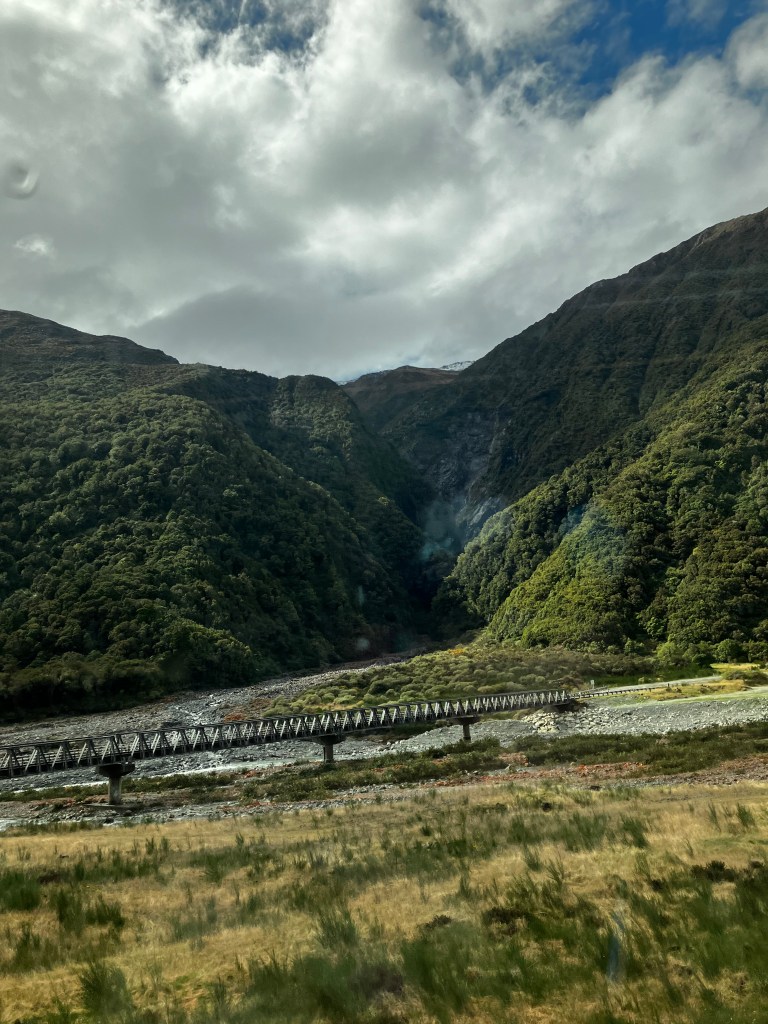
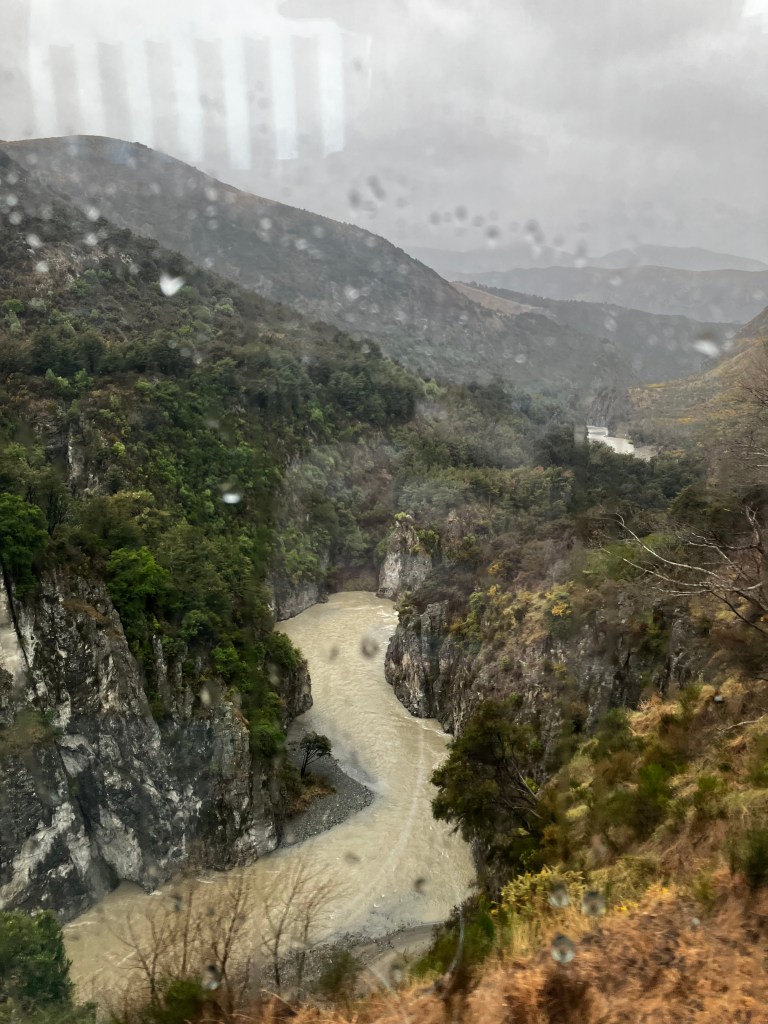
People ran from one side of the train to other for the best pictures and I can’t say I blame them. It was a one of a kind trip, a hundred meters above the river, as the towering peaks above us slowly glided past. When we got to the river gorge, the longest bridge about 45 minutes in, a hush fell over the entire train car as the unparalleled majesty of the southern Alps unfolded before us. A few people managed to wrench themselves, as if awakening from a dream, to snap photos, but most were hypnotized. No IMAX, 3D, VR or James Cameron CGI wizardry could rival that moment. It simply has to be experienced in person.
I was surprised that we started weaving our way through sheep pastures, dotted with small houses. The Craigieburn and Avoca homestead areas seem to run year-round, nestled in the mountains.
It was amusing to see how little New Zealanders are unsettled by minor inconveniences. Whenever a train crossing blocked a car, the occupants were usually smiling and waving at the train. We even passed a construction site where the workers waved at the train with grins on. In Canada or the US, it would be an unacceptable interruption!
Eventually we wound our way to the small village of Arthur’s Pass, one of three ways through the mountains, and the most used. There are lots of little hiking trails around, and I debated if I should make another trip up here with the bike to stay the night sometime. The biggest problem with the scenic train is that you pay the full price no matter where you get on or off, so stopping in Arthur’s Pass overnight will cost you 2 full price tickets, which is dumb.
That said, a fair number of people were getting off the train or embarking again. They also allowed people not disembarking to get off the train, stretch their legs and take pictures with the sign, which I did not bother doing.
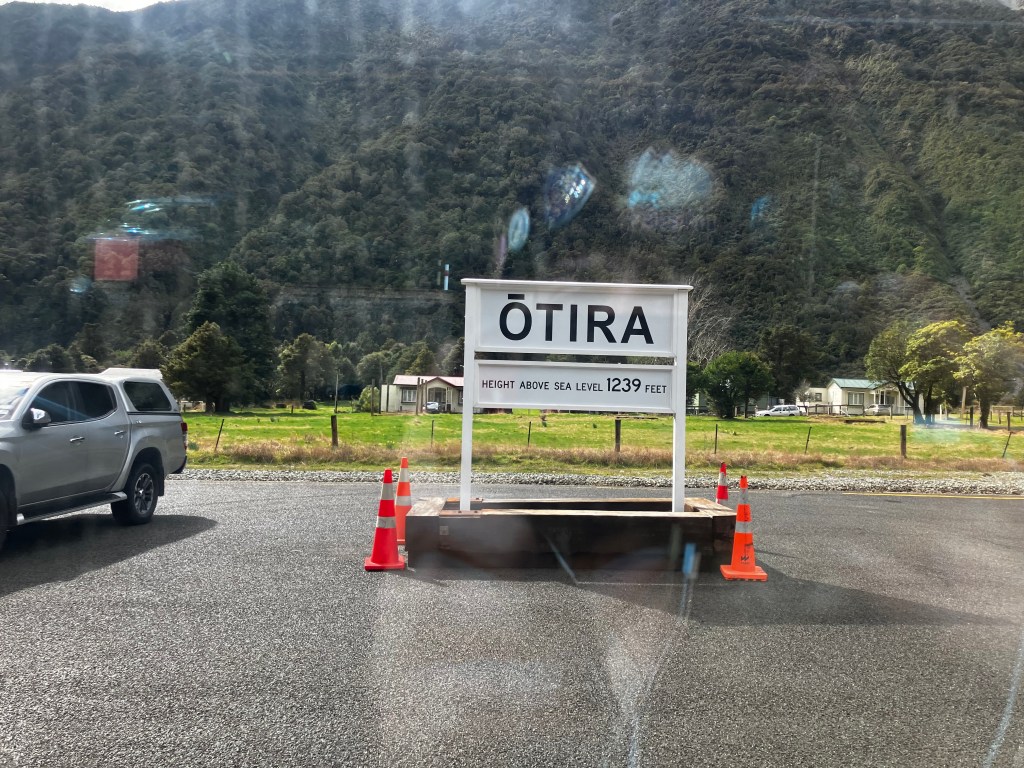
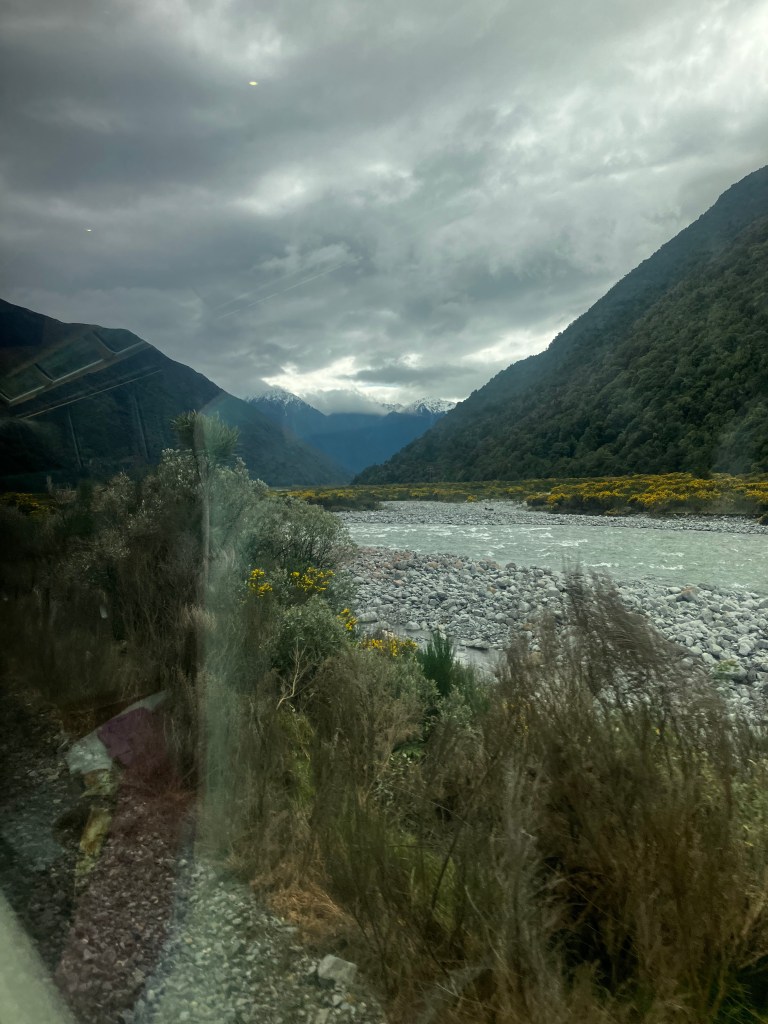
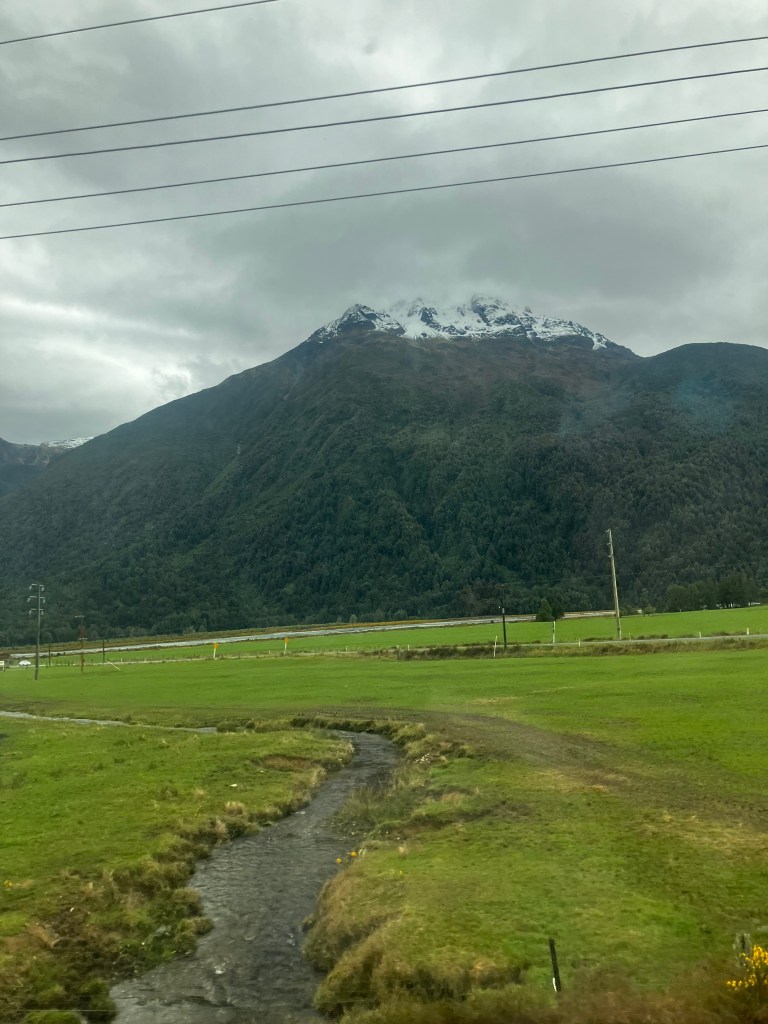
The next section is both impressive and boring. After Arthur’s Pass, the train descends through the Otira tunnel, which has been in use for a hundred years. It is 8.5 kilometers long, but it looses 300 meters in elevation – almost half of what the train gained in the ascent. They used to have a problem with the coal fumes gassing out the engineers, so it was one of the first train systems to be electrified to bypass that issue. Nowadays, they use an elaborate system of doors and fans to vent the tunnel. Nonetheless, it’s such a dramatic angle that they attach extra engines to the train to make sure it brakes properly. They close the cafe and the bathroom and make everyone sit in their seat until you reach Otira and they stop to detach the extra engines.
That being said, as dramatic and impressive a feat it is, as a passenger it is dead boring. Train tunnel walls are not interesting to look at. The free train Wi-Fi dies in the tunnel (naturally) so make sure you’ve got 15 minutes of content lined up.
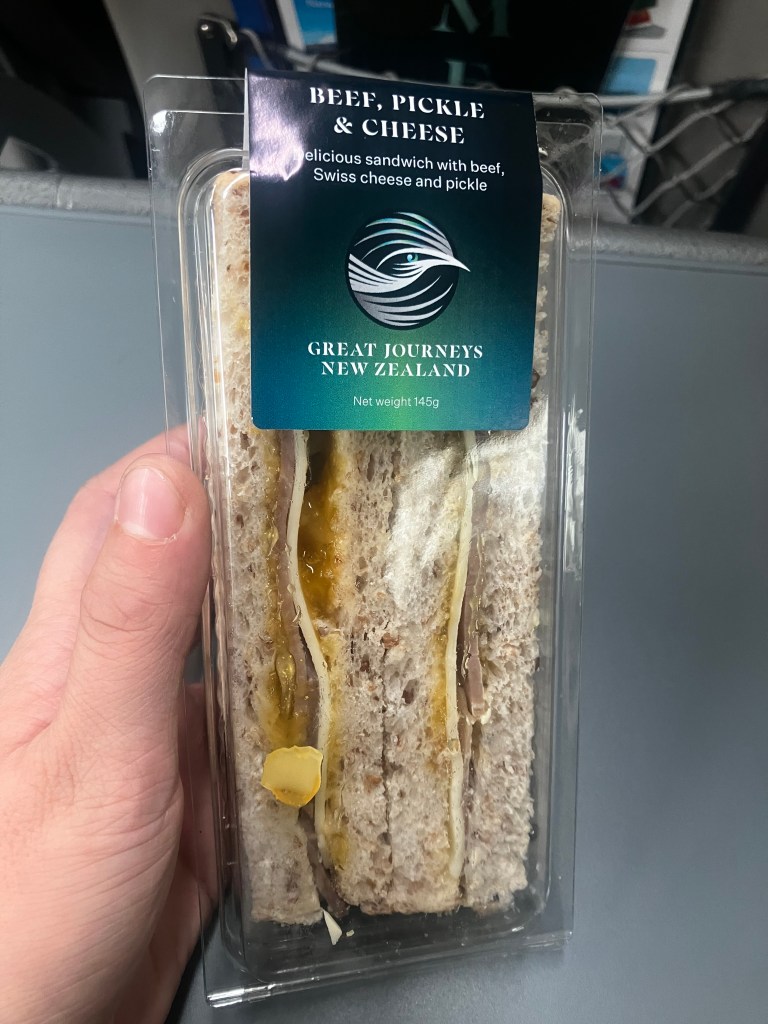
Once they reopened the cafe, I went to grab lunch. In hindsight, I should have packed a couple sandwiches before I headed out, but that’s hindsight for you. I ended up overpaying for a beef, pickle and cheese sandwich at the cafe, which was good but had just a single thin slice of beef and cheese.
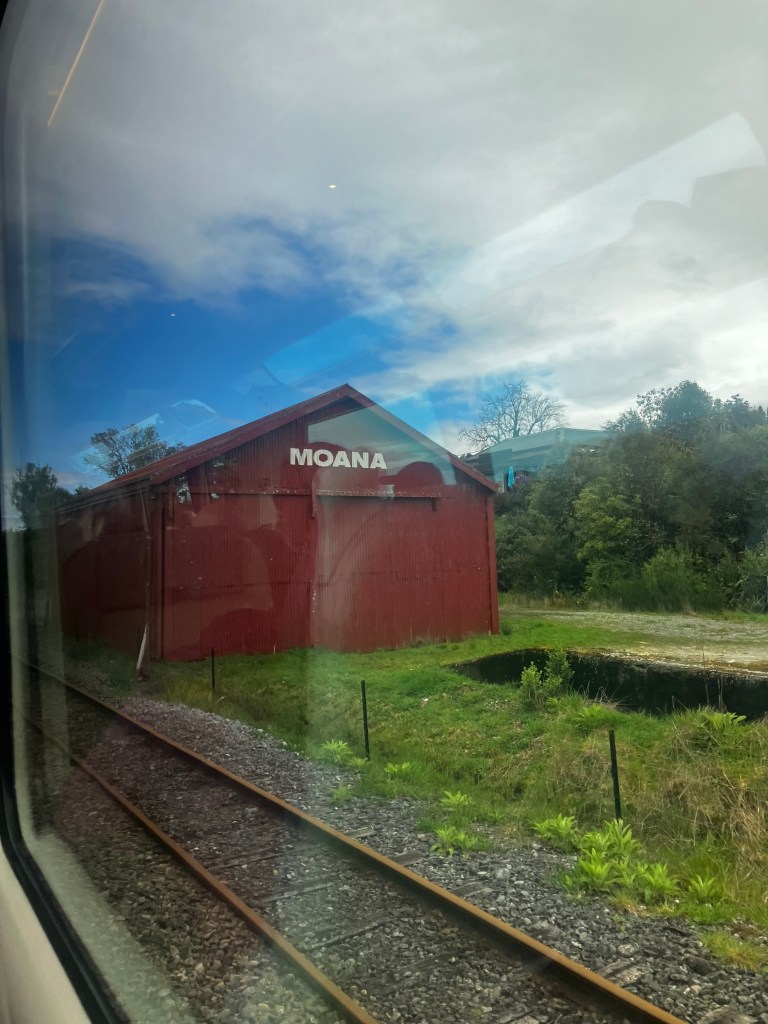
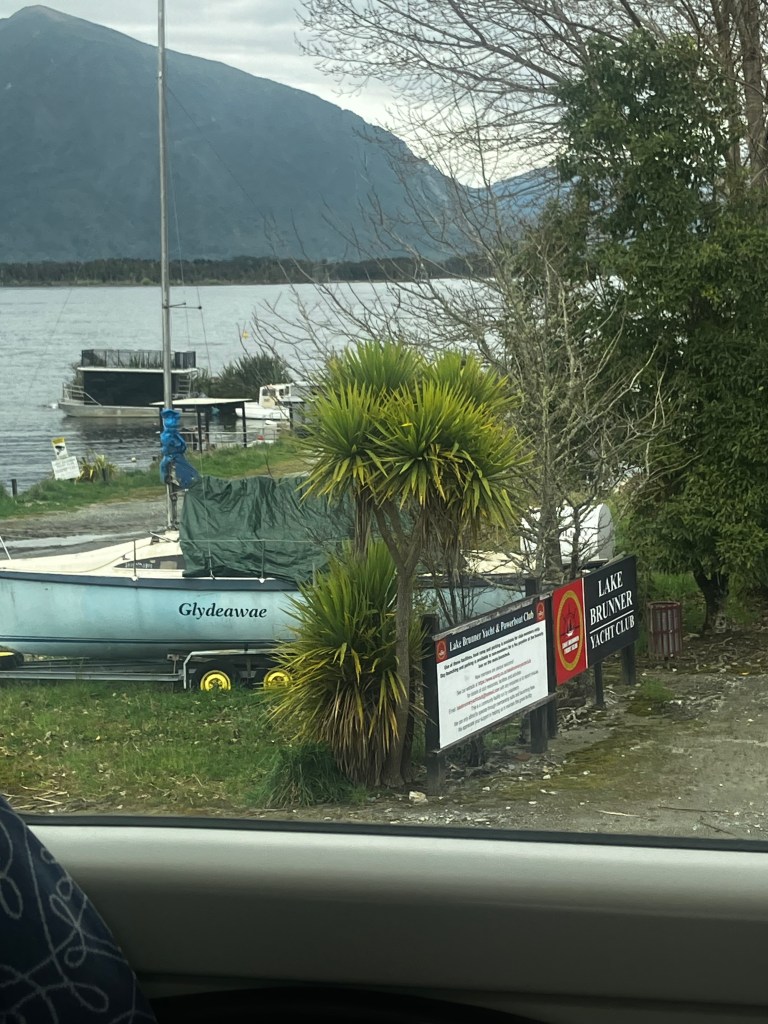
The mountains were smaller and less impressive here. The scenic portion was over, although the scenery was still pretty. We stopped at a small town called Moana, on the shores of Lake Brenner, which of course I had to fangirl over. Lake Brenner is apparently a large enough lake to have a yacht club, which I immediately took pictures of and sent to the sailing group. The area still has an active coal mine, so the scenic trains have to “pull over” and let the coal trains pass.
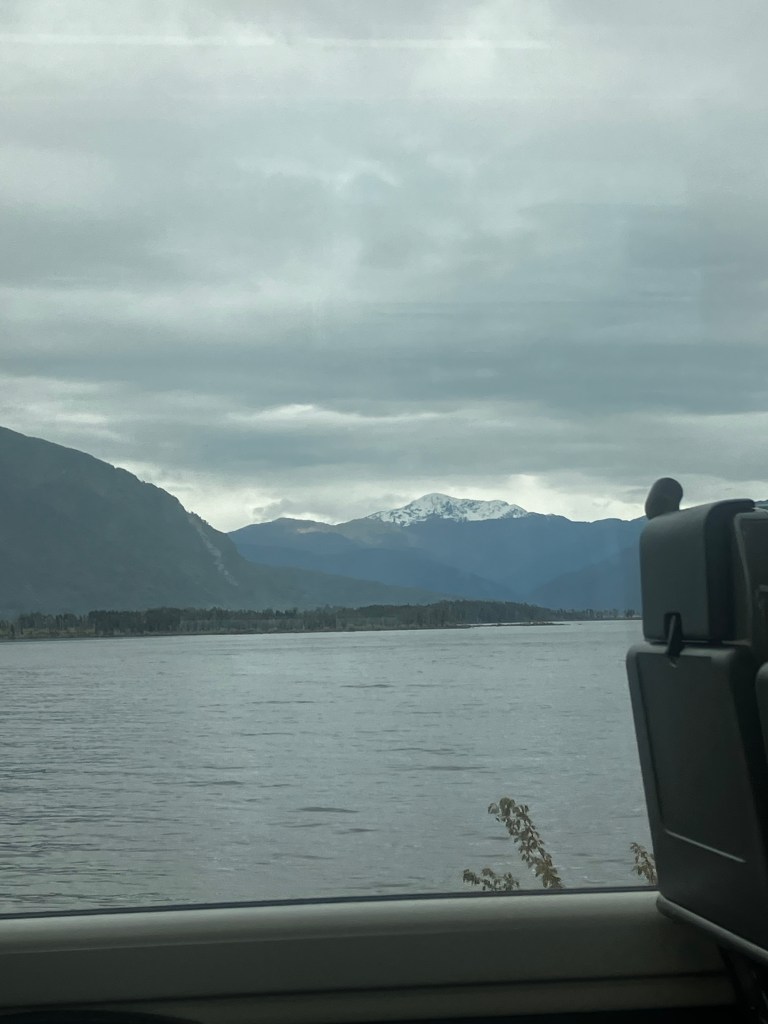
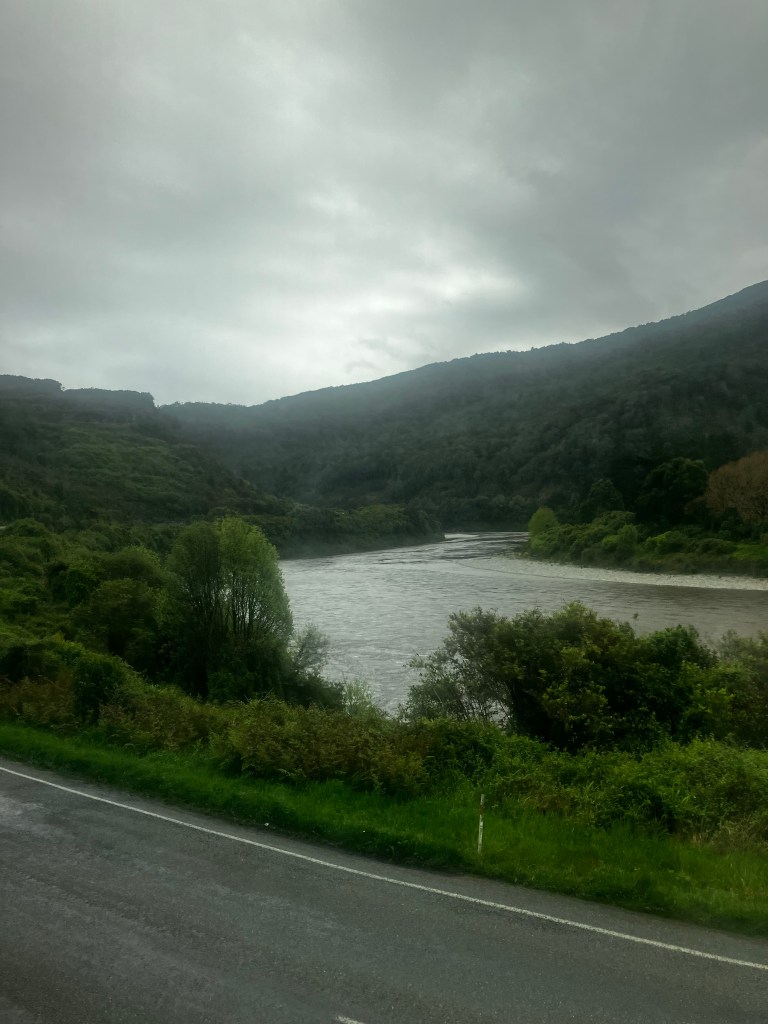
The rivers on this side were swollen and spreading beyond their banks, although it looked like a lot of the space they were occupying was a yearly floodplain.
Between Greymouth and Moana is a small town called “Kokiri”, which is a name from Legend of Zelda! I missed taking pictures of the sign, unfortunately.
Then finally we pulled into Greymouth, which is the English translation of the Maori name, Mawhera. It is the mouth of where the Mawheranui river (now renamed “Grey” river after some old white guy who thinks he’s a big deal) empties into the sea, in a gap in the mountains.
The hostel where I was staying is a short walk from the train station, although it does seem like half the town is hostels. I checked in and asked the guy at the front desk how to get to locations outside of town. I had two places I couldn’t walk to; Shantytown, and the dell for the glow worms. He suggested hitchhiking.
Hitchhiking to Shantytown… sure. But the glow worms wouldn’t be out and glowing until well after dark, and I was leery about trying to hitchhike in the dark.
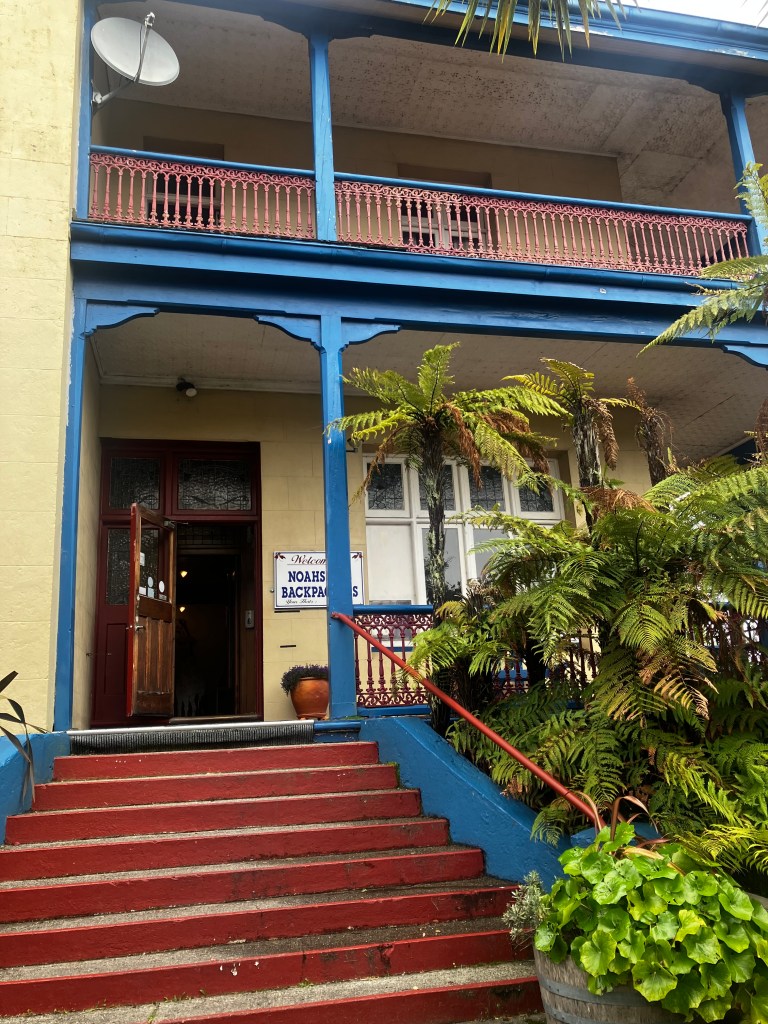
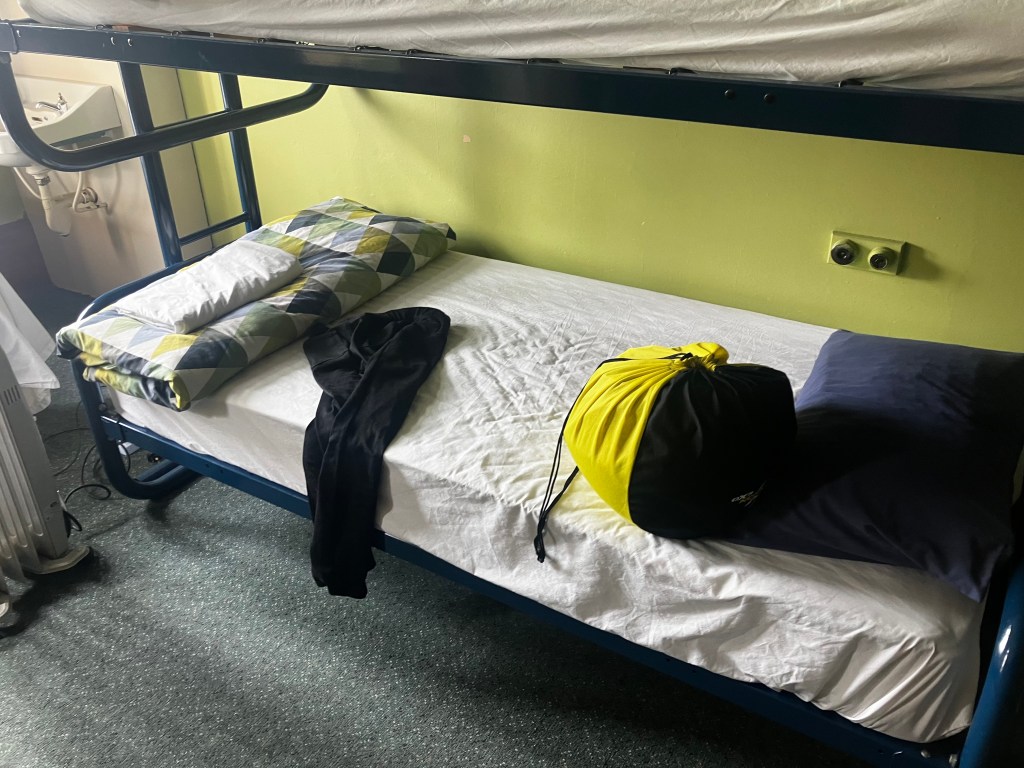
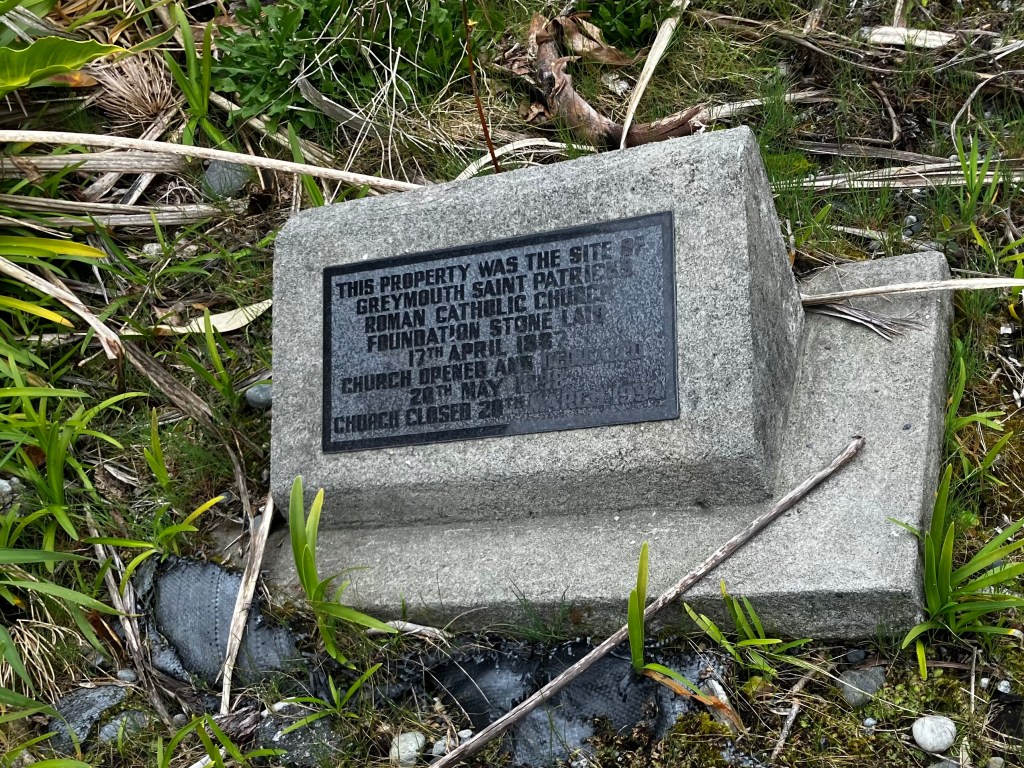
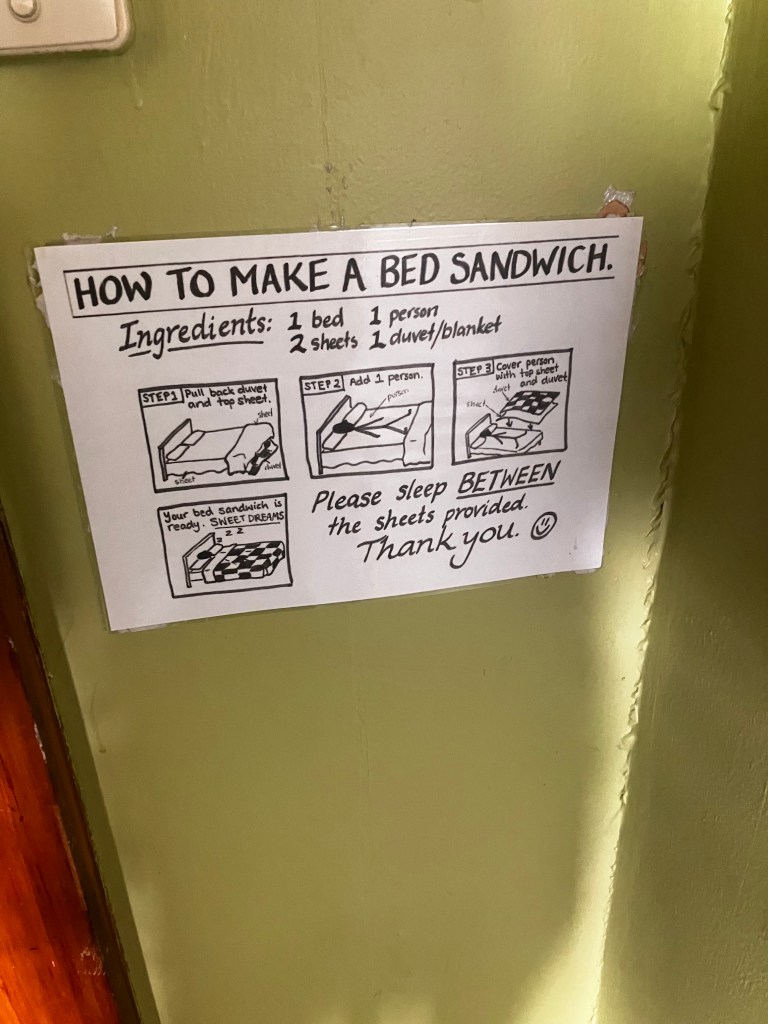
I picked the 5 bed female dorm, which meant there was a single bed that wasn’t a bunk. It was claimed by a young French woman named Jen, who seemed excited to have a roommate and started asking what my plans were. I didn’t really have plans, however. Shantytown closes at 4, so I didn’t want to stress out about trying to rush there and decided just to go the next day. She went down to the kitchen to cook and I walked across the road to KFC to grab a snack box, because the piddly little sandwich hadn’t filled me up.
When I walked back to the hostel to see if she was done lunch and wanted to hang out, she didn’t seem thrilled by the concept. Maybe I had misunderstood earlier?
I left the hostel and started back towards the train station. I had passed a giant, elaborate building that said “Pounamu Pathway” and it seemed like a good place to start exploring!
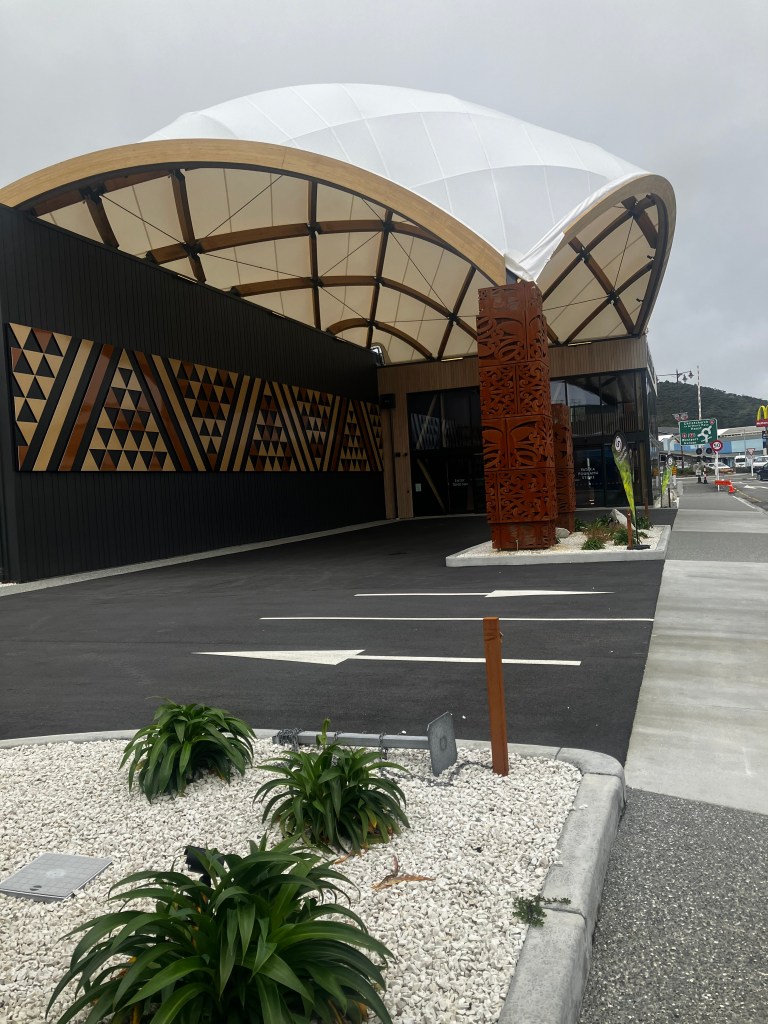
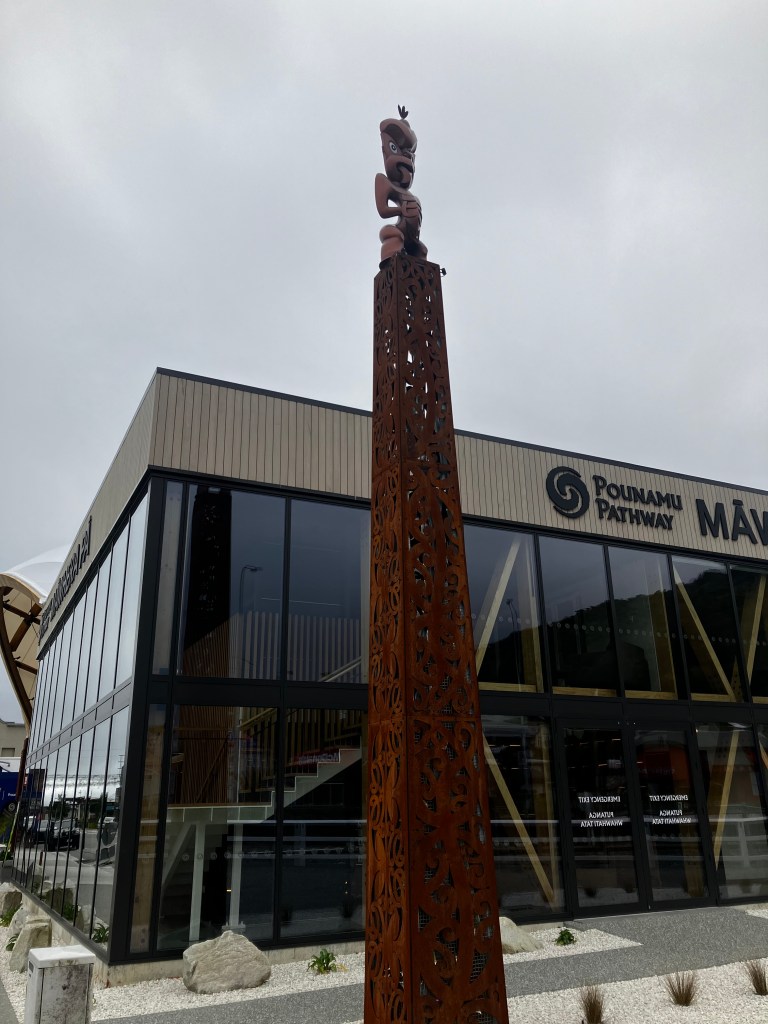
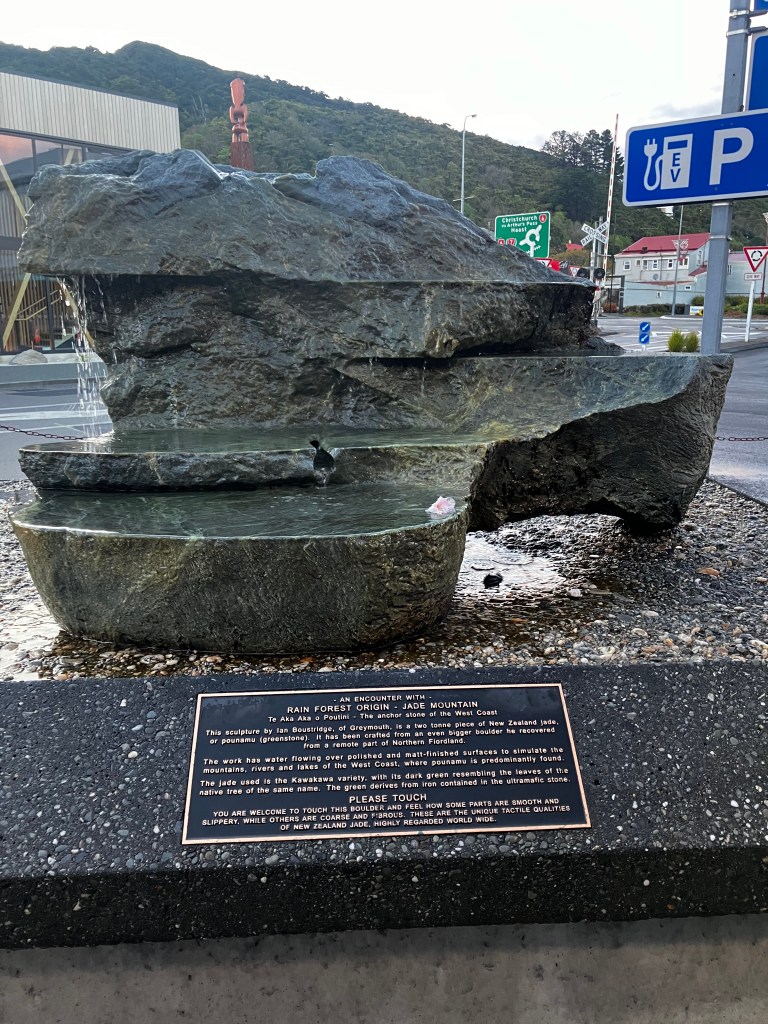
The clerk seemed slightly confused by my existence, but then that seems to be a standard reaction to my appearance. Once I paid for my ticket, she showed me inside the exhibit, which seemed odd.
We entered through a hallway dramatically lit by shifting blue lights, as if to mimic being under the sea. We exited the hallway into a large space with several smaller rooms inside it. It was similarly lit, except with gold and red light, as if we were in a volcano or fire.
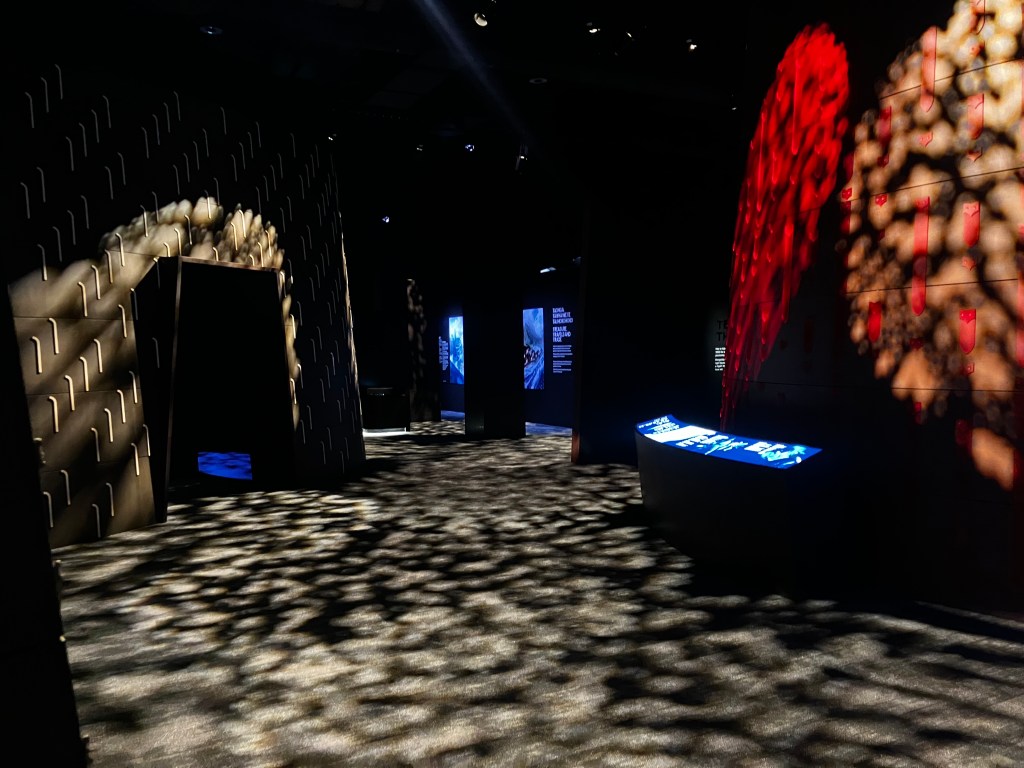
“This room and this room- ” She gestured. “The audio loops. One starts right after the other. So just go to the first room and look around, and when it’s about to start again I will come and get you.”
I nodded, feeling very lost. I wasn’t sure what to expect, but definitely not this “interactive experience” place. I wandered over to the first room and read the plaques there.
For the people at the back; Maori myth tells that the south island, where I am, was formed when Aoraki and his brothers (who were giants) were sailing around and their canoe (waka) ran agound. They climbed to the prow as it was highest out of the water, and froze there; the canoe became the south island, and the brothers became the southern Alps. (This story I knew already)
Tu-te-raki-whanoa, Aoraki’s grandson, went looking for them. When he realized they were the south island, he wept, and his tears became the rivers flowing down the mountains to the sea.
He was also a giant. He created the place that would be Mawhera when he noticed a spot behind the mountain where the water had pooled. He pried the mountain range apart to let the water through, and this created the Mawheranui river.
I thought that was cool! Some real Maori legends!
Back to pounamu!
Tangaroa is the Maori deity of the sea. He has a child named Poutini (and no, the fact that multiple buildings in the town are named “Poutini” as a consequences did not escape me or fail to make me laugh). Since him and all his kin are “pounamu”, the precious greenstone native to New Zealand is considered the essence of the sea.
Geologically speaking, pounamu is a unique form of jadeite. Jadeite is made in lava – pounamu is made because the Australian plate and the Pacific plate are still actively moving, which means the southern Alps are actually still growing as you read this! The geodes then grind their way up the fault line, into the alpine springs, then streams, then down to the ocean until wear cracks them open, making it look like they came from the sea.
But of course, once I clued in that this was about a magical green rock connected to the ocean, it clicked. The heart of Te Fiti is a pounamu! I’d found it! Happy dance
I wandered back out to the middle room until the clerk came to get me.
The next room was a 12 minute audio story, although the stone in the centre is bathed with coloured lights for flair, and the panels on the side of the room also light up as the relevant part of the story is told. It was quite intense – I’d be nervous about bringing small kids in there. One part of the story explicitly includes someone cutting heads off and carrying them home by gripping the hair in his mouth (the Māori believe the head is the most sacred part of the body, which is why they tattoo it a lot. It also means that heads make great war trophies).
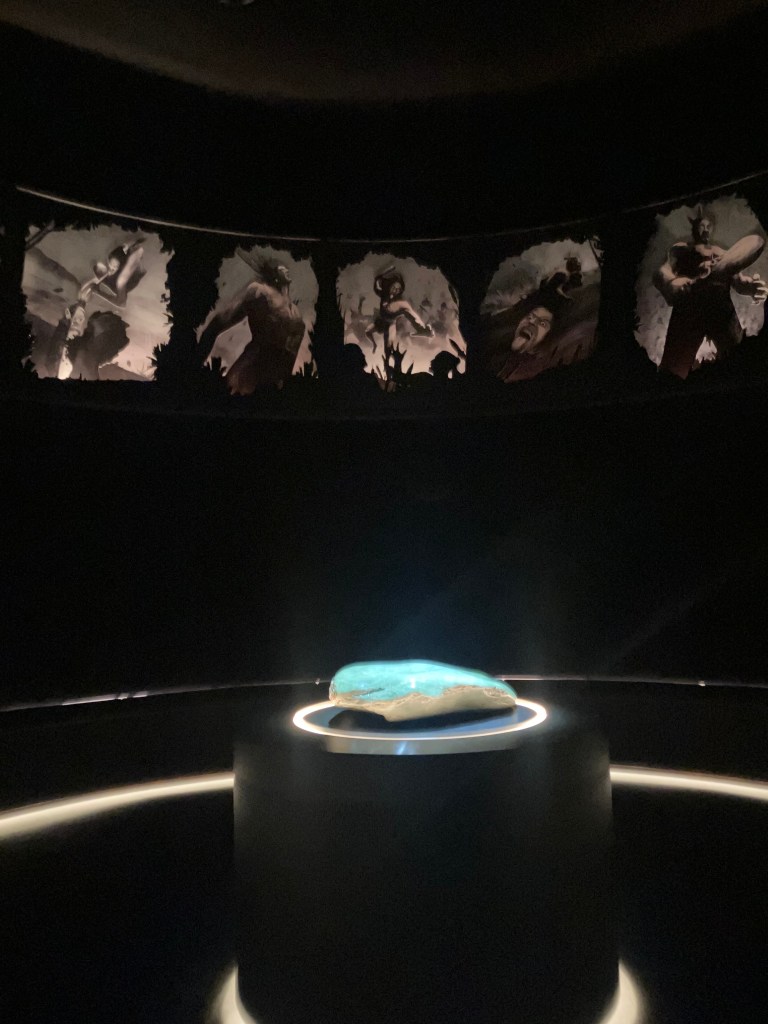
The story gets slightly disjointed here, so I’ll simplify it for you. Basically, a tribe called Ngati Wairangi settled Mawhera and controlled the pounamu trade, since only they knew where it was and how to get through the mountains. A woman named Raureka fought with her family, gathered her belongings and went into the mountains for a couple of years. Eventually she came across a Ngai Tahu party and showed them the path through the mountain (for whatever reason, implied willingly). This lead to a series of bloody battles, which the Ngai Tahu ultimately won and seized control of the pounamu supply, which continued until the white man showed up.
Room 2 is about the bloody battles. Room 4 is about Raureka.
The room ponders about how the course of history might have been different if Raureka hadn’t shown the other tribe how to get through the mountains. It’s classic “We’ll never know”. Maybe the tribe would have found a way without her. Maybe not. Certainly it all would have come to an end when the white man showed up anyway, but it’s interesting how one family’s fight and one woman’s choice changed the balance of power.
“Te kopa iti o Raureka”
“The small purse of Raureka”
Means that thought something is small, it can have massive and lasting impacts.
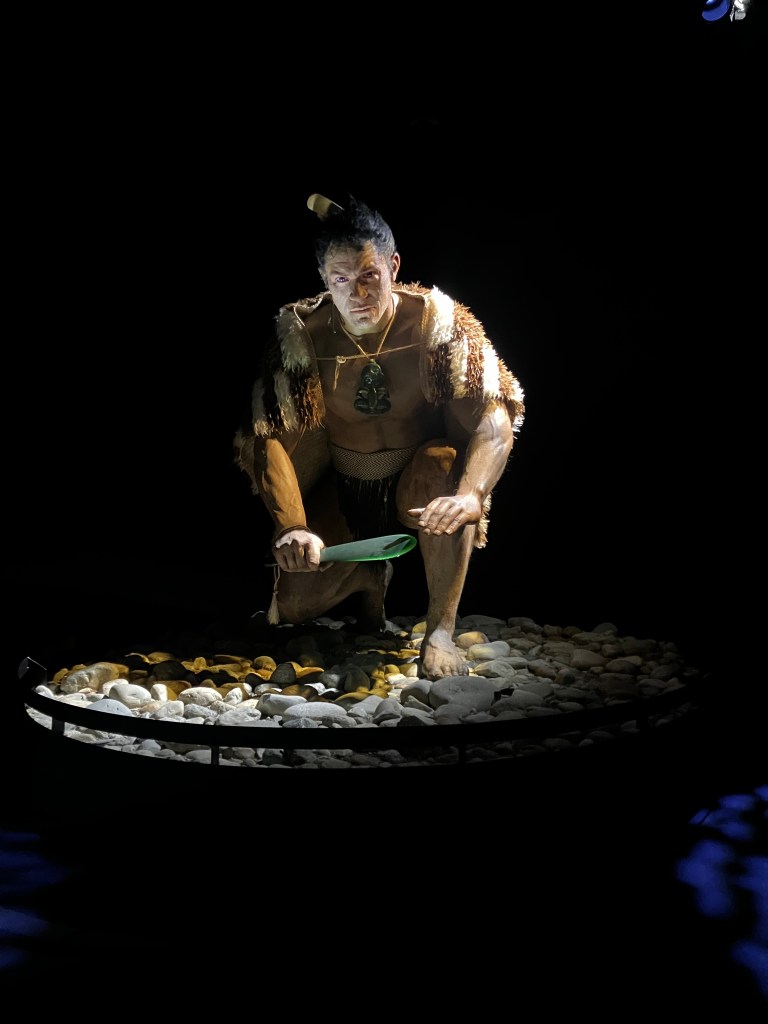
The third room is about a great leader of the combined tribes, Tuhuru, and his co-leaders, his wife Papakura, and his sister Moroiti. The room is dominated by a MASSIVE wax figurer that depicts Tuhuru in painstaking detail. It was quite startling to come around the corner and be suddenly face to face with a giant who looks very alive!
The room also takes pains to make sure you understand that women were and can be warriors in Maori society. As a sidebar, the Maori are also a culture with a documented history of transgender people, for all the Republicans reading this who insist gender fluidity is a recent invention of the left.
The fifth room is the crying room. The white people show up.
In 1846, Thomas Brenner was asking around the south island for a source of coal. The people of Poutini showed him the coal seams they found, and 20 years later Greymouth was born. A town of white people and a source of coal for the new land.
After tricking and coercing the Moari into “selling” the land to the town, in 1872 there was a great flood that took out a good chunk of Greymouth. The white people decided to make a great wall to keep the sea out, so they took the stone from the cave that the Maori bury their people in. Yes, they literally blew up a Maori cemetery to build their stupid wall for their stupid town.
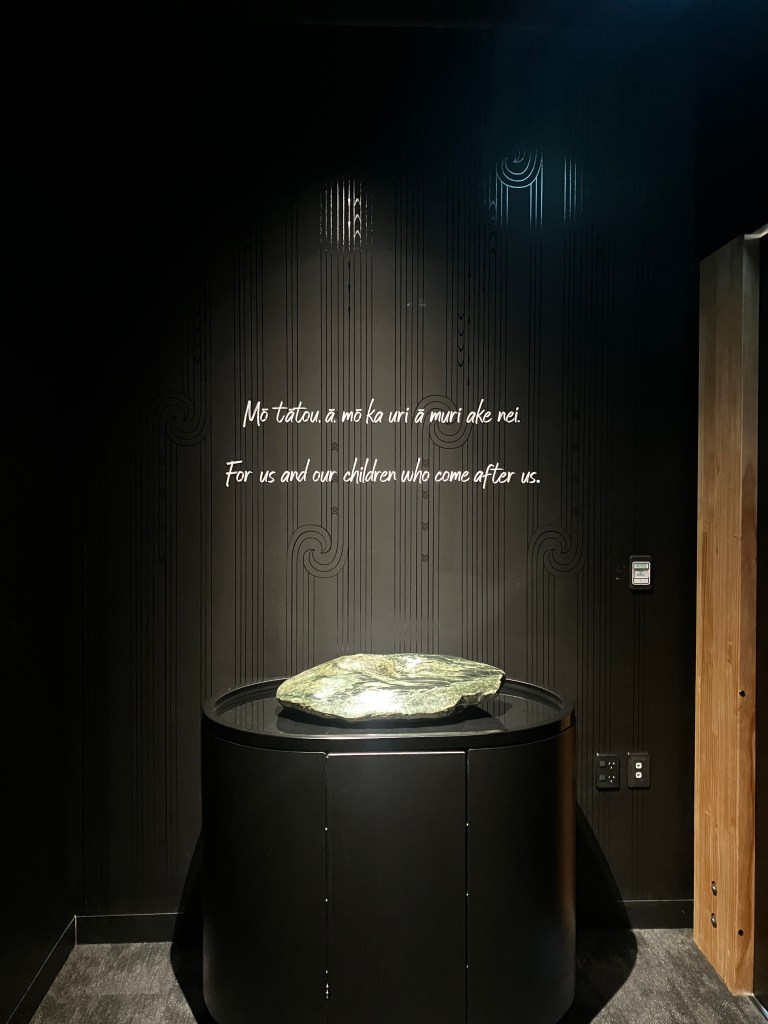
It’s devastating. Barely more 150 years ago… this was a pristine paradise, untouched by greedy white people. Now this town stands as a testament to everything wrong with capitalism; the coal mine dried up, the town has been gutted and is basically just a tourist destination with some fishing boats. They literally blew up a cemetery to build a wall to protect a town that was a bust less than 40 years later. What an absolutely heartrending waste of… everything. Just everything.
I stood around, not crying but just shocked and ashamed, for a while. Eventually I gathered myself enough to leave the exhibit and enter the store section.
I had already decided I want a pounamu before I left. They had some more intricate carved pieces for 200$, and a single display stand of smaller pieces for 50. Most were just squares and triangles, but as I hunted around the display for something that really spoke to me, I found it. Nested behind another piece, carved like a wave. It was the only one that wasn’t a simple shape, and I wondered if it had been mislabeled. But it grabbed me. The heart of Te Fiti!
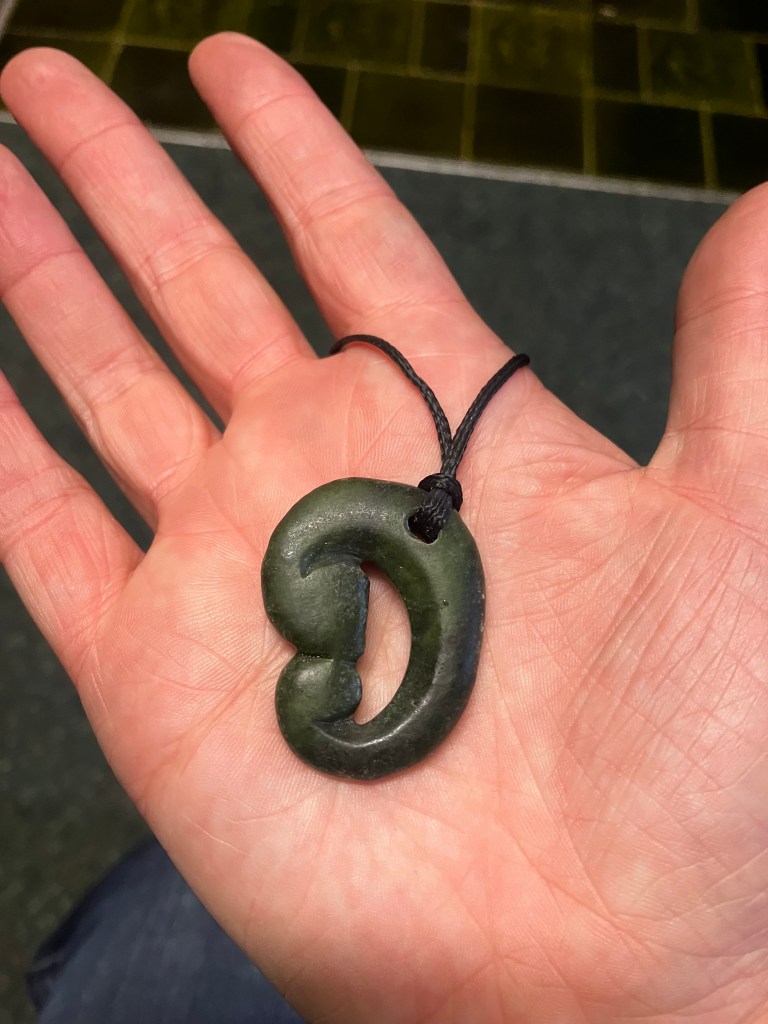
This was the real prize. Some Maori spent hours combing the beach for the geode that held this, shaped it by hand, and sent it here for me to find. I could feel the care and effort in every piece.
The clerk said nothing about the price as she rang me up. I got the feeling she was thrilled to have me in the store. We chatted for a bit and she advised me to try a place called Blanchie’s for breakfast. She also advised me to register my piece of pounamu online – every piece of jadeite from New Zealand comes with a registration code, so if you buy something that says “product of New Zealand” without one, it’s a lie!
I continued down the road to the art gallery, which was a small local affair. You can go in for free. It’s not much to look at, but it’s a way to kill a bit of time.
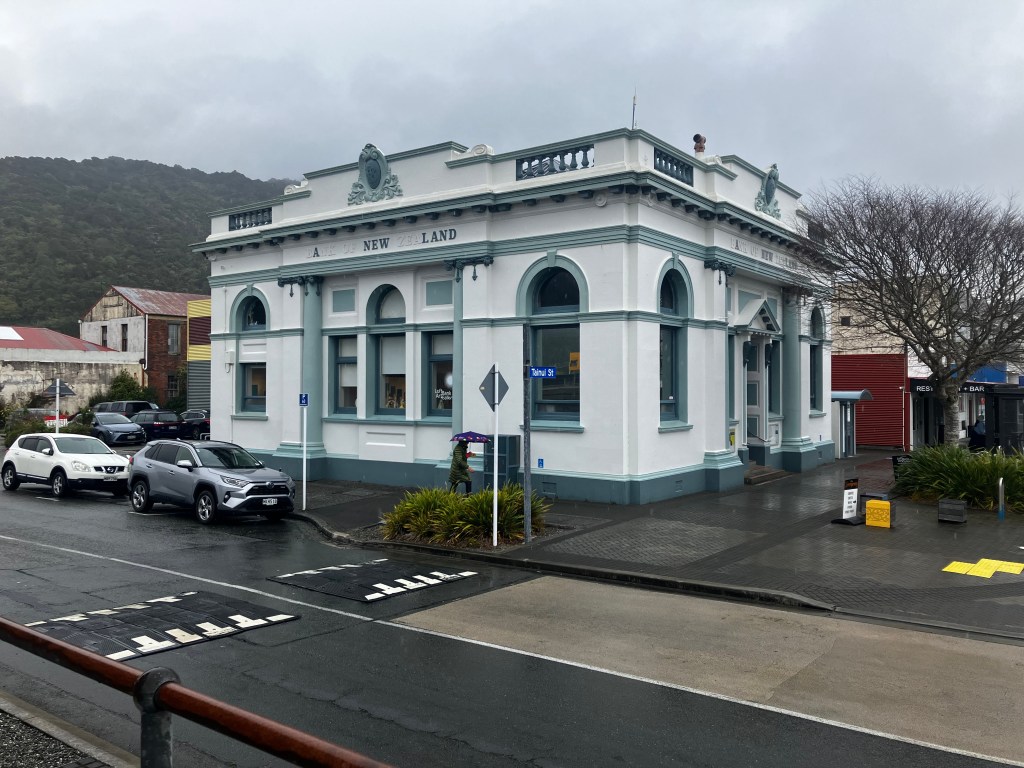
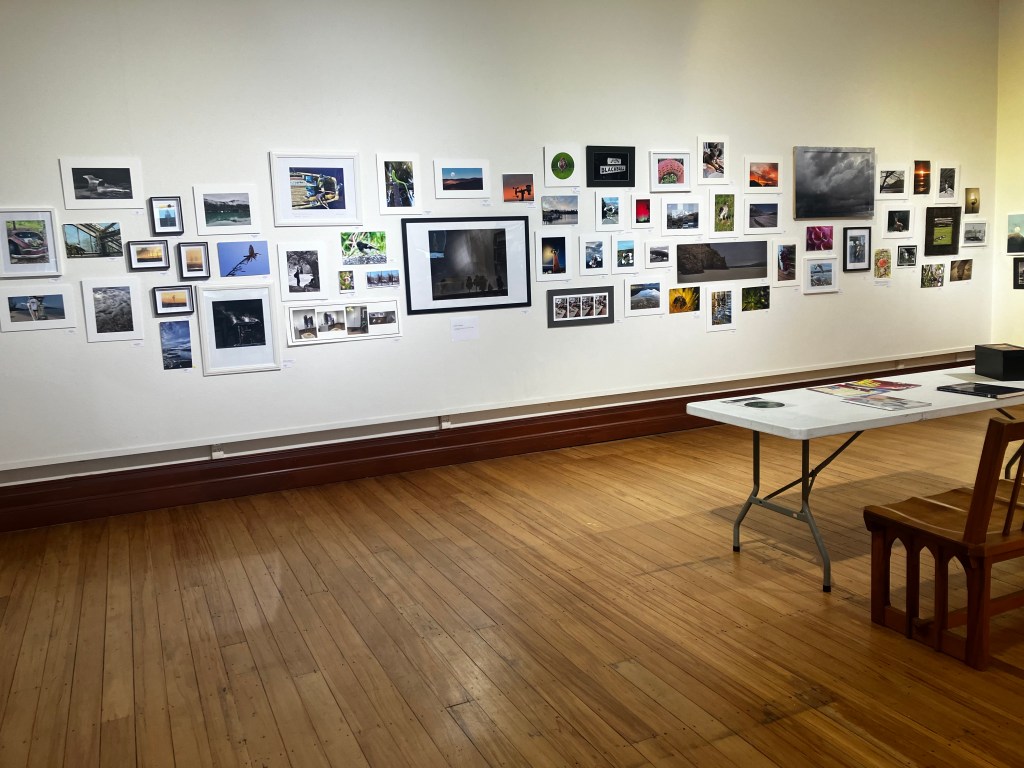
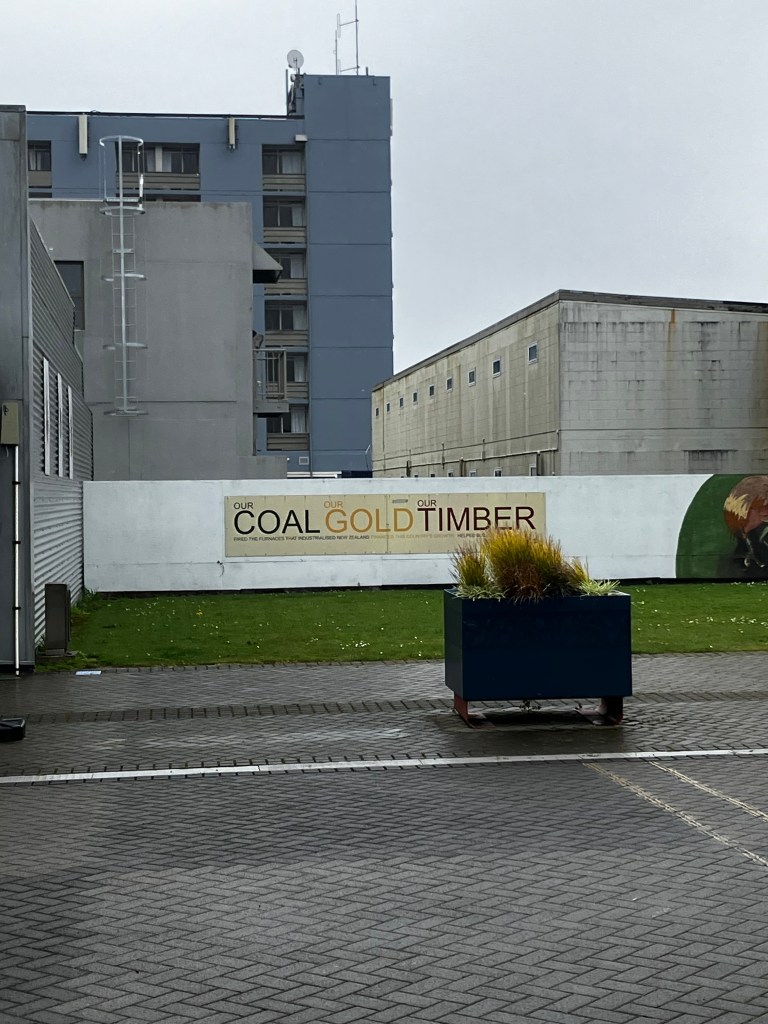
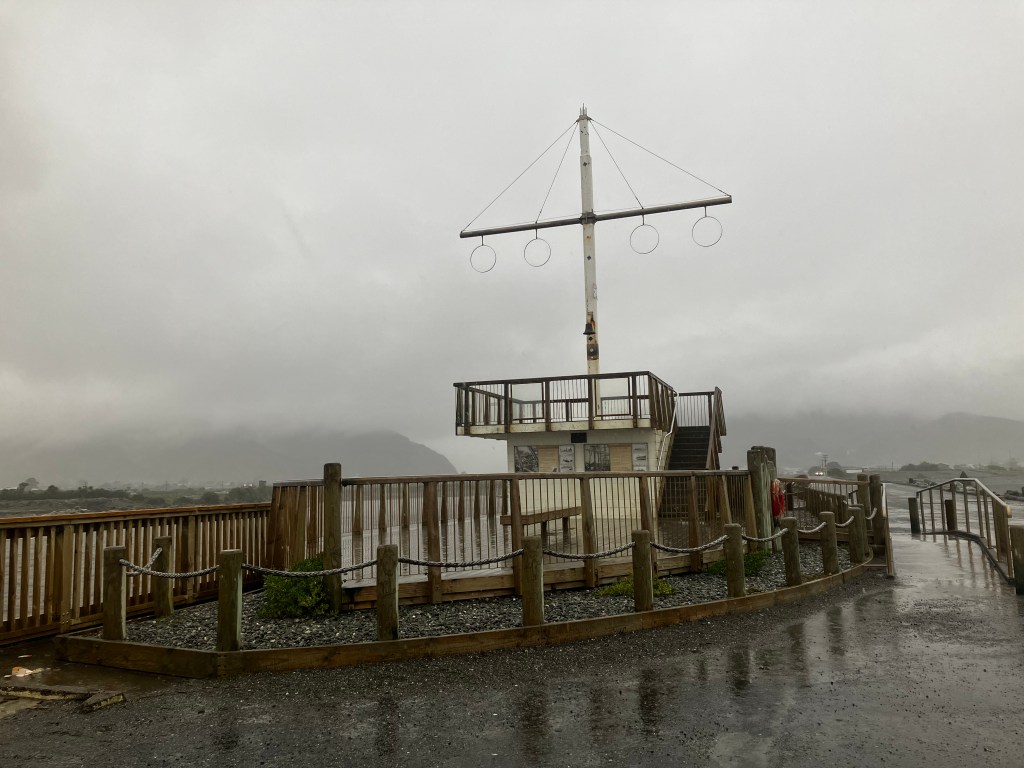
The gallery is right next to the breakwall for the river, so I decided to walk down to the sea. Which was a slight mistake – it’s about an hour walk to the coast, because there is a lagoon/ natural harbour that you have to detour around. Fishing is a secondary industry here, they catch tuna, hake, groper, sole, cod, snapper, herring, crayfish and more! There were signs along the boardwalk with bits of information about the town. Like that the wind that picks up at night is called a katabatic wind, which often shrouds the town in the sort of fog that would inspire Stephen King.
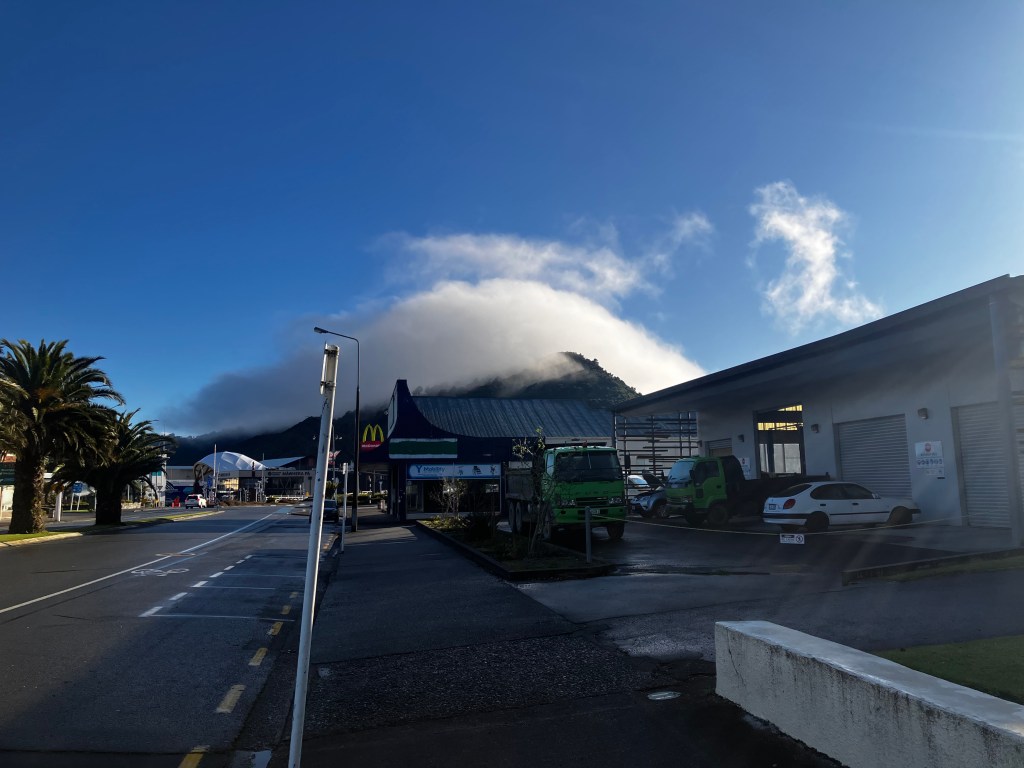
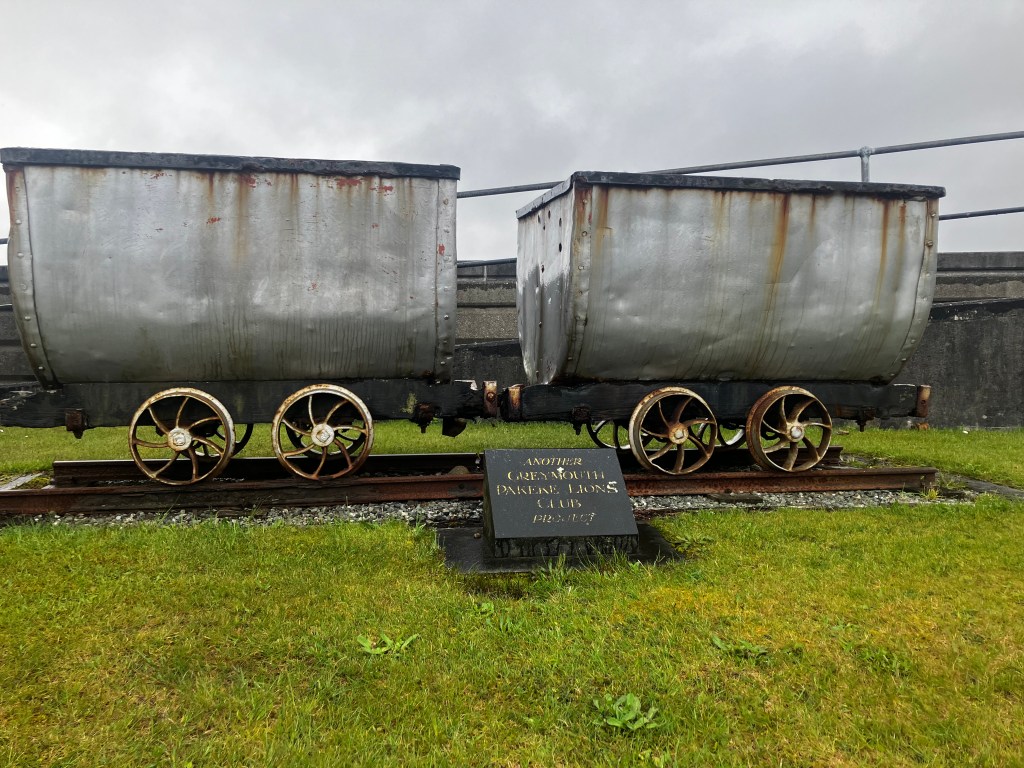
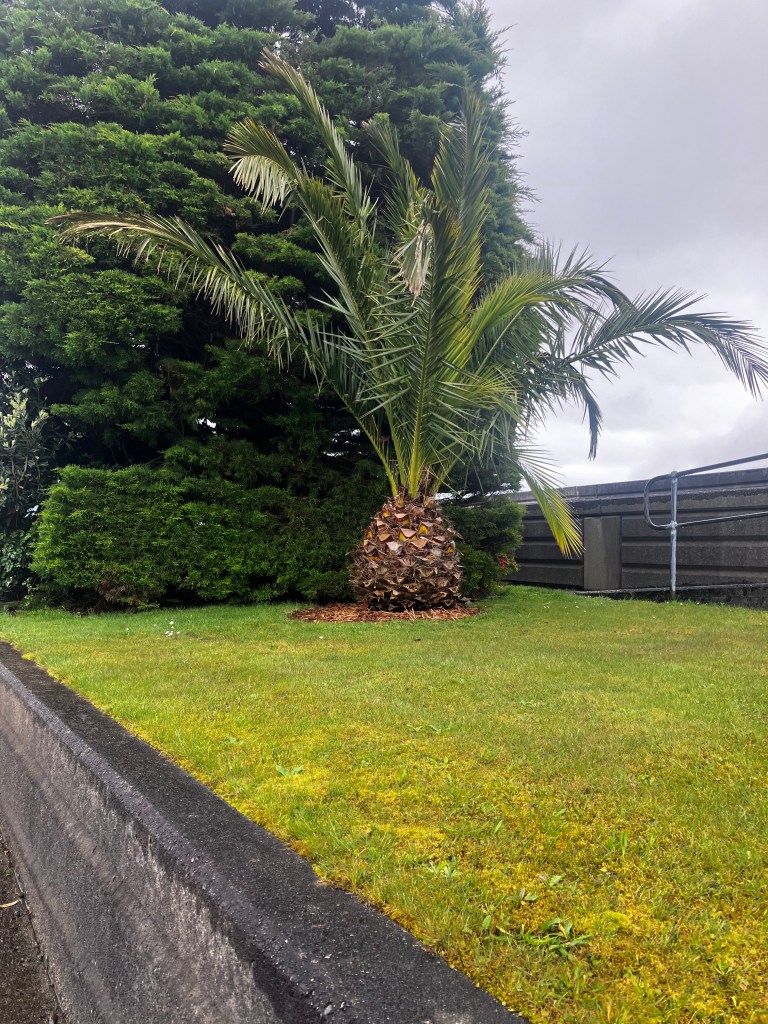
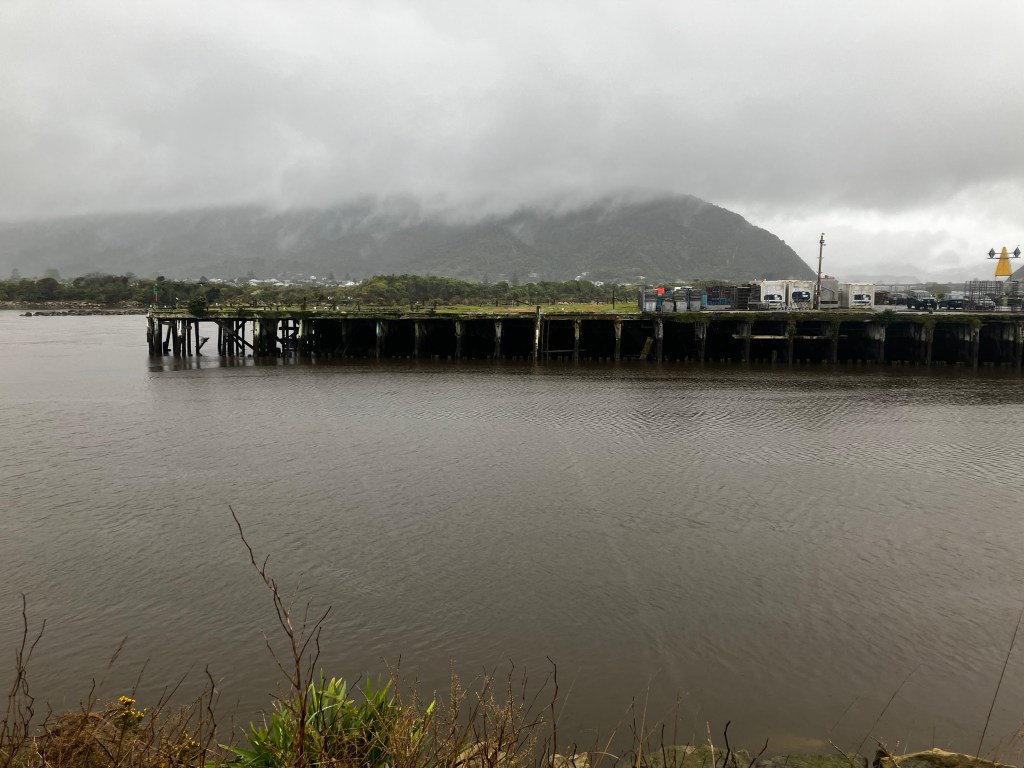
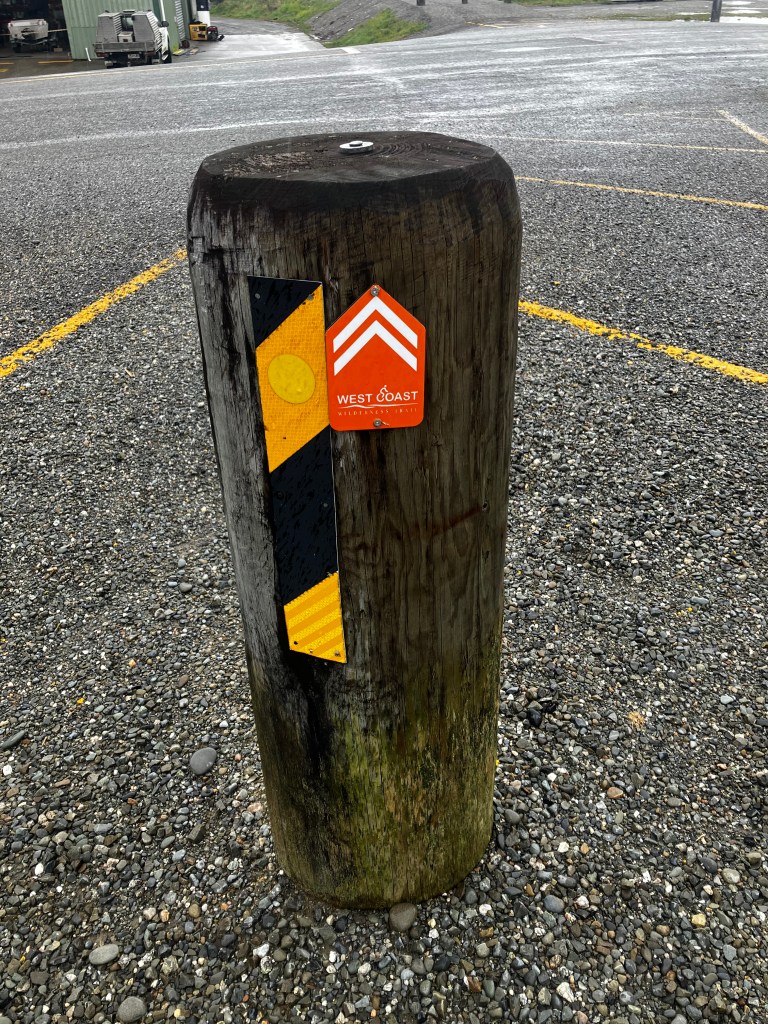
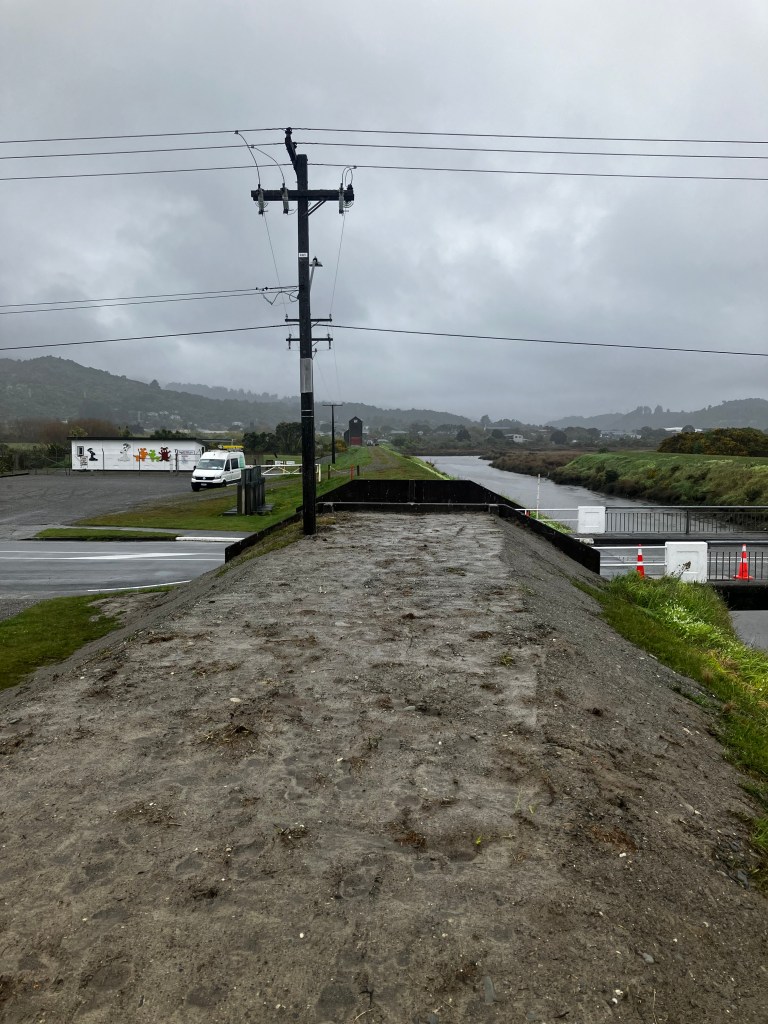
It rained off and on the entire walk down, although it wasn’t much of a rain. Compared to how heavy it is in Thunder Bay, this is what we would call a drizzle. Still, when I wasn’t entirely dry from the motorcycle ride and I was out walking in the rain for over 2 hours, I was nice and soaked by the time I got back to the hostel!
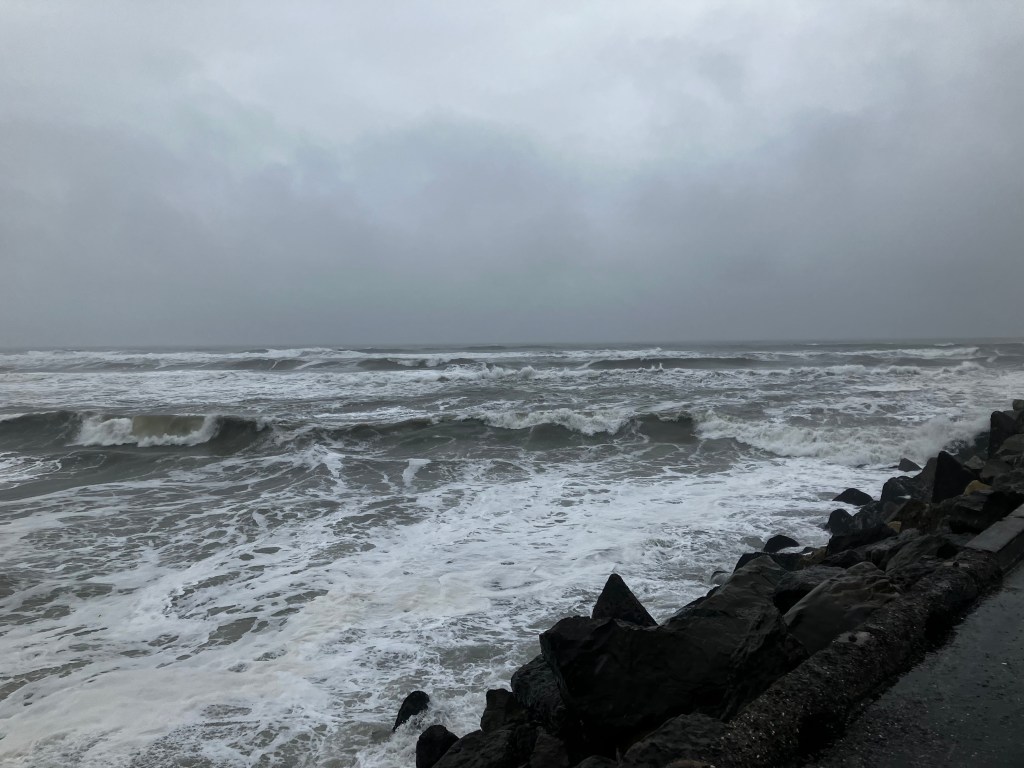
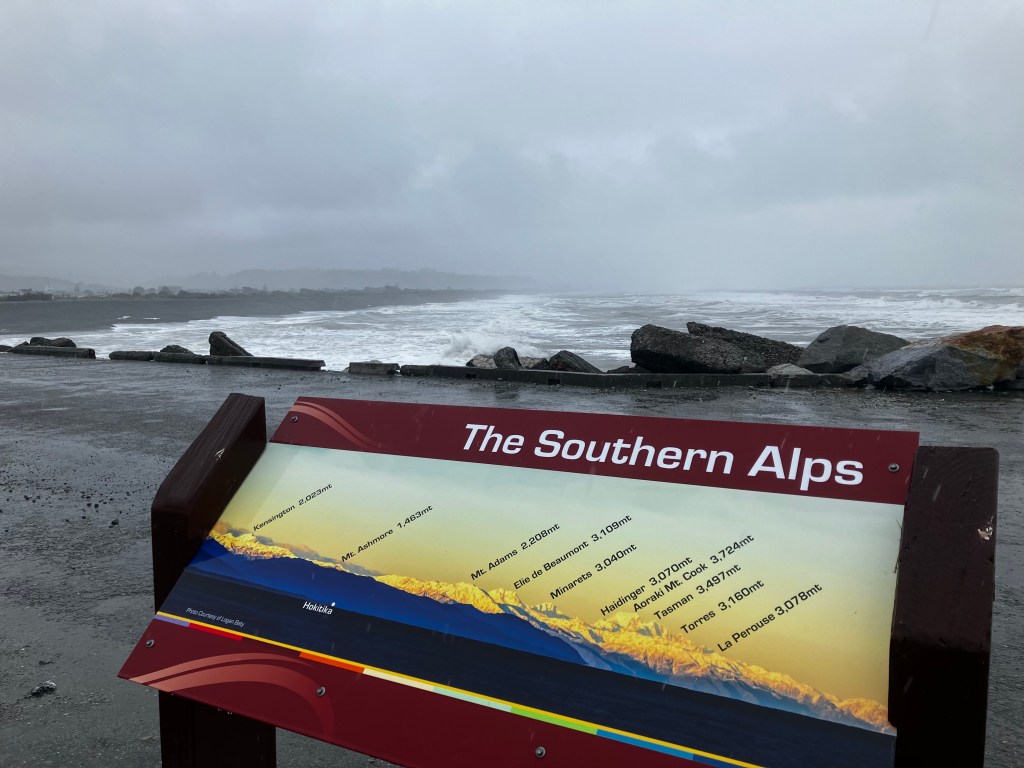
The Pacific ocean wasn’t much to look at, with the steel-grey clouds hanging low overhead. You couldn’t see much to down the coast, either. Still, it was nice to watch the big waves crash over the rocks and smell the salt. I unwrapped my pounamu necklace. It is the essence of the sea god, after all. I held it up to the rain in thanks, then slipped it over my head. I’ll show you more seas!
There is a monument to the souls lost at sea. There’s also an original World War 2 pillbox next to the road.
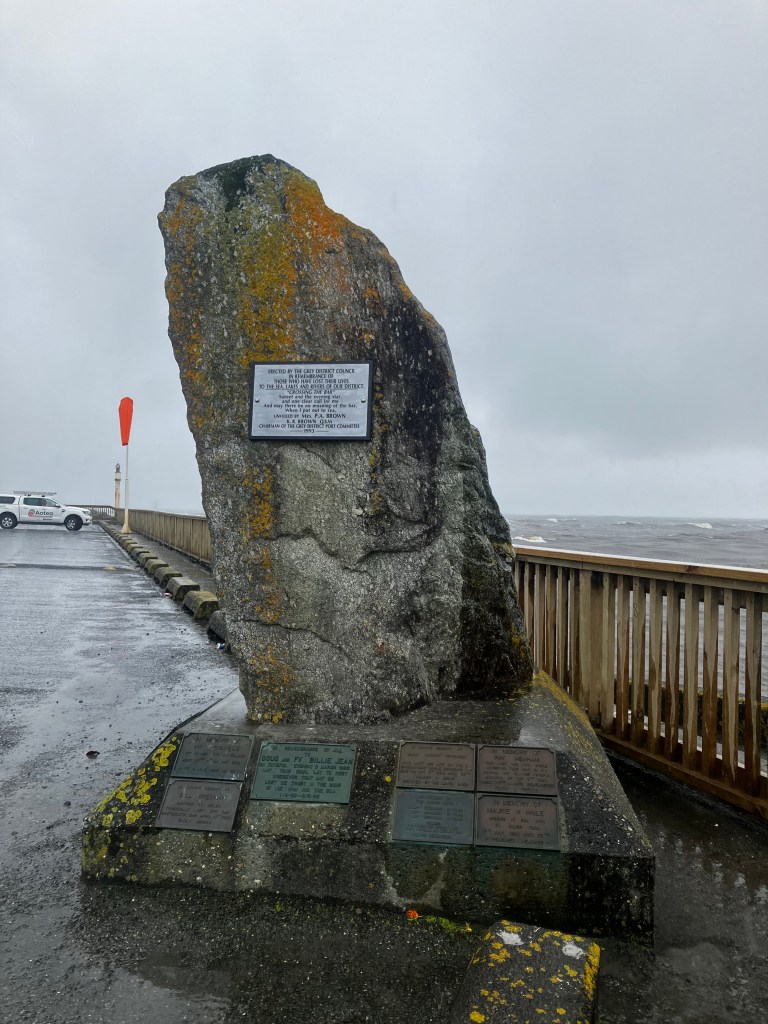
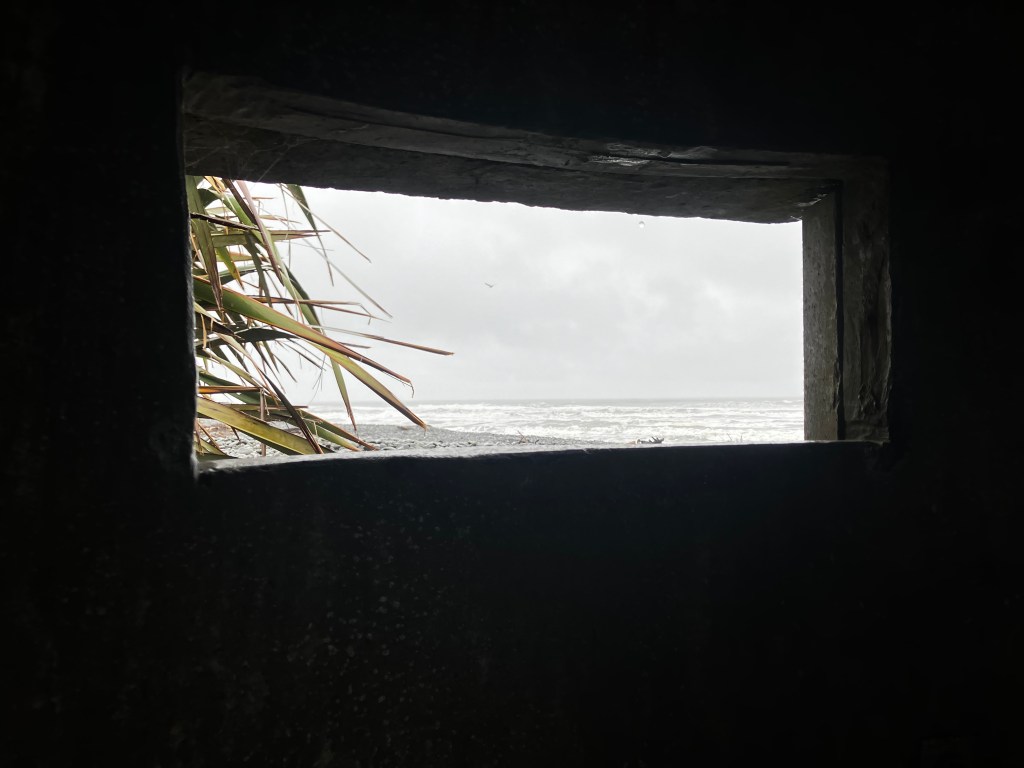
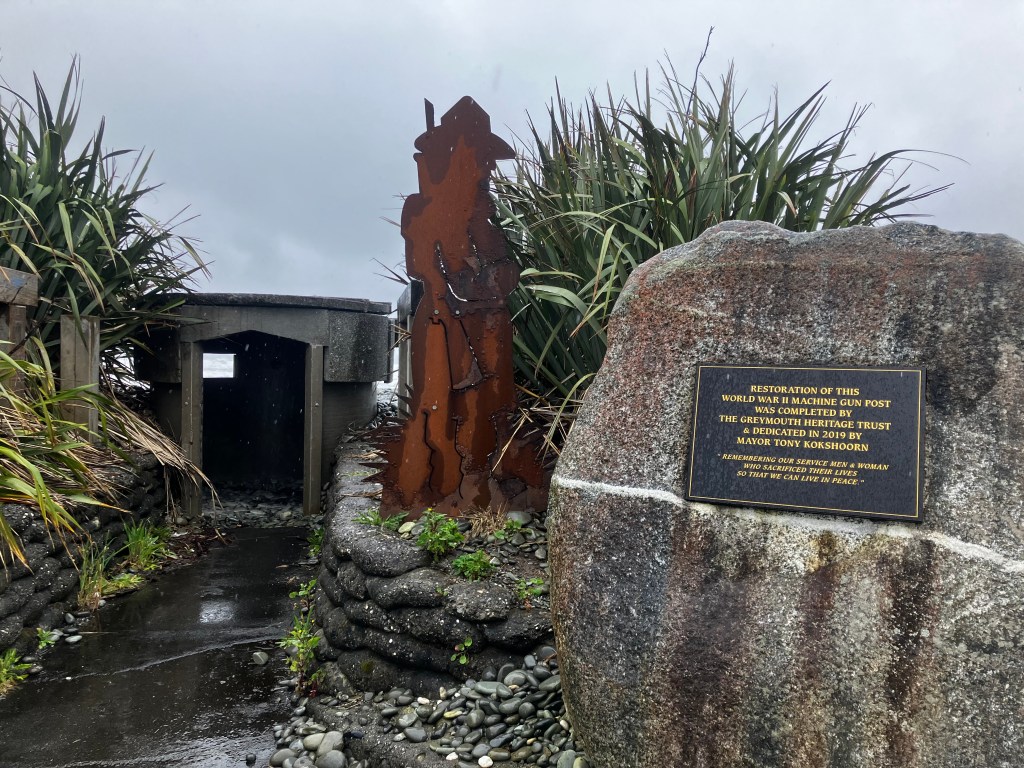
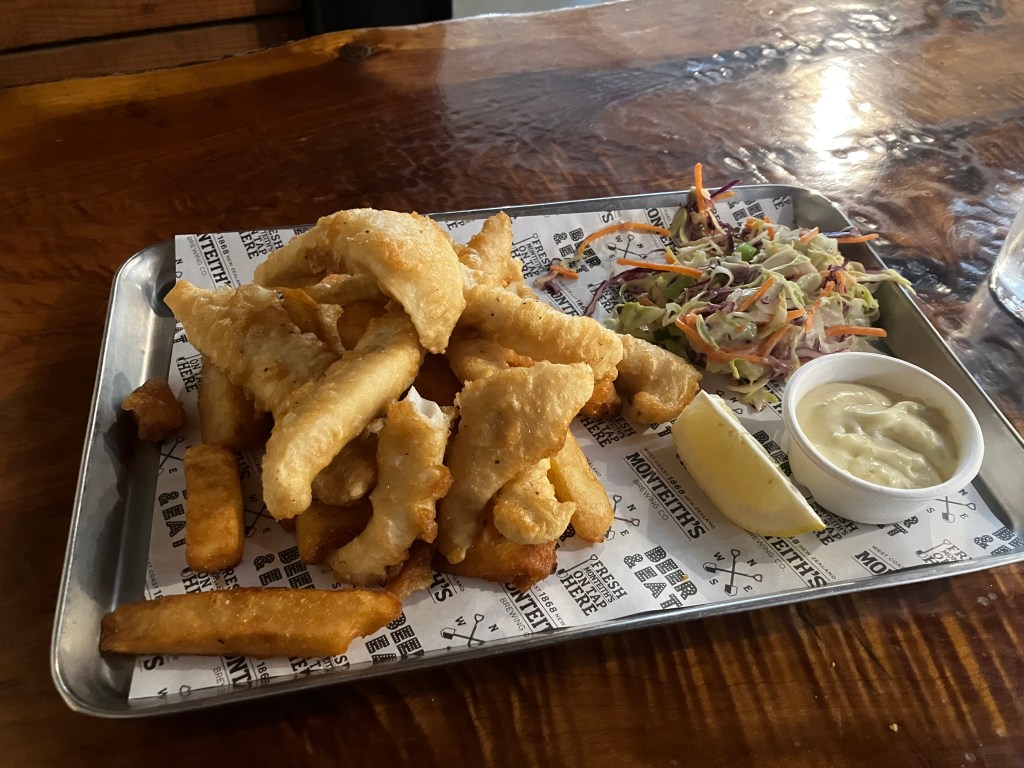
Then it was time to head back. Between the water and the hostel was a brewery/ restaurant with a 10% off discount when you book with this hostel, Monteith’s. Seemed like a good place to get a piece of locally caught fish, and maybe a stiff drink. There was a sign behind the bar that said they were busy and wait time would exceed 45 minutes, but I couldn’t make myself go back into the rain to find another place, so I ordered the Hugh Street Haul and a lemonade, forgetting I meant to order alcohol in my fluster. I also forgot that New Zealand, like England, has an entirely confused theory on what lemonade is, which means it was carbonated. Rats.
The food came half an hour later (yay!) and was very good! I couldn’t eat all of it, although I stuffed myself ’til my belly ached.
The bathroom was odd. I’ve noticed a few times that there are quite a few unisex bathrooms in New Zealand, which I applaud. I’m just not used to it. This one in particular had the sink area in common, but some of the stalls were labelled “male” and some were labelled “female”… for reasons.
I got back to the hotel around 6:30, chilly and soaked to the bone, ready to peel out of my wet clothes and into my dry pajamas and bury myself in my blankets. My roomie was dancing when I came into the room; she later explained that she’s part of a dancing troupe in her native France, and was practicing a routine. She popped her headphones out of her ears.
“Have you eaten?”
“Uh, yeah, I went to Monteith’s. It’s pretty good.”
“Oh rats, I was waiting to ask if you wanted to go get something.”
Isn’t that funny. I had been debating walking back to check, but decided against it after the reception earlier. “I could come with you, get a drink and something small.” I offered.
“Hmm.” She peered out at the rain. “Maybe I’ll just get Macdonald’s.”
She hemmed and hawed for twenty minutes while I sat dripping next to my bunk. I wasn’t getting back into my wet clothes if we were going out, and I hadn’t brought spares.
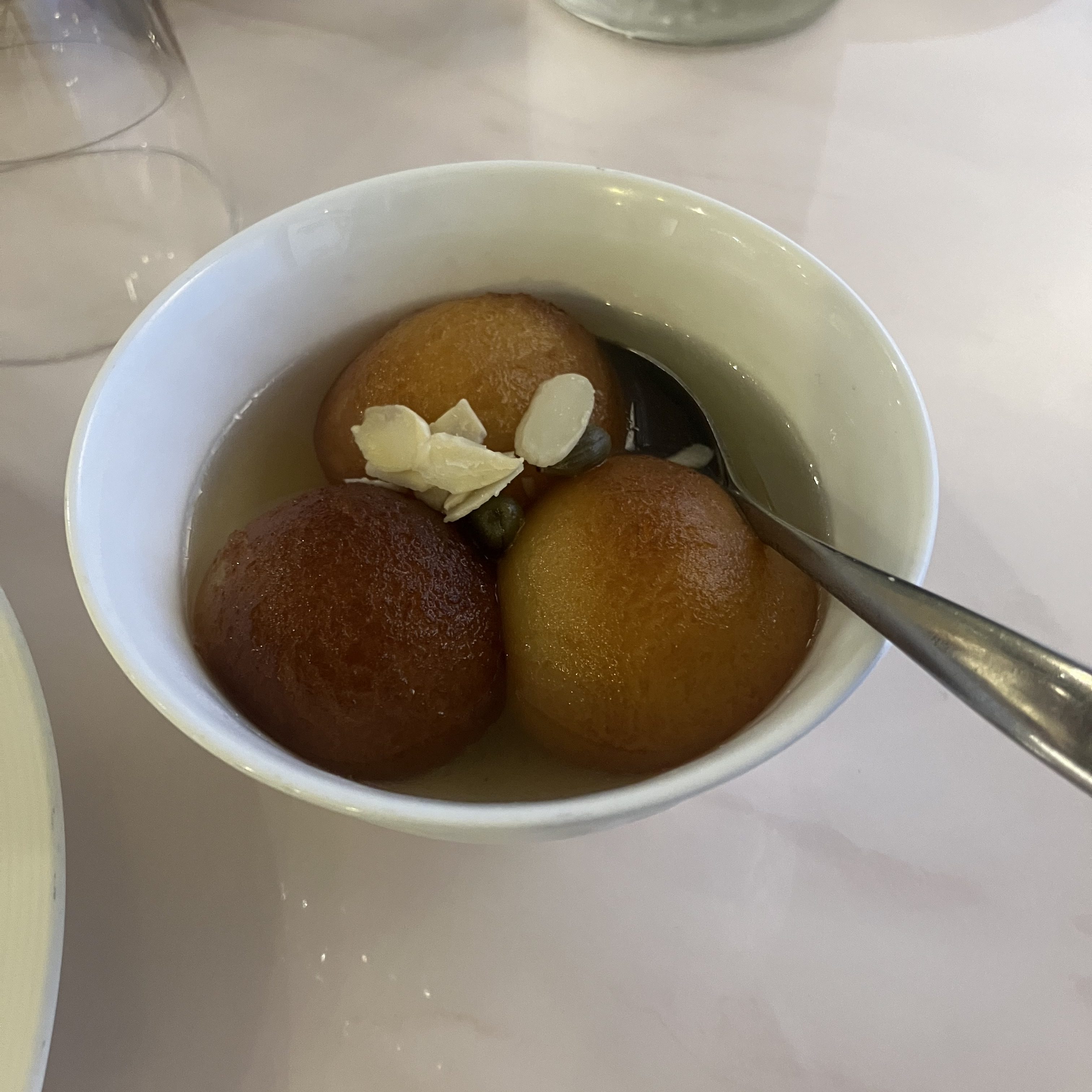
Eventually she decided to go get some Indian food from a place beyond Macdonald’s, so I went with her. She ordered something green with cheesy naan, and we both ordered mango lassi (mango lassi is the best! I despair that I can’t find any in Thunder Bay). I ordered some gulab jamun, which I hadn’t had before but it was the only warm dessert on the menu, and I wanted something to pick at so she didn’t feel bad about eating alone. It tasted like I was eating spoonful’s of sugar with a little rosewater mixed in, but they were soft and warm. I also tried a little of whatever she ordered. We sat around chatting and drinking lassi for more than an hour as the sun sank below the horizon, and walked back in the pitch blackness!
The room was chilly when we got back. The heater mounted on the wall has a timer on it. Which makes some sense – people might go out and forget it on – but there was no set-up to account for people being asleep! I got ready for bed and wrapped myself in my sheets, and we talked until I fell asleep midsentence.
When I woke up the next morning, I had a dilemma. I had no idea when she went to bed and when she might wake up. Did she want to do breakfast? Some people don’t eat breakfast, although I imagine a French person would.
I waited for an hour and a half, then decided I couldn’t wait any longer.
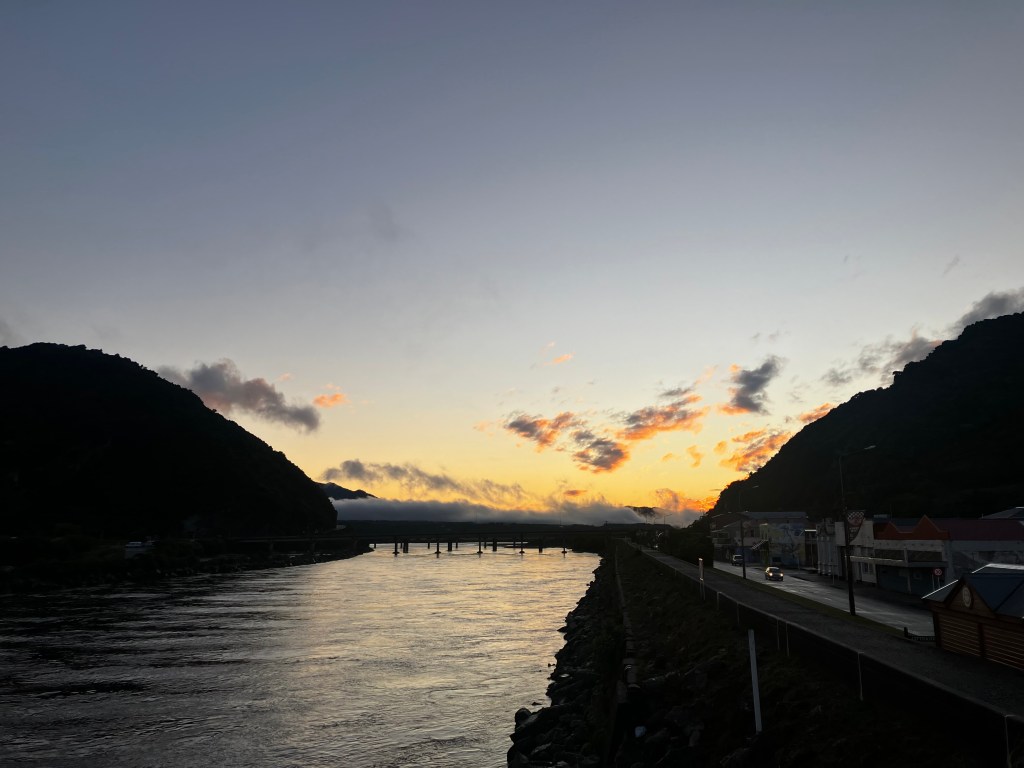
I walked out to the breakwater. I had half an idea to take a picture of the sun rising over the ocean, only to realize that I was on the wrong coast. Still, I snapped a nice picture of the sun rising between the gap in the mountains.
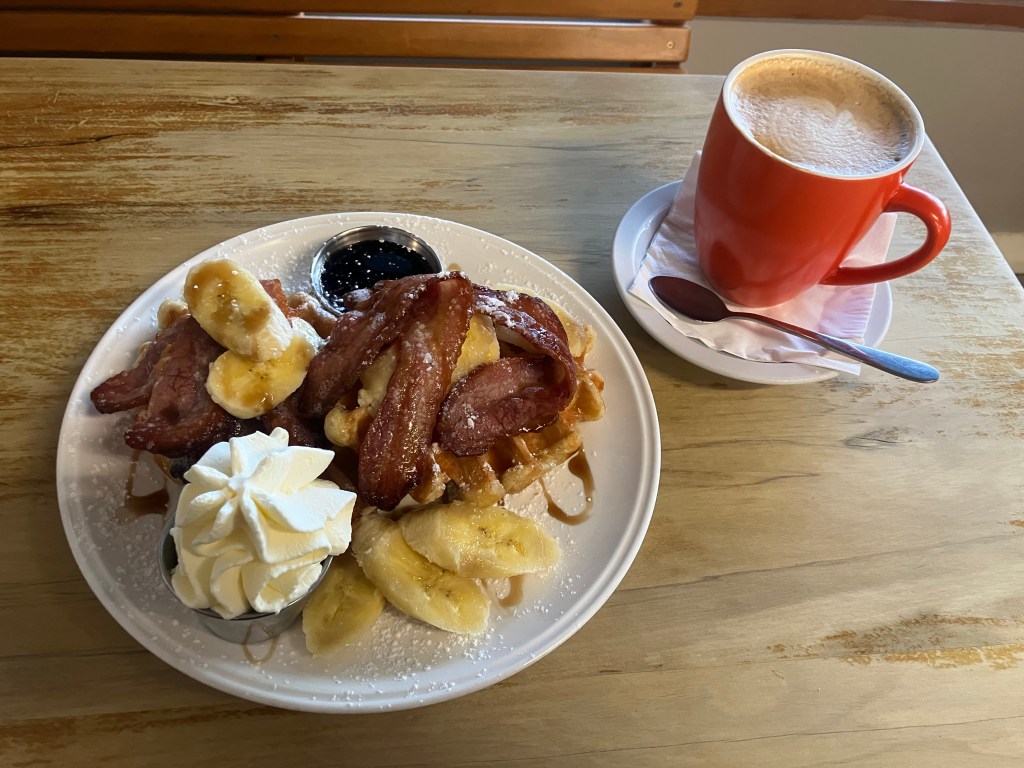
I walked to Blanchfield’s bakery, which, since it caters to a fishing village, is open at 5! When my usual lament is that most places don’t open ’til 8! I ordered the Belgian waffles, which automatically come with bacon on the side, and stuffed myself until my stomach ached again. I wished I had Jen’s number, so I could text her where I was and I could keep drinking tea and picking away at the food.
I walked back to the hostel. Jen was awake, not much for food, and ready to go. We exchanged numbers and I packed up my stuff – I wasn’t coming back to the hostel.
We walked down to the main road, and along it a bit; tip for hitchhiking, make sure there’s room for the car to pull over and pick you up. We were there for between 5 and 10 minutes. I briefly wondered if my obvious motorcycle gear was a help or a hinderance for this mission.
A woman in a silver car pulled over to pick us up. She wasn’t from the area either, she was from some northern town, but passing through on the way to Christchurch. Shantytown is only 11 kilometers outside of town though.
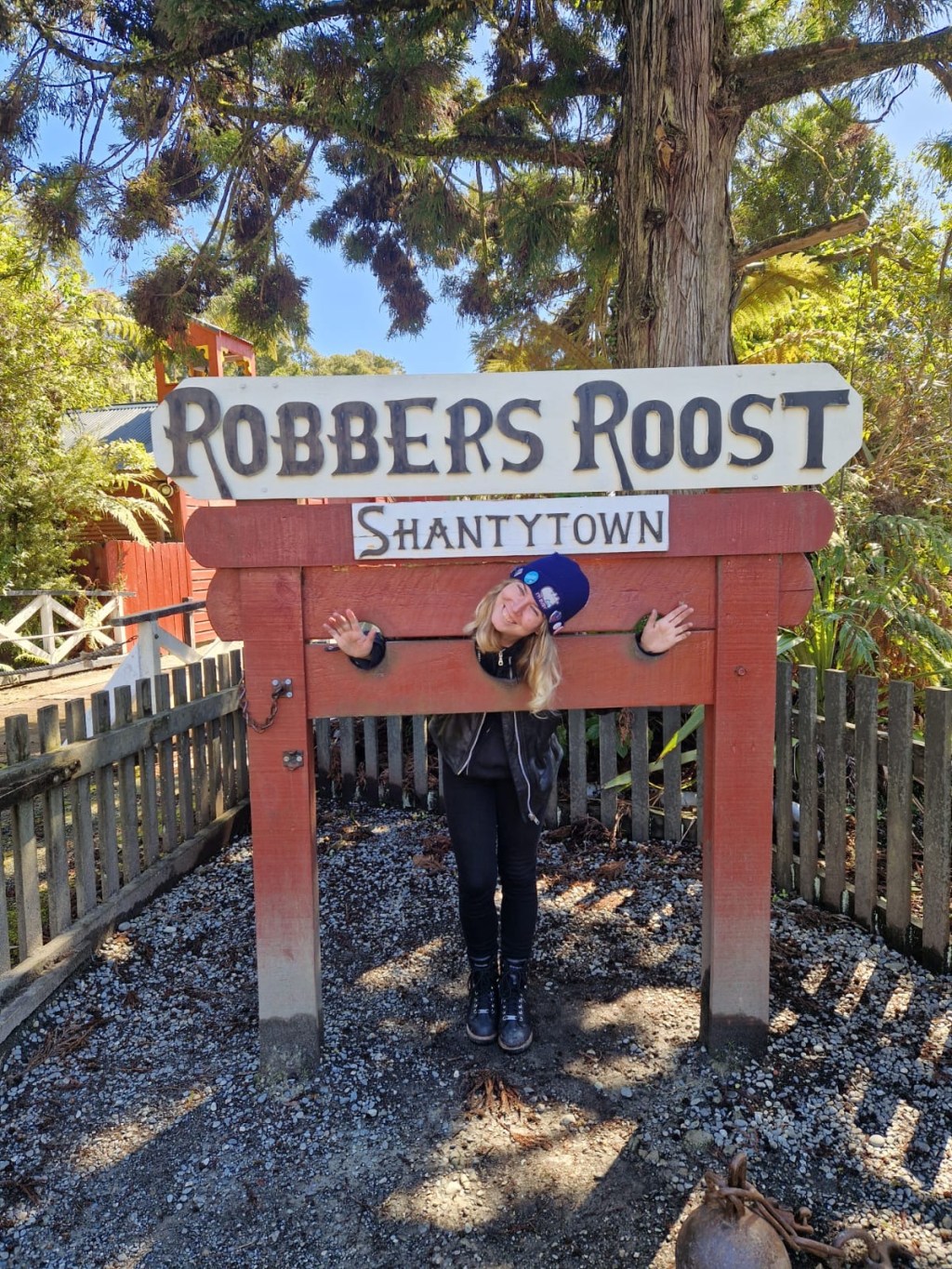
We arrived at Shantytown a few minutes before they technically opened, so we enjoyed the warm, sunny weather!
Shantytown is a historical park about the gold rush in the late 1800’s. In includes a “historical” town square that wouldn’t look out of place in Texas, with cowboys. The tickets are about 40 bucks each and include the steam train ride, but not the gold panning (presumably because gold costs money and the panning area is seeded). It lacks Pounamua Pathways introspection about how destructive the era was in favour of “Gee Willickers isn’t gold panning fun?”.
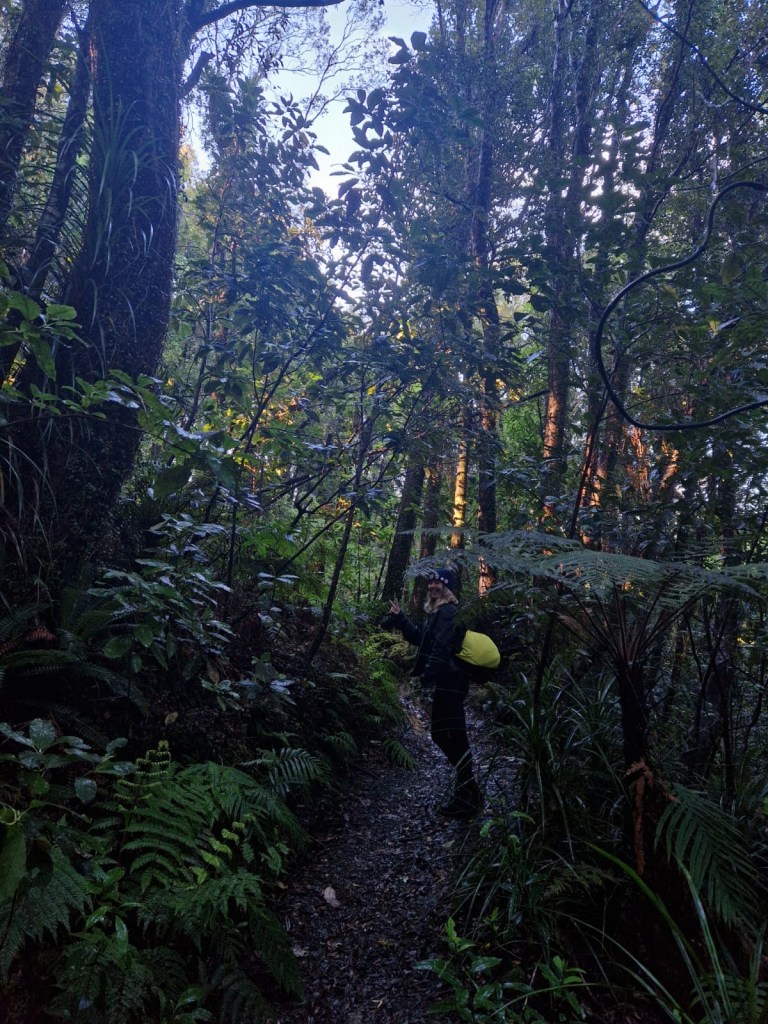
We started off at the “look-out” trail next to the entrance. The trail was nice to walk through, although the look-out is almost entirely blocked by trees. I learned that Jen is an excellent whistler, and can perfectly mimic the birds!
After that, we wandered through the “Chinatown” part of the park.
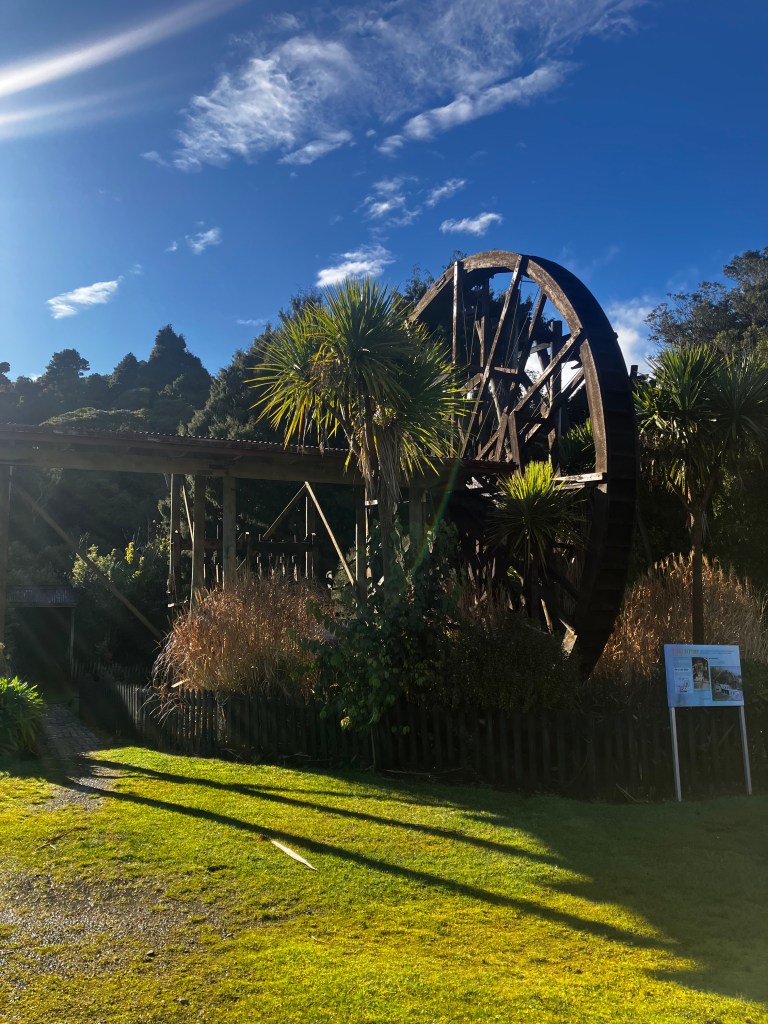
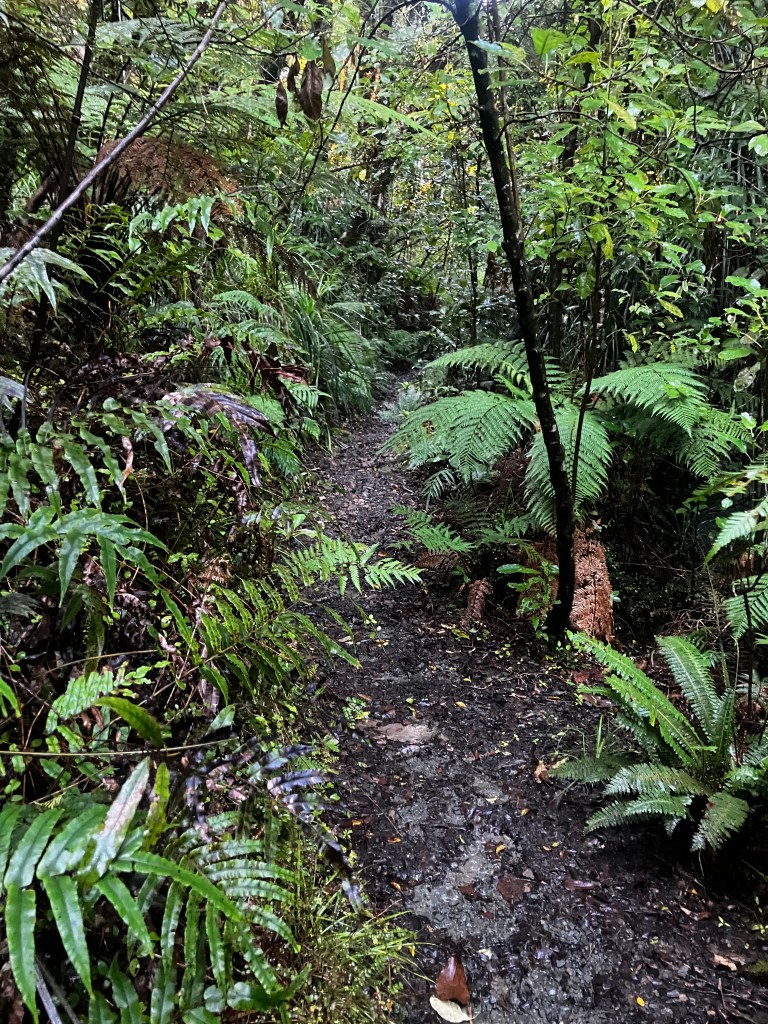
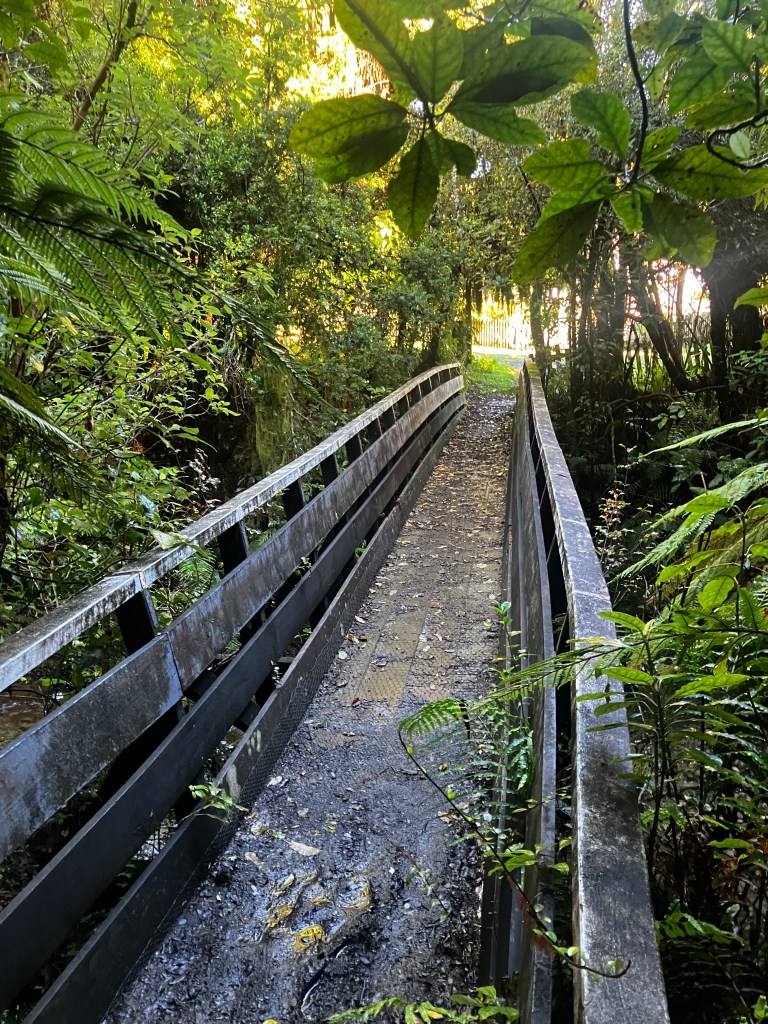
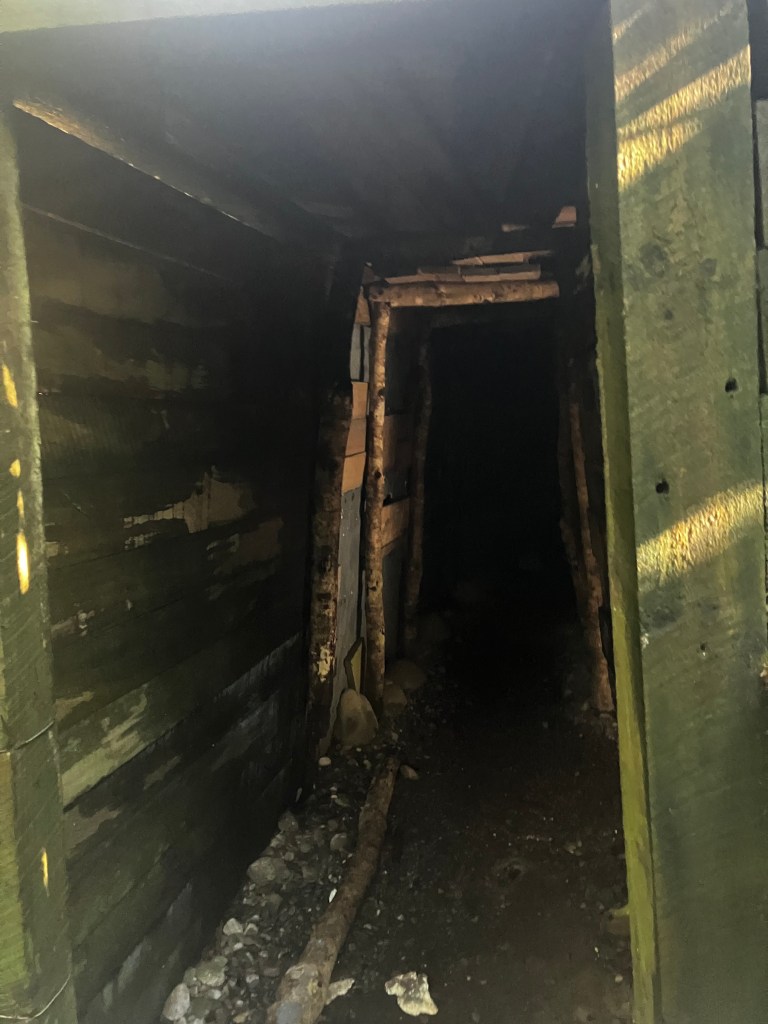
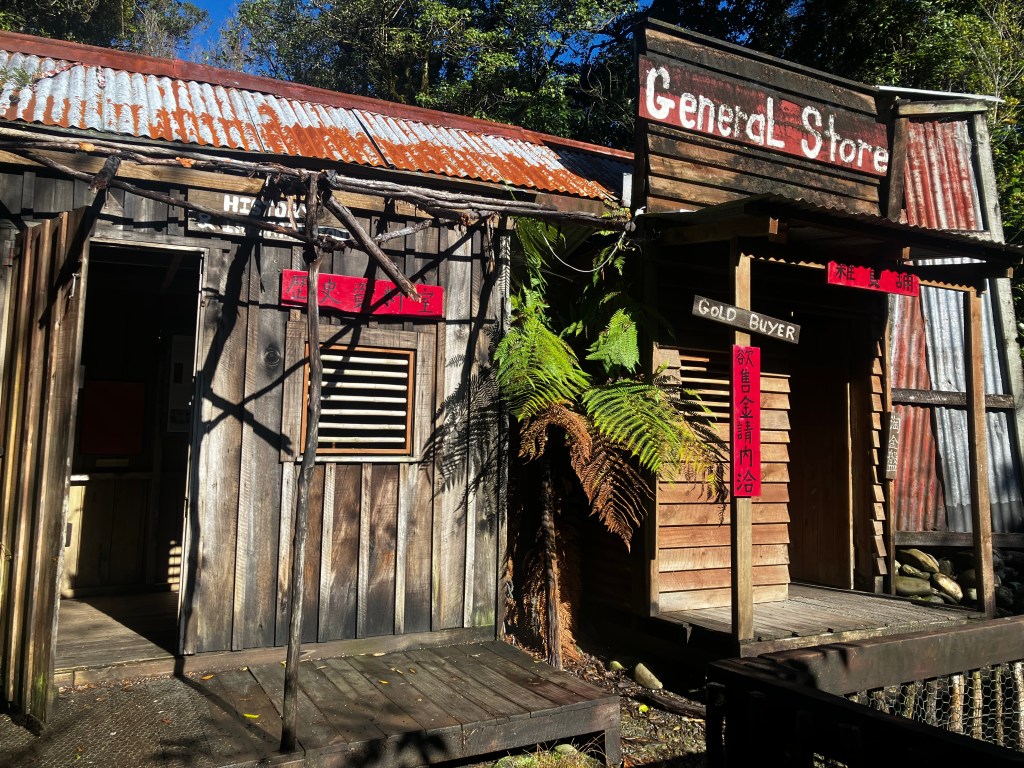
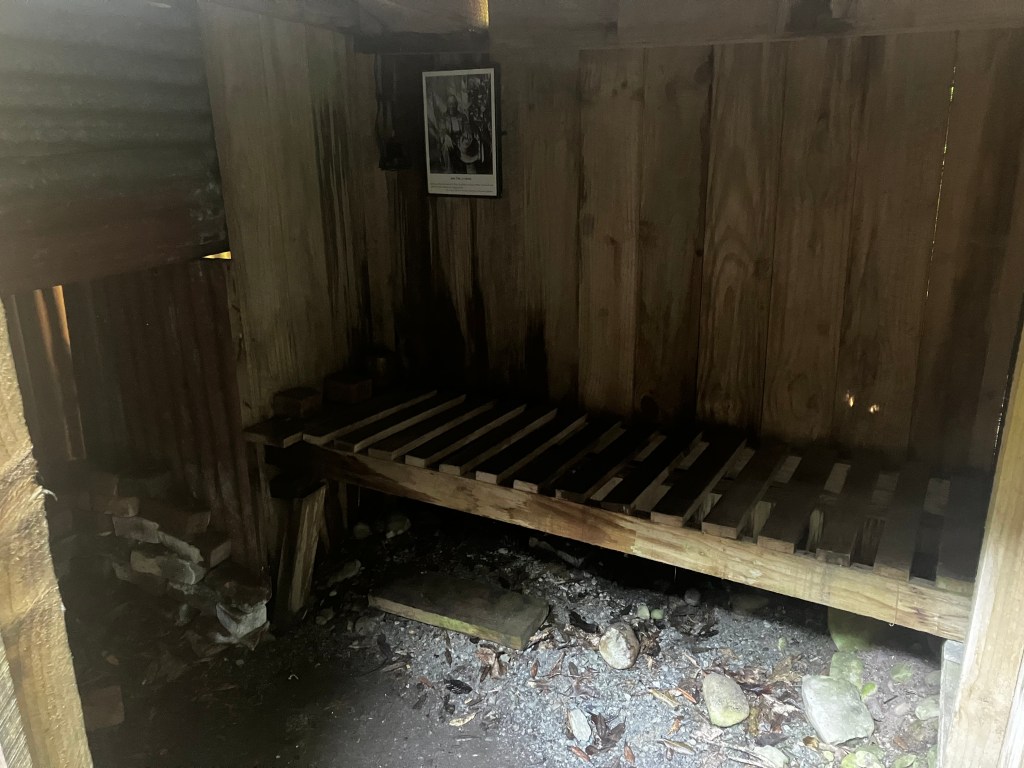
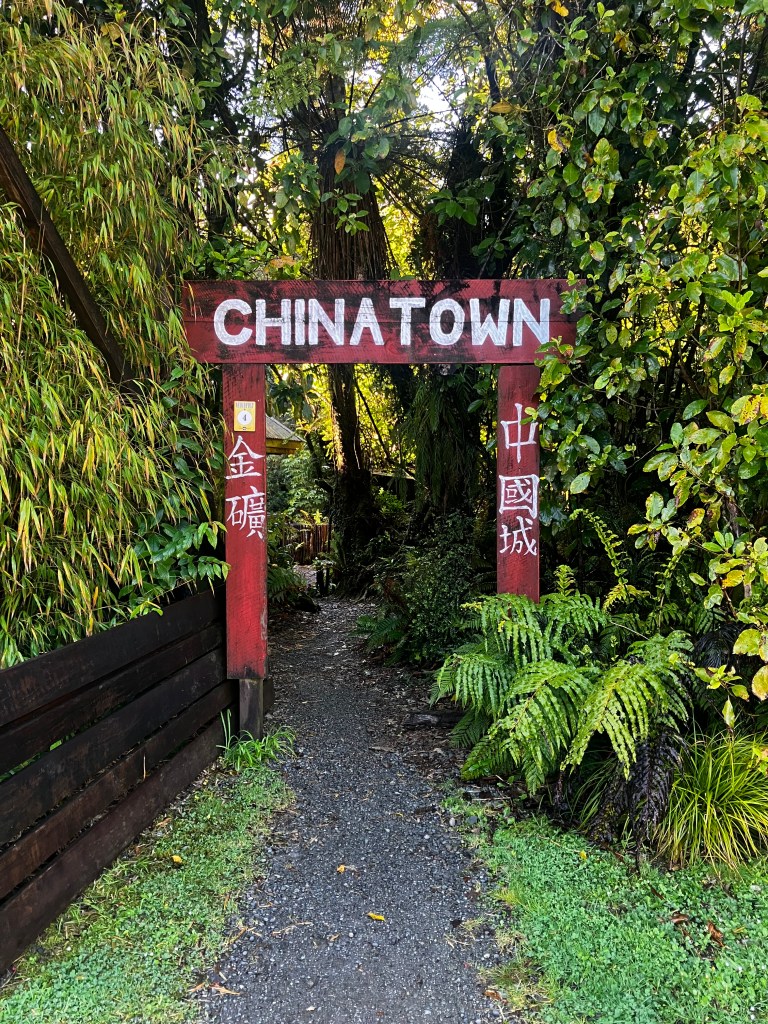
I like the story of Annie Long. Most of the Chinese men who moved here to work the mines didn’t make enough money to convince a woman to move there with them, but a few did. Many people speculate Annie was actually a servant, sent in lieu of her mistress who didn’t want to go, but she was a determined woman nonetheless. She eventually separated from her husband and supported herself by running the laundromat. I’m curious if any of her descendants still live in the town – they would be grandchildren or great-grandchildren.
After that, it was 10 and the cafe was open, so we went to get Jen breakfast. I bought a cup of tea and noticed a sign on the wall said “5 postcards for 5$”, so I got 5. The clerk sheepishly noted that, since postcards are usually 1.20, he had been charging people 6$ for 5 without realizing. (or being corrected).
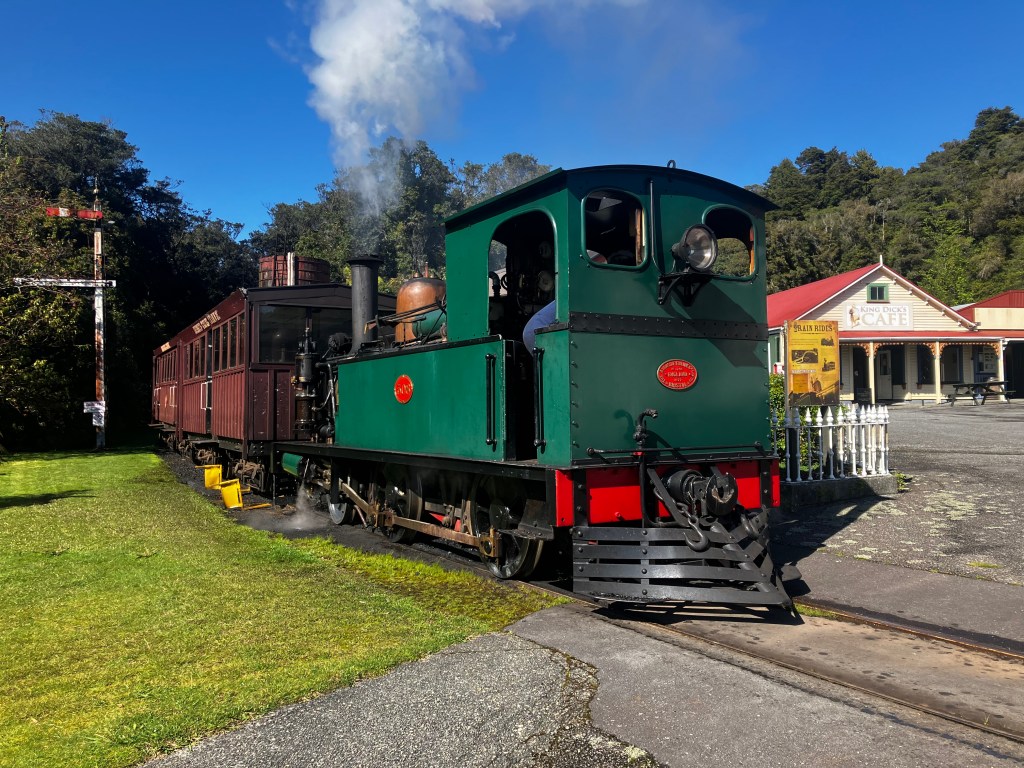
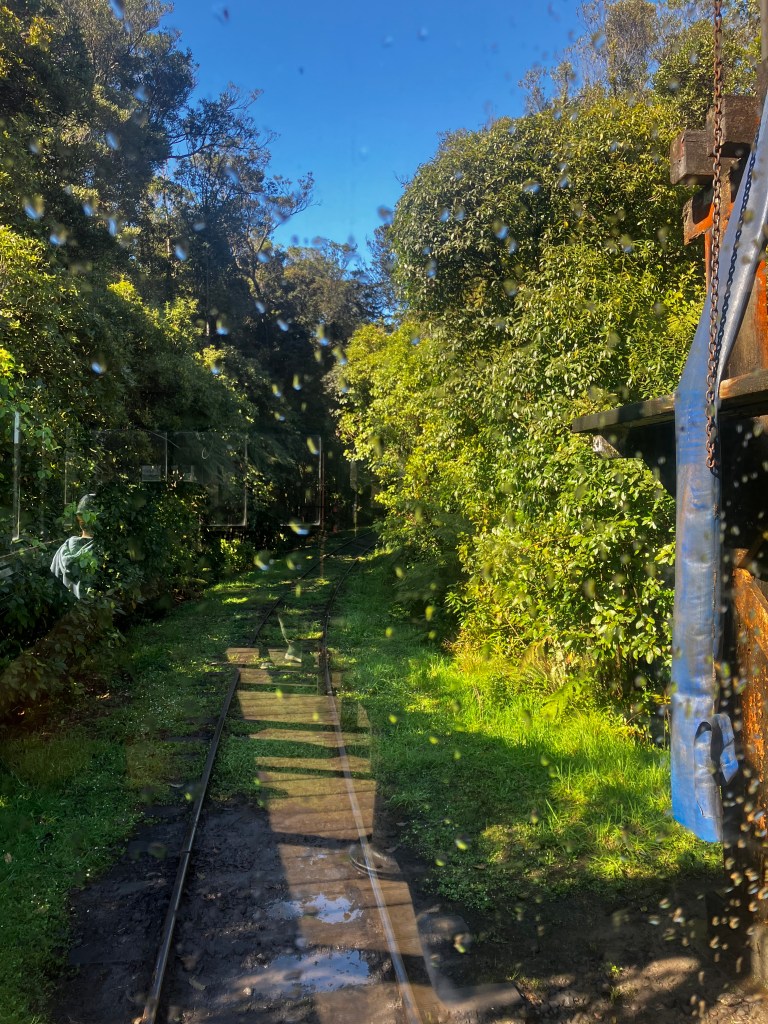
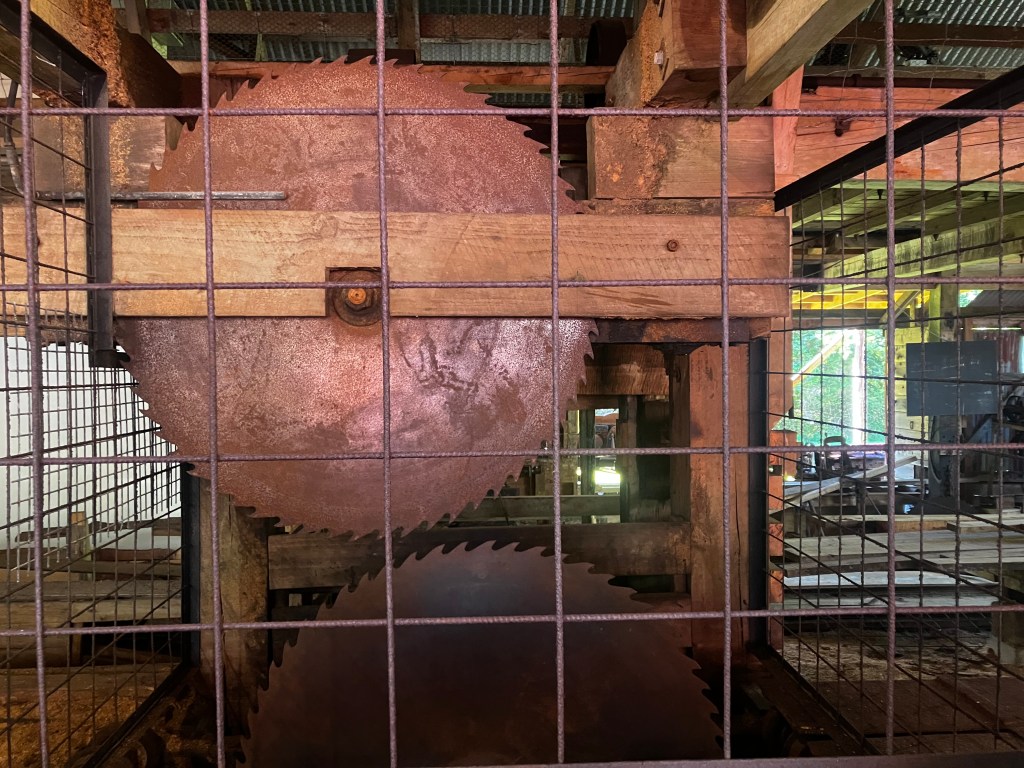
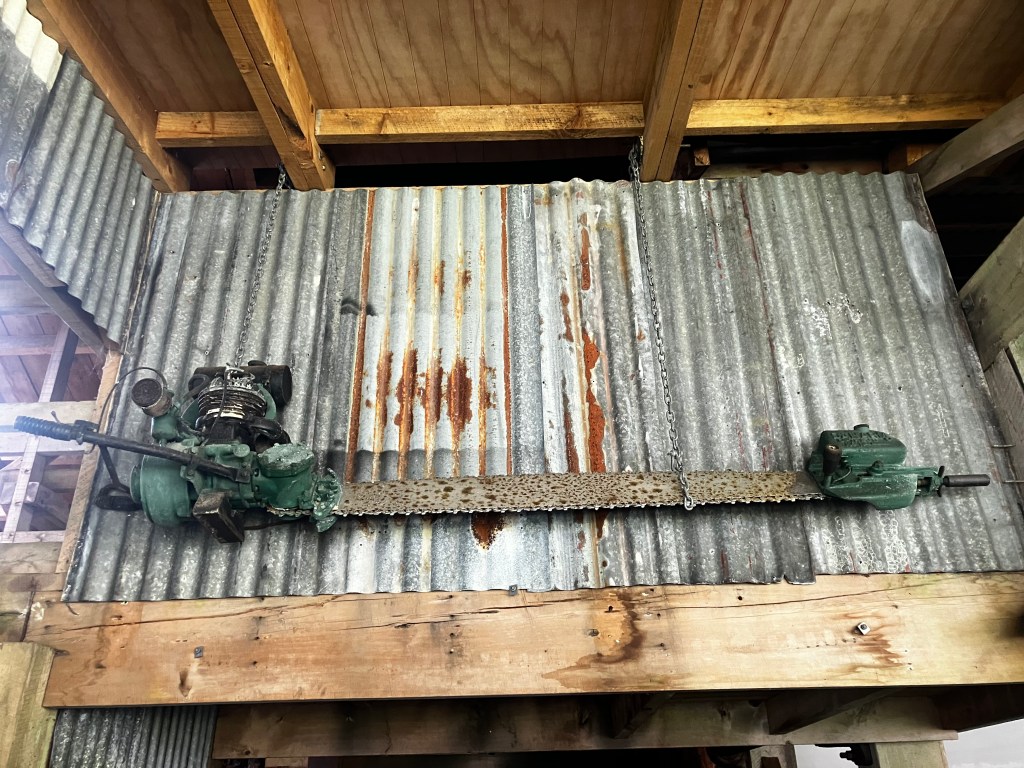
The first train, and really the only one we could make, was at 11, so we just hung around the cafe ’til then. I noticed some scaffolding outside and took pictures of it, cuz I am a giant nerd. The steam is an old-fashioned steam train, although I noted most of the components were manufactured in Chicago. Is that historically accurate? We went maybe 500 metres into the bush, stopping at some “this is how they cut trees down” spot for five minutes. Then they drove us back down the track a bit to a “sawmill”. The whole train ride was not even 15 minutes.
We wandered through the sawmill to the “sluice gun”, which is how they drilled the gold out of the hillside for panning.
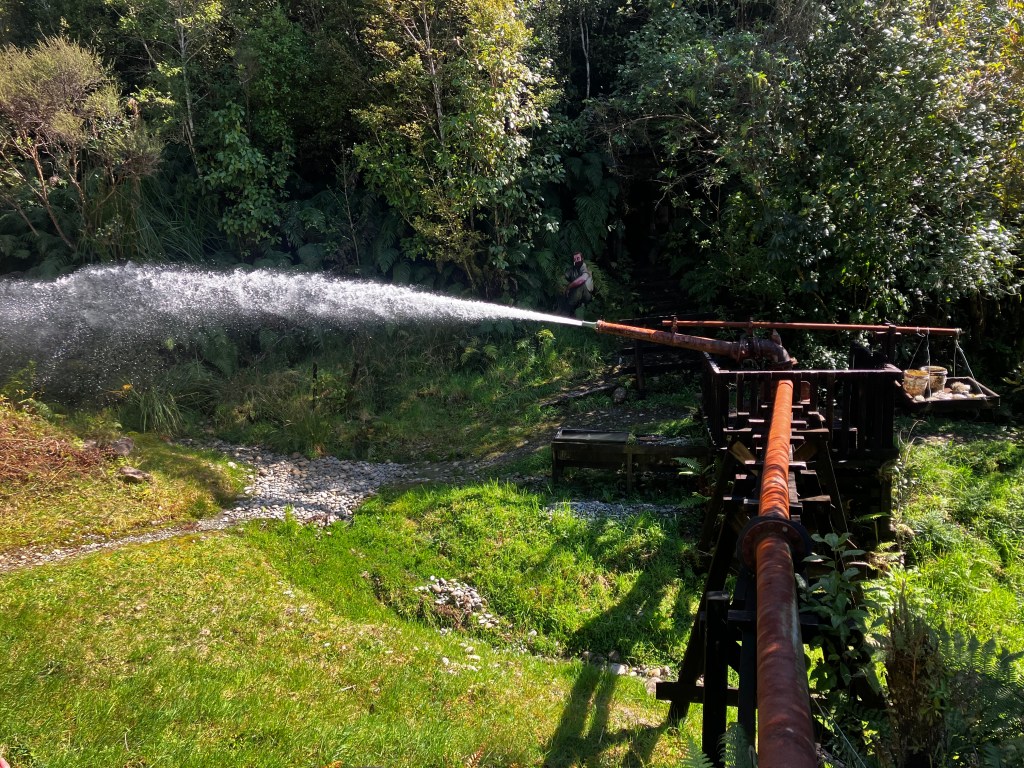
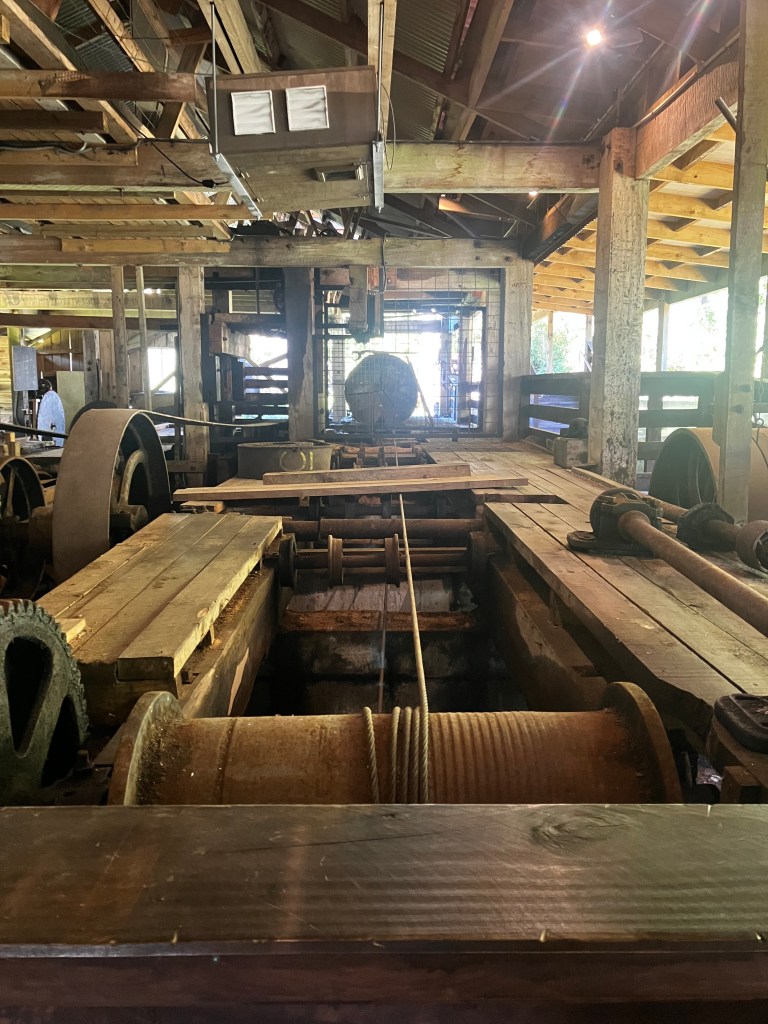
After a brief demonstration (it basically works like a firehose) we kept walking back to ‘town’.
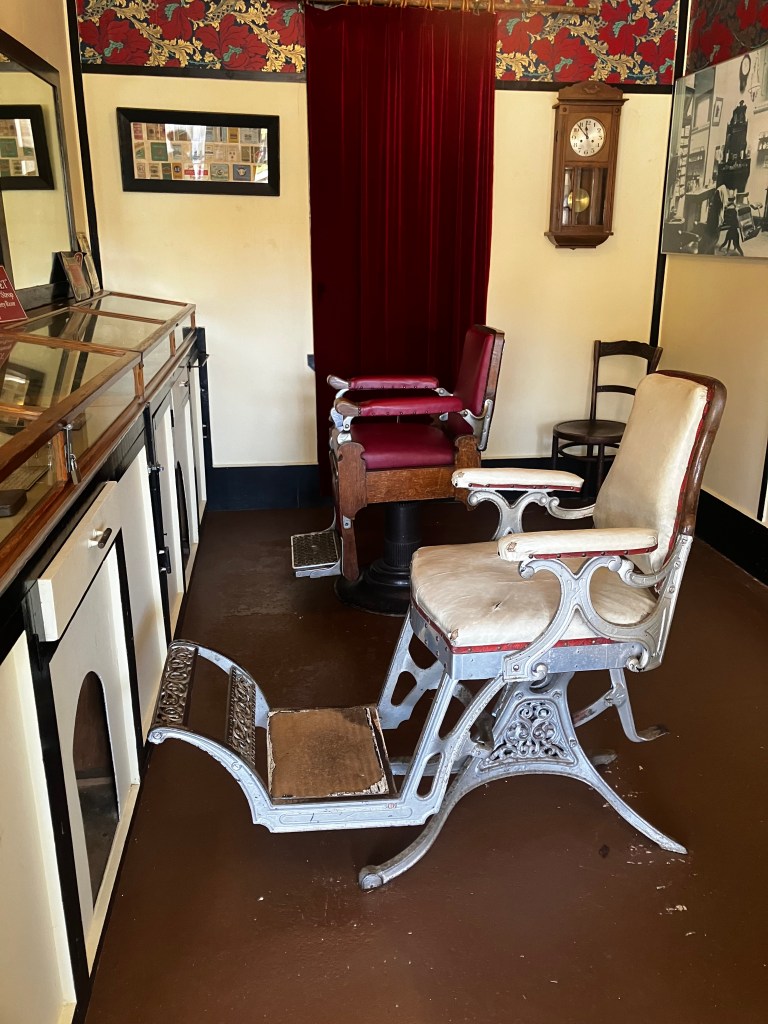
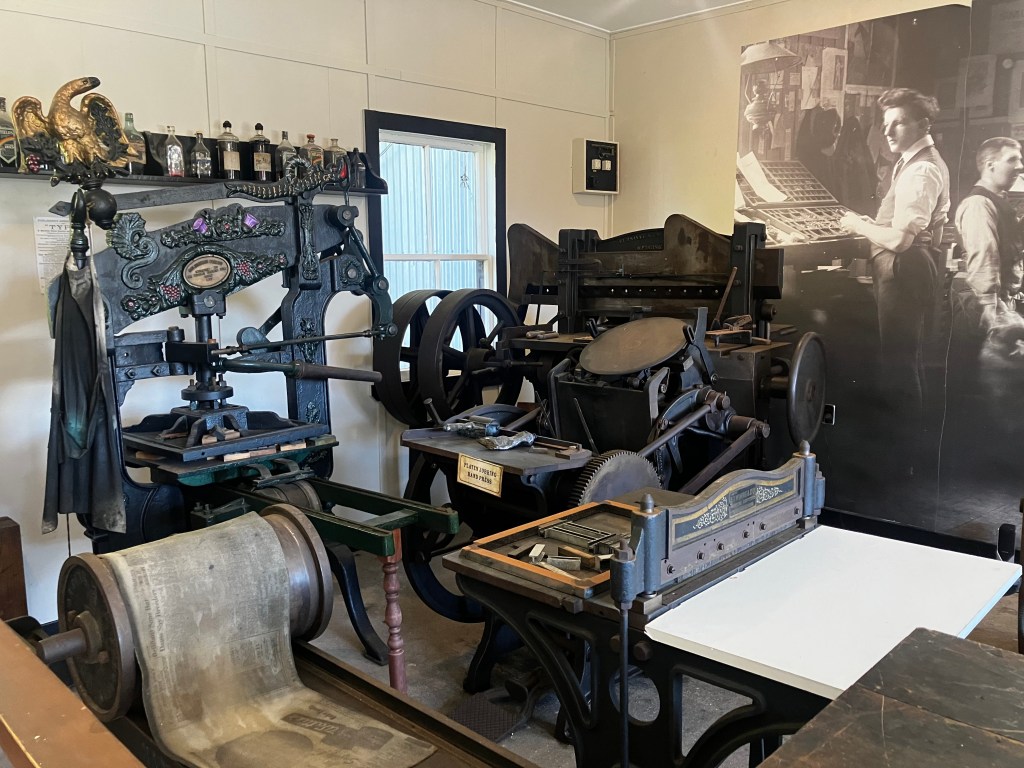
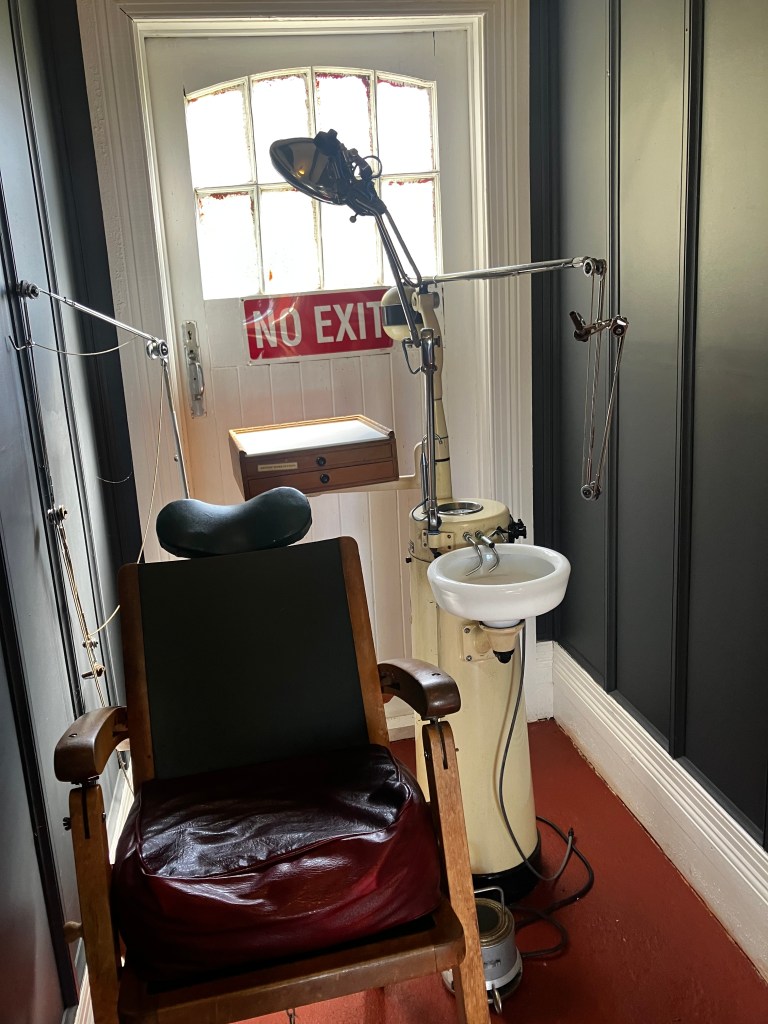
We spent about 20 minutes wandering around town. If you’ve seen any sort of historical park, there isn’t much there to blow your mind, but I was also wary of the time. I had a little under 2 hours to get back to Greymouth for the train.
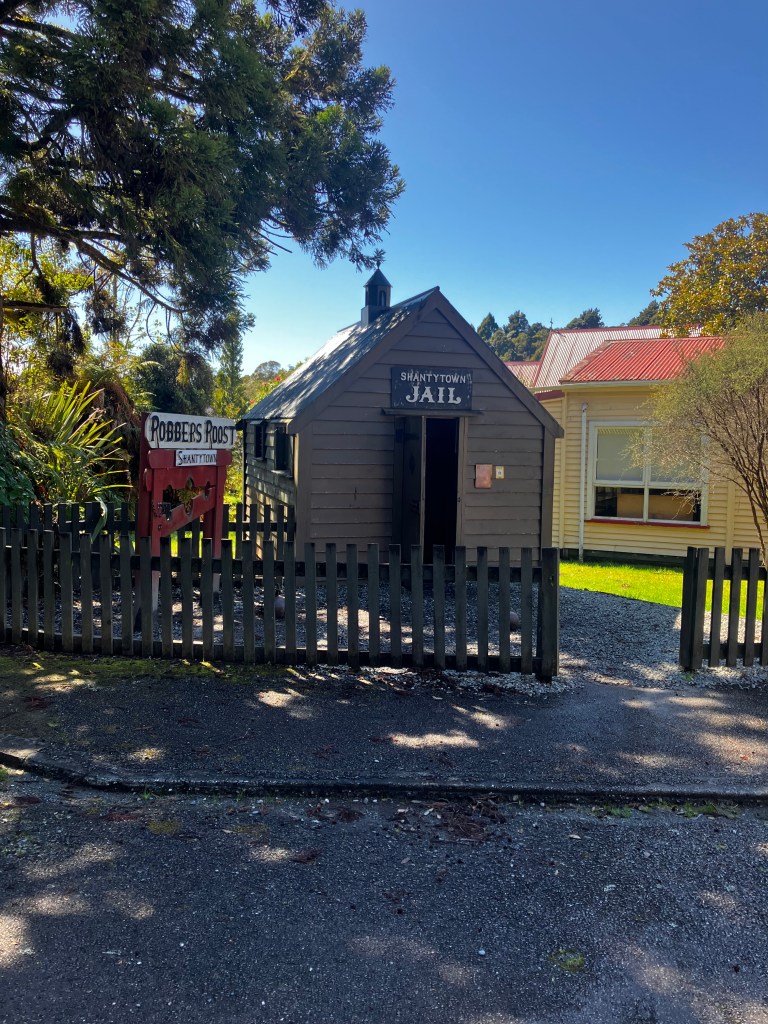
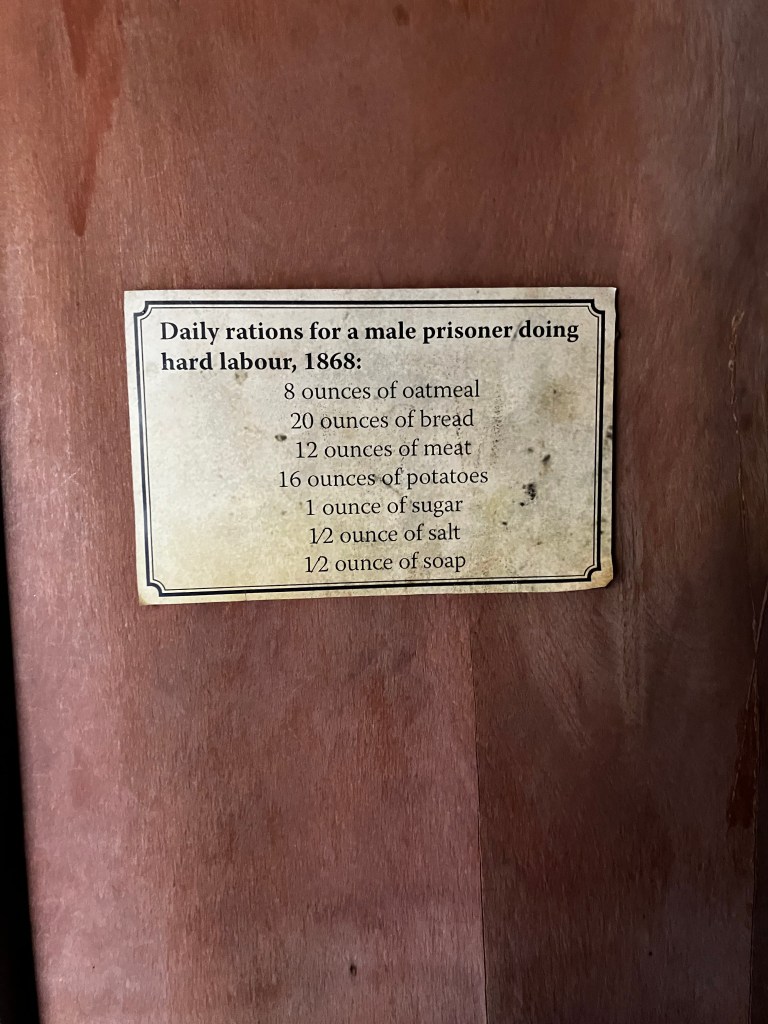
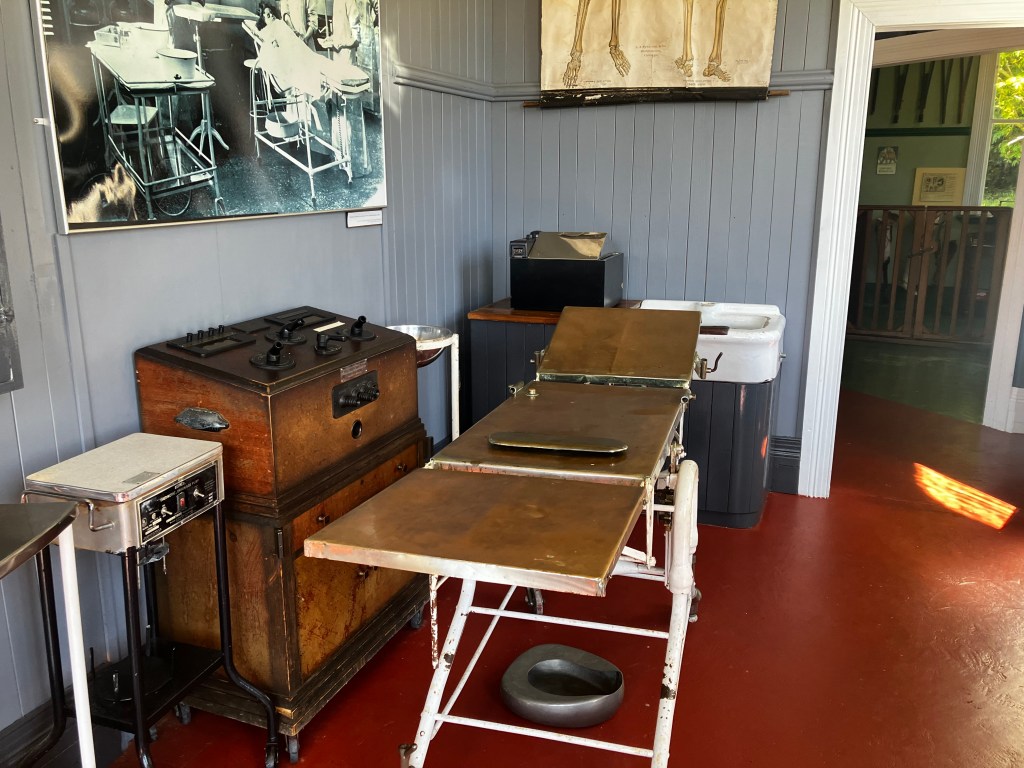
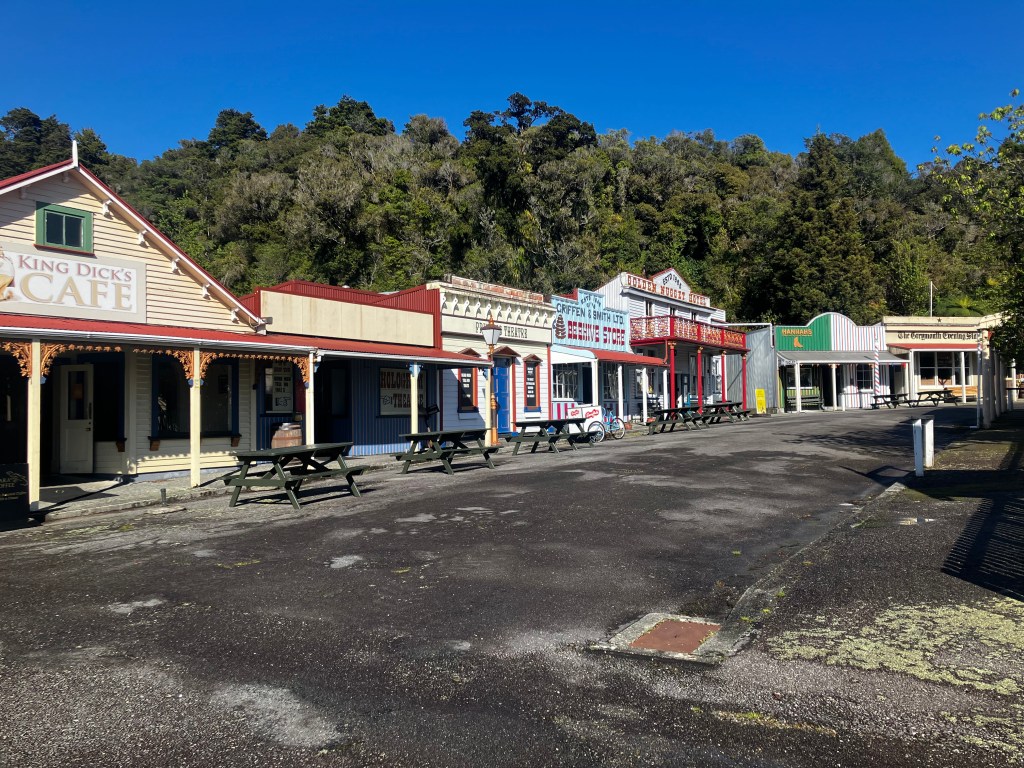
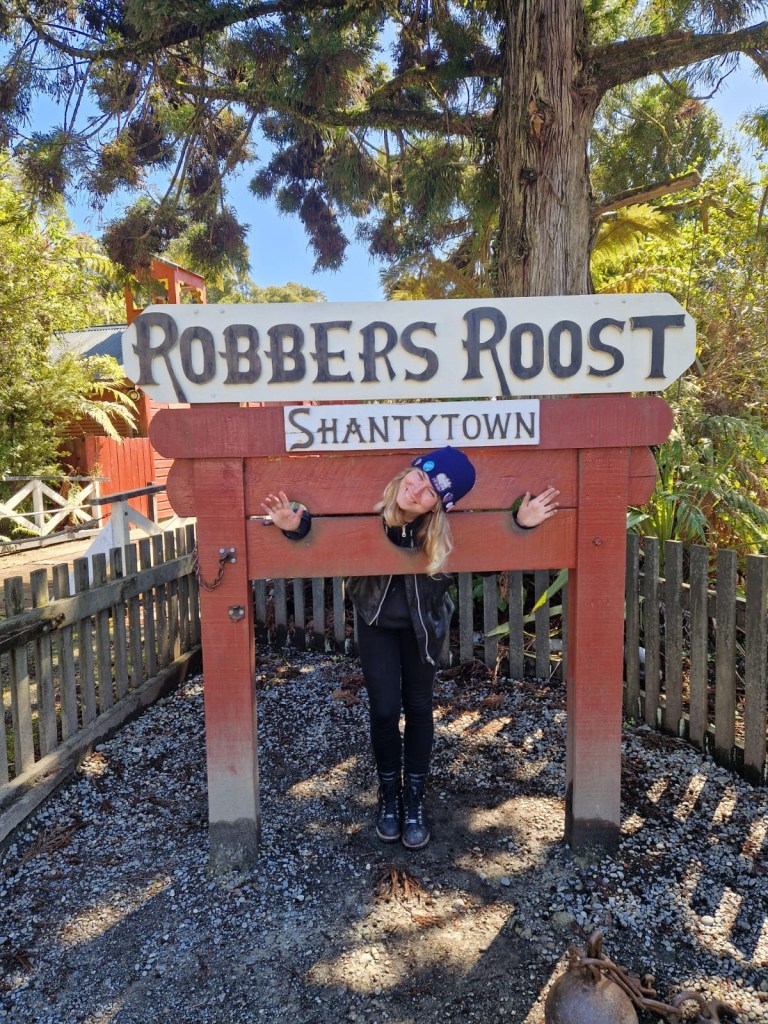
We walked out to the main road, somewhere between 3 and 4 kilometers. I hadn’t brought my walking shoes, so I’d been doing a lot of walking in my motorcycle boots, which aren’t designed for it. i was starting to limp from the pain in my left foot. Probably giving myself some serious blisters. There was some traffic on the road out to Shantytown, but no one wanted to stop for us.
When we got to the main road, this was where we parted ways. Jen was going further south to Hokitika, and I was going north, so we would be going in opposite directions.
I ran across the road and set myself up in front of a hotel. She had a car stop for her first. I was there for about 15 minutes, and starting to debate if I should go in to the hotel and ask them to call me a cab, when an older lady did a U-turn on the main road and stopped in front of me. She felt bad for me standing there and figured I was just going back to town, which is a short drive for her. She told me around here, it’s called “whitebait weather”, when it’s just foggy and rainy for weeks and there’s nothing to do but fish and went for the summer weather to kick in.
Once back in Greymouth, I went to KFC – it’s cheap and right by the train station – then I grabbed my ticket and waited for the train.
The train ride back was much better this time. The sun, the blue sky! I did notice in the 24 hours since I took this train, the snow on the mountaintops has visibly melted. I was also lucky that there was no one sitting in my row at all, so I could take pictures from both sides of the train as I pleased.
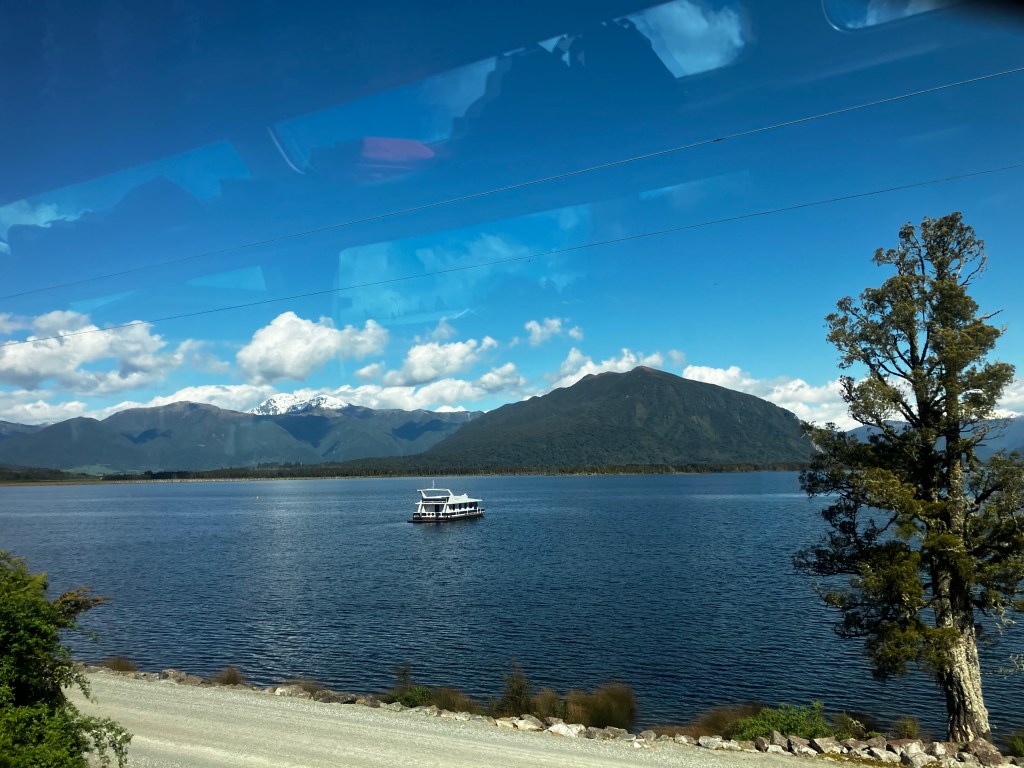
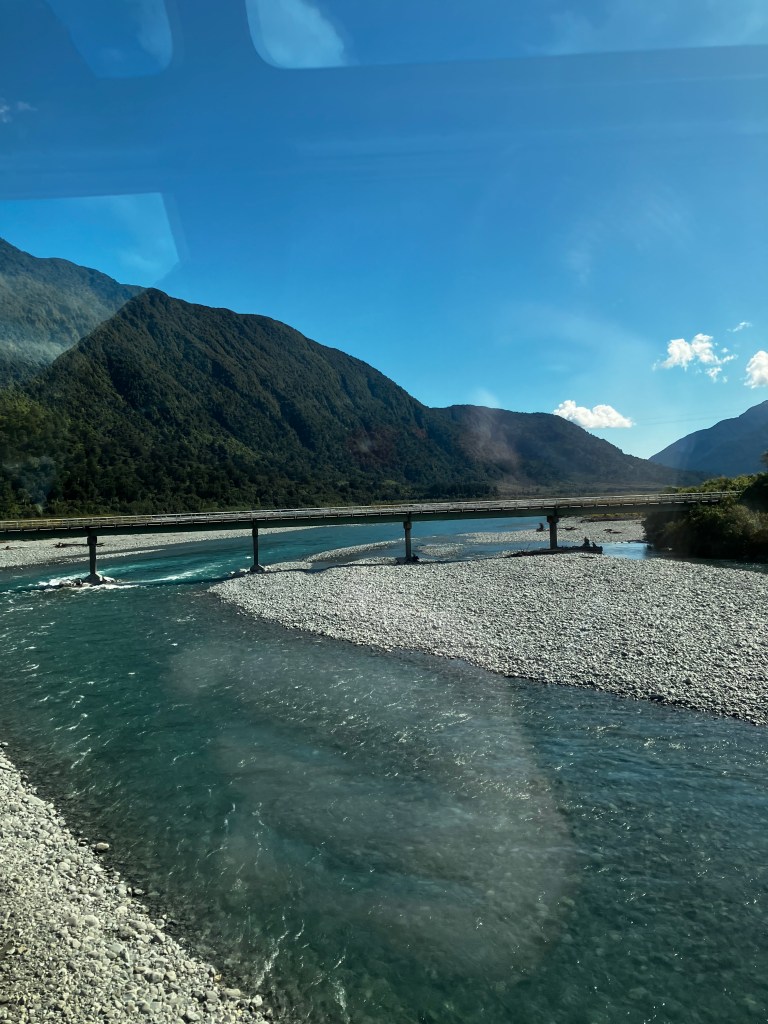
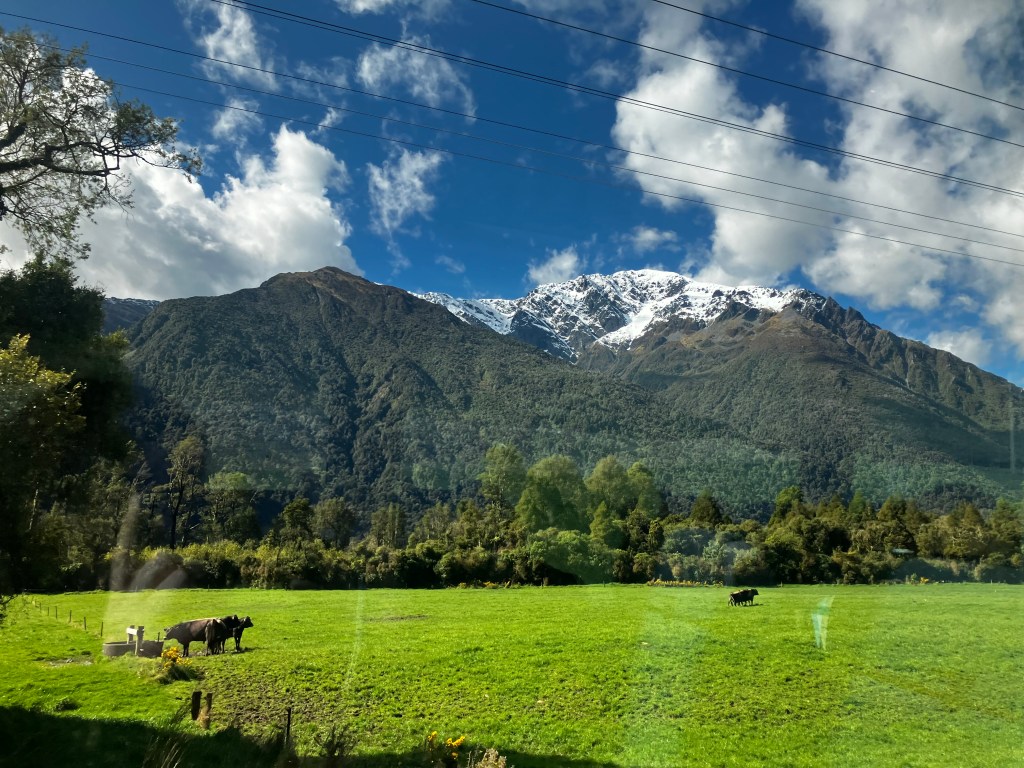
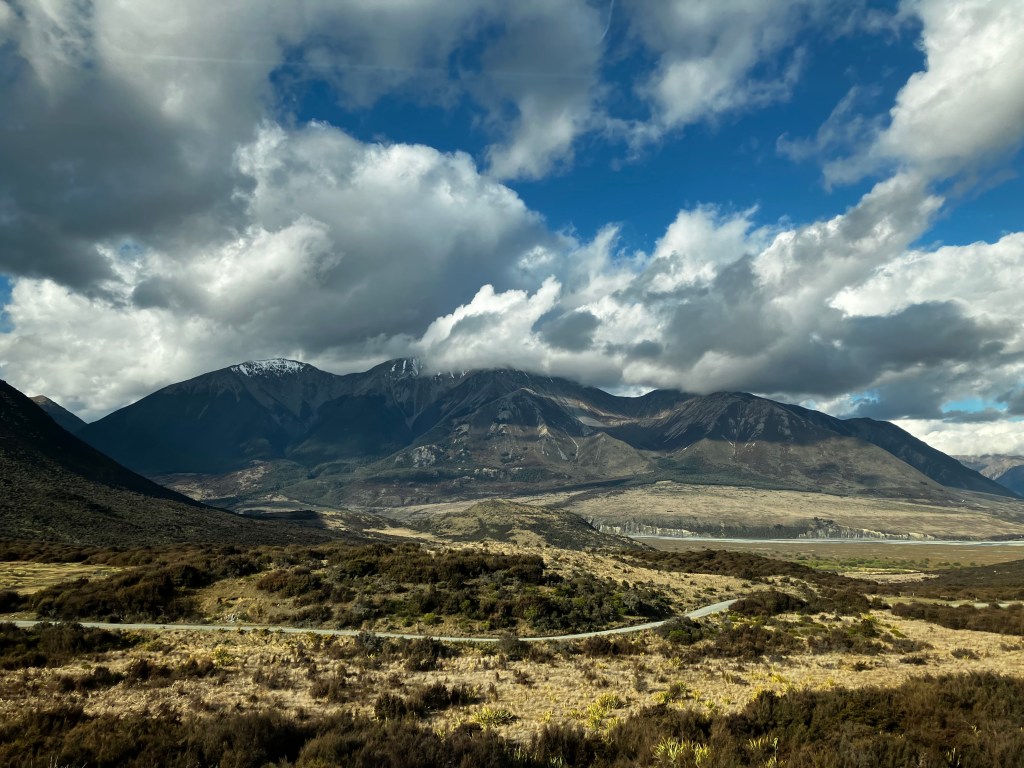
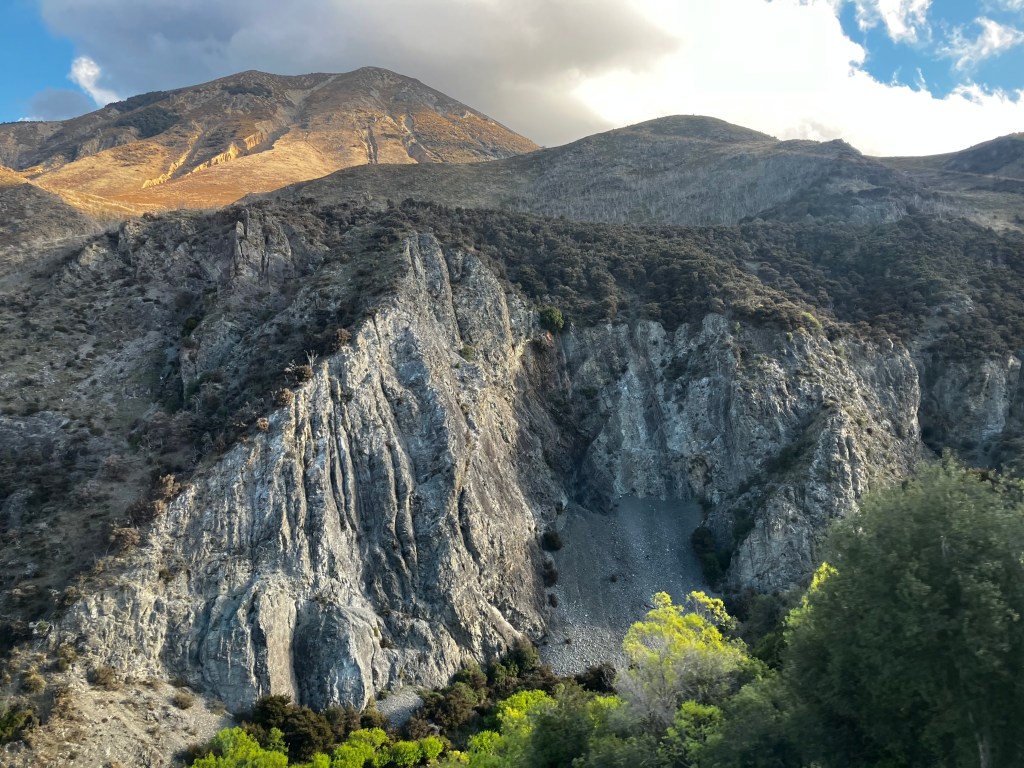
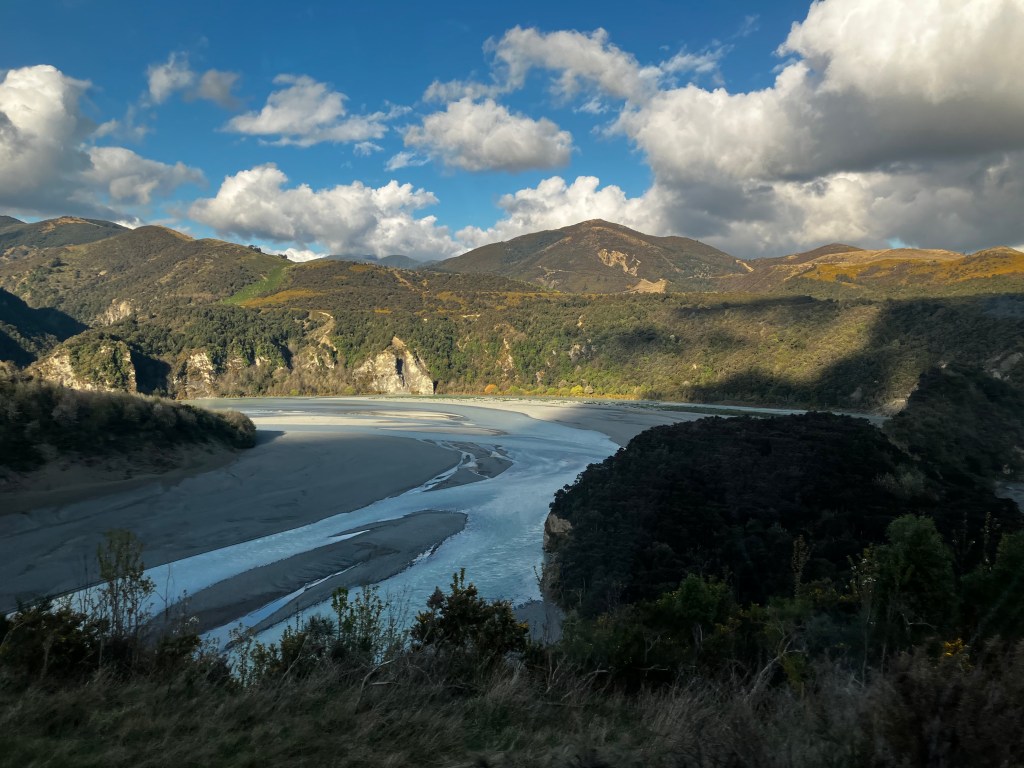
I got back to Darfield at 6:30, which with the time change meant it was still daylight. Unfortunately, there were clouds squatting right over where I was staying! Urgh!
I drove home quickly. It was cold and you could feel the damp in the air (and presumably on the tires) but it never actually rained and I was thankful for that. I got back shortly after 7 and just had time to unpack, change, and grab firewood before dinner (I should have stocked 2 days of firewood before I left…). I went into the kitchen figuring Simonetta would want to hear all about it, but she had a story of her own. They’d had some rich snob book one of the cabins for three nights, but he was just unpleasable. He didn’t like that there were chickens on the property, he didn’t like that there was other cabins, and he called and woke her up in the middle of the night to complain about it for some reason.
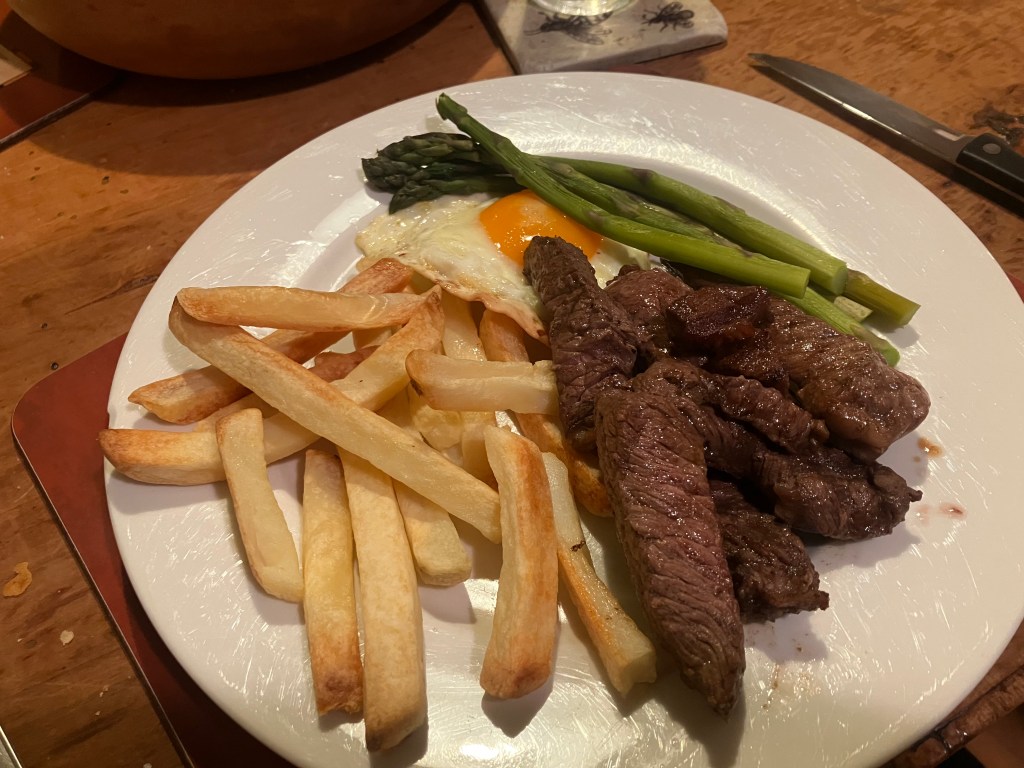
She made a English/ New Zealand staple for dinner – steak and eggs!
Then I went back to my cabin, started the fire and had a hot shower. One thing I am glad for – the shower here is sumptuous. The stall is large, the flow is good and the hot water comes almost instantly.
I felt pretty good about this trip. I’ve stayed in hostels a lot, but this was more of an adventure. Taking off on my motorcycle with just a change of clothes, hitchhiking where I want to go… like a real Vagabond!


 Wanderjahre
Leave a reply to abacaphotographer Cancel reply